
Best Gas Chainsaws of 2026 For Heavy-Duty Cutting
Cut tough timber easily with the best gas chainsaws for October 2026, built for reliable starting, steady power, and quick firewood bucking.
 By Kenny Koehler
Updated October 2, 2026
By Kenny Koehler
Updated October 2, 2026

Cold morning pull cords and flooded carburetors often turn routine firewood bucking into exhausting chores. Thick oak rounds and fallen storm branches demand persistent engine torque that small cutting tools can’t deliver during all-day woodlot clearing. Sorting through the market for the best gas chainsaws requires examining critical elements like two-stroke engine displacement, dependable inertia chain brakes, and reliable anti-vibration damping systems that reduce hand fatigue. While smaller yard jobs might only need efficient pruning saw options, clearing large blowdowns calls for raw gas-powered muscle.
Based on product specifications and user feedback, dependable saws must deliver an ideal balance of power and handling without leaking bar oil in storage. Saws with smart start mechanisms and centrifugal air injection keep debris away from carburetors, ensuring longer motor life and smoother cuts through dense wood. Property owners looking beyond simple hand saws for cutting branches often count on two-cycle motors to handle aggressive cutting bars ranging from 16 to 24 inches. Selecting a well-balanced tool equipped with sturdy bucking spikes ensures the saw won’t jump during aggressive cuts, giving you clean results on every pass.
| Award | Product | TGH Score About TGH ScoreThe TGH Score is our own rating from 0 to 10, based on performance, design and build, ease of use, and value. It reflects independent research and is never influenced by manufacturers, retailers, or affiliate commissions. Learn more › | |
|---|---|---|---|
| Best Overall |
PROYAMA 68CC Gas Powered Chainsaw
|
9.1/10 | Buy |
| Best Budget |
 VEVOR Gas Powered Chainsaw 25.4CC 2-Cycle 12 Inch
|
8.8/10 | Buy |
| Best Value |
 Husqvarna 120 Mark III Gas Chainsaw, Garden Tools
|
8.8/10 | Buy |
 Husqvarna 435 Gas Chainsaw, 40-cc 2.2-HP
|
8.8/10 | Buy | |
 VEVOR Gas Chainsaw, 52CC 18" 2.55HP
|
8.4/10 | Buy | |
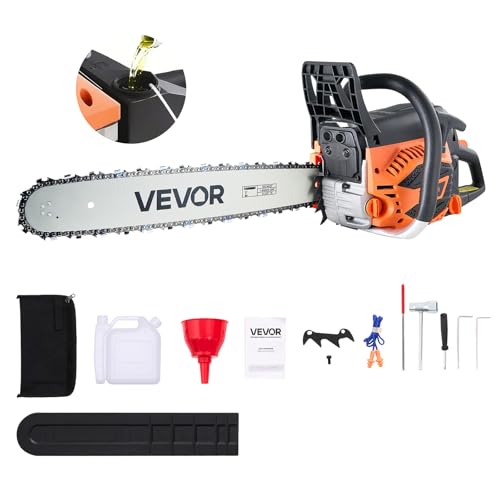 VEVOR 20inch 62CC Gas Powered Chainsaw
|
8.4/10 | Buy | |
| Best Premium |
 Husqvarna 445S Gas Chainsaw, 18 Inch Chainsaw
|
8.4/10 | Buy |
 Husqvarna 450 Rancher 20 Inch Gas Chainsaw
|
8.3/10 | Buy | |
 Husqvarna 460 Rancher Gas Powered Chainsaw
|
8.3/10 | Buy | |
 62cc 20 Inch Gas Chainsaw for Tree Cutting
|
8.0/10 | Buy |
Frequently Asked Questions
What bar length is ideal for general firewood cutting?
A 16-inch to 20-inch guide bar is ideal for most firewood cutting tasks. This length allows you to buck typical hardwood logs in a single pass without adding unnecessary nose-heavy weight. Saws in the 40cc to 50cc range pair naturally with these bar sizes to maintain balanced chain speed. If you only need to trim small timber stakes around the yard, an electric saw for cutting fence posts might be simpler, but gas saws offer maximum portability for remote woodpiles.
How should two-cycle fuel be mixed for the Best Gas Chainsaws of 2026?
Most modern gas chainsaws require a 50:1 or 40:1 fuel-to-oil ratio using fresh, ethanol-free gasoline and quality two-stroke oil. Checking your specific saw manual is essential, as some heavy-duty engines require a 40:1 mix while others run best on 50:1. Using ethanol-blended pump gas can degrade carburetor diaphragms and cause stubborn starting over time. Pre-mixed canned fuel eliminates guesswork and prevents fuel gumming during seasonal storage.
Why do gas chainsaws leak bar oil when sitting in storage?
Minor oil seepage is normal because gravity and thermal pressure changes cause bar oil to weep from the automatic oiler port. Saws heat up during woodcutting, which expands the air in the chain oil reservoir and pushes bar oil through the delivery channel even after the engine stops. Storing the unit on a cardboard pad or draining excess oil before long-term storage keeps your workspace clean. Saws with adjustable oil pumps let you dial back the flow rate to reduce waste.
What is the difference between tool-free chain tensioning and dual-stud scrench systems?
Scrench systems with dual bar nuts offer tighter, more secure bar clamping for heavy-duty bucking, while tool-free dials provide quick adjustments in the yard without tools. Dual studs hold the guide bar firmly against the crankcase under high cutting torque and resist vibration loosening. Tool-free tensioners are convenient for light cleanup, but high-displacement logging saws rely on traditional scrench nuts for maximum bar stability.
How does an inertia-activated chain brake protect the operator?
An inertia-activated chain brake stops the saw chain instantly when it senses rapid upward rotational movement from kickback, even if your hand does not touch the front guard. This critical safety mechanism uses an internal weighted trigger to clamp a steel band around the clutch drum in fractions of a second. Checking the chain brake engagement before every cutting session ensures the mechanism works properly when bucking dense logs.
Can you cut dense hardwood with low-kickback safety chain profiles?
Yes, low-kickback chains can cut dense hardwood effectively, though they cut slightly slower than aggressive full-chisel professional chains. These safety chains incorporate raised bumper tie straps that limit the bite size of each cutter, reducing rotational kickback forces. For homeowners and firewood cutters, this trade-off provides smoother cutting control and greater security without sacrificing the capability to slice through seasoned oak or maple. When squaring milled stock rather than bucking logs, a dedicated saw for cutting planks of wood is generally preferred.
About the author

Kenny Koehler is an experienced tool reviewer known for combining hands-on testing with a scientific, measurement-focused approach. With a background in biology and chemistry and more than a decade of tool evaluation experience, he has developed repeatable testing methods for comparing drilling speed, fastening performance, runtime, ergonomics, and other measurable characteristics.