
Best Drill Press for Glass of 2026 for Clean Holes
Prevent shattered bottles and cracked tile with the best drill press for glass accessories in October 2026 for clean and chip-free cuts.
 By Thomas Gaige
Updated October 2, 2026
By Thomas Gaige
Updated October 2, 2026
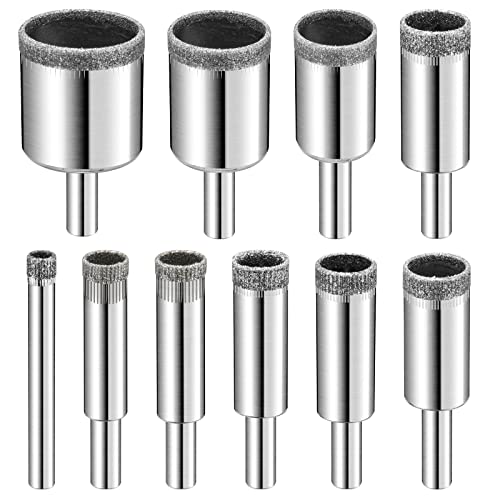
Sudden cracking sounds during a drilling pass can instantly ruin an expensive glass workpiece. Shattering delicate bottles, porcelain tiles, or architectural panes usually happens when spindle runout, excessive rotational speed, or uneven downward pressure stress brittle materials. Securing the best drill press for glass alongside matched diamond hole cutters turns high-risk boring tasks into predictable, repeatable operations. Rigid quill travel and a stable worktable eliminate the erratic hand wobbles that frequently cause edge blowouts on portable drills.
Continuous fluid lubrication and thermal control dictate whether your cut finishes cleanly or fractures the entire perimeter. Diamond-coated core bits grind away dense mineral substrates instead of slicing like standard twist bits, which requires a steady water supply to clear abrasive slurry and prevent thermal shock. Workshop operators who value exact tolerances on a portable table saw for cabinetry understand that stable setups prevent costly material waste. Investing in a true low-runout drill chuck and balanced diamond saws protects your workpiece while delivering smooth, chip-free hole walls.
| Award | Product | TGH Score About TGH ScoreThe TGH Score is our own rating from 0 to 10, based on performance, design and build, ease of use, and value. It reflects independent research and is never influenced by manufacturers, retailers, or affiliate commissions. Learn more › | |
|---|---|---|---|
| Best Overall |
Diamond Drill Bits Set, 10 PCS Diamond Hole Saw
|
7.8/10 | Buy |
Frequently Asked Questions
What drill press speed should be used for drilling glass?
Run your drill press at low spindle speeds between 400 and 900 RPM. High rotational speeds generate extreme frictional heat that causes thermal shock and instantly fractures brittle glass. Setting your pulleys or variable speed drive to its lower range gives diamond grit sufficient grinding contact. Maintaining light quill feed pressure ensures steady abrasive cutting without cracking the material.
Do diamond hole saws require water when cutting glass on a drill press?
Yes, diamond hole saws must always be lubricated with continuous water flow. Running diamond core bits dry burns off the nickel bonding matrix and overheats the glass surface within seconds. Applying a steady stream of water or building a small plumber putty dam around the target hole keeps the cutter cool. Proper lubrication also flushes away glass slurry so the diamond coating stays sharp.
Can a handheld drill cut glass as accurately as a drill press?
No, a handheld drill lacks the vertical rigidity and spindle stability of a dedicated drill press. Handheld tools tend to skate across slick surfaces, which scratches the glass or causes bit chattering. A drill press provides precise 90-degree alignment and controlled mechanical plunge depth. Just as fabricators rely on a cold cut saw for metal frames, a rigid press quill prevents side deflection that breaks glass.
Why do diamond drill bits chip the backside of glass upon breakthrough?
Backside chipping occurs when excessive downward feed pressure pushes through before the core bit finishes grinding. Relieving feed lever pressure right before the cutter punches through prevents blowout on the bottom face. Placing a flat wood or dense rubber backing board underneath the glass offers critical support against mechanical deflection. Drilling halfway from one side and finishing from the opposite side can also yield flawless hole edges.
What chuck size is best for mounting glass diamond hole saws?
A standard 1/2-inch or 3/8-inch keyed or keyless chuck provides plenty of clamping strength for cylindrical shanks. Most diamond hole saw sets feature straight carbon steel shanks sized between 1/4-inch and 3/8-inch. Ensuring the chuck jaws close squarely on the shank eliminates runout, preventing wobble that could shatter delicate bottles. A smooth-running ratcheting chuck secures the tool firmly without slipping under low-speed torque.
Can you use standard carbide masonry or twist bits on glass?
No, standard high-speed steel twist drills and masonry hammer bits will shatter glass instantly. Twist flutes grab and fracture brittle materials, while hammer action destroys tempered or annealed glass panels. Only hollow diamond hole saws or specialized spear-point carbide bits should ever contact glass. Hollow diamond core cutters grind away thin annular rings of material smoothly without inducing severe point stress.
About the author

Thomas Gaige combines mechanical engineering knowledge with extensive hands-on construction experience. His background includes engineering, AutoCAD design, general contracting, residential and light-commercial construction, automotive restoration, cabinetry, fabrication, and workshop projects. This combination gives him a practical framework for evaluating tools based on engineering, performance, usability, and jobsite demands.