
Best Belt Sander Grit for Metal of 2026 Top Picks
Smooth weld seams and strip rust fast using the best belt sander grit for metal updated for October 2026 without burning stock.
 By Edward Ting
Updated October 2, 2026
By Edward Ting
Updated October 2, 2026

Grinding metal with the wrong abrasive produces stubborn burrs, heat discoloration, and belts clogged with melted swarf. Heavy weld cleanup on steel tubing demands coarse aggression, whereas prepping aluminum requires a progressive touch to prevent deep gouges. Selecting the best belt sander grit for metal preserves base metal thickness, saves motor stamina, and prevents friction burns. Fabricators who prep stock after making clean cuts with cold cut metal chopsaws often rely on narrow bandfile belts to blend tight joints. Proper grit choice also stops portable belt tools from bogging down under pressure.
Abrasive mineral composition dictates heat management and belt longevity across heavy deburring jobs. Self-sharpening blue zirconia alumina excels under heavy feed pressure on steel, while flexible aluminum oxide on sturdy X-weight cloth handles light rust removal. Stepping smoothly from 40 coarse grit up to 240 fine grit ensures uniform satin finishes without gouging the workpiece. Investing in a structured grit progression eliminates tedious hand filing and protects metal surfaces from heat warp.
| Award | Product | TGH Score About TGH ScoreThe TGH Score is our own rating from 0 to 10, based on performance, design and build, ease of use, and value. It reflects independent research and is never influenced by manufacturers, retailers, or affiliate commissions. Learn more › | |
|---|---|---|---|
| Best Value |
POWERTEC 1/2 x 18 Inch Sanding Belts, 50PK
|
9.2/10 | Buy |
| Best Overall |
 POWERTEC 3 x 21 Inch Sanding Belts, 10PK
|
9.2/10 | Buy |
| Best Budget |
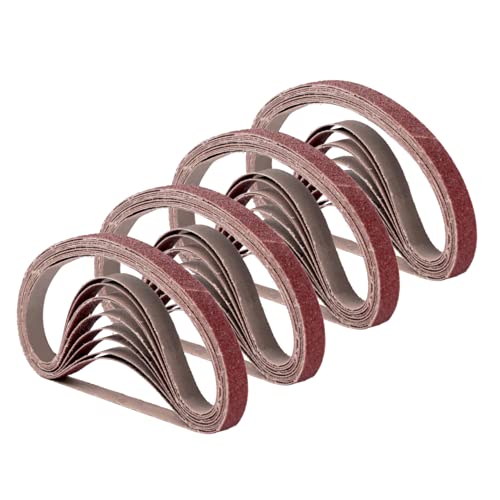 1/2 Inch x 18 Inch Sanding Belts
|
8.8/10 | Buy |
 8 Pcs Belt Sander Paper, 3x21 Belt Sander Sanding
|
7.8/10 | Buy | |
 Shineboc 40-Piece Premium 1/2 x 18 Inch Zirconia
|
7.8/10 | Buy | |
| Best Premium |
 Kquzemra 32 Pack 1/2 X 18 Inch Zirconia Sanding
|
8.3/10 | Buy |
Frequently Asked Questions
Which grit is best for heavy weld grinding and rust removal?
Coarse 40 to 60 grit is the standard choice for aggressive weld leveling and heavy rust removal on metal. These low grits strip mill scale rapidly without loading up the abrasive cloth. Coarser grains cut fast under firm pressure, leaving pronounced scratch lines refined by higher grits later.
What grit should you choose for general deburring and smoothing metal edges?
Medium 80 to 120 grit works best for deburring sharp edges and rounding cut metal profiles. This intermediate range removes burrs left by cutting torches or saws while leaving a uniform scratch pattern. It offers a solid balance between stock removal speed and manageable surface texture.
Is zirconia better than aluminum oxide for metal sanding belts?
Yes, zirconia alumina outperforms aluminum oxide when grinding dense metals like stainless and carbon steel. Zirconia grains are self-sharpening, fracturing under pressure to reveal fresh cutting edges. Standard aluminum oxide remains practical for softer metals like brass, copper, and aluminum where clogging is more common than dulling.
Which belt sander grit creates a satin or pre-polish finish on metal?
Fine grits between 180 and 240 grit are ideal for creating uniform satin finishes on metal surfaces. These fine abrasives blend prior scratch marks into an even sheen suitable for paint or powder coating. Moderate belt speeds prevent heat buildup and warping.
Can you use the same belt sander for both wood and metal projects?
Yes, but you must clear all wood dust from the tool housing before grinding metal to prevent fire hazards. Hot sparks can instantly ignite combustible wood fibers trapped near rollers. Craftsmen building fine furniture with a portable table saw for cabinet making should clean tools thoroughly before grinding metal brackets.
Why do metal sanding belts snap at the seam?
Excessive feed pressure, incorrect belt direction, and high frictional heat cause most seam failures during metal grinding. Belts built with bidirectional tape joints withstand shear forces better than basic lap joints. Letting the belt speed do the work without leaning into the sander extends seam durability.
About the author
Edward Ting is an experienced amateur astronomer, telescope reviewer, and astronomy educator known for his detailed equipment evaluations. With an engineering background and extensive experience reviewing telescopes and astronomical accessories, he helps astronomy enthusiasts understand optical performance, equipment design, and practical considerations when selecting observing equipment.