
Best Miter Saw Blade of 2026 for Flawless Trim Cuts
Upgrade your workshop with the best miter saw blade for splinter-free cuts in November 2026. Compare top carbide discs for clean trim joinery.
 By Kenny Koehler
Updated November 5, 2026

Eliminating Rough Tear-Out on Precision Trim Joints
Rough crosscuts and splintered veneer can ruin an expensive stack of crown molding before the project even gets off the ground. Factory blades supplied with new power tools often feature aggressive teeth engineered for framing lumber rather than seamless finish woodwork. Upgrading to the best miter saw blade transforms how your sliding or compound saw tackles delicate baseboards, oak casing, and dense hardwoods. A well-balanced blade with carbide-tipped teeth minimizes tear-out and stops unwanted blade deflection along wide sliding crosscuts. Pairing these fine cutting tools with a dependable compact cordless bandsaw gives any workshop the versatility to handle both straight joinery and irregular curves.
Careful evaluation of tooth geometry, kerf thickness, and vibration-dampening laser slots reveals how much cut quality varies between budget discs and dedicated finish blades. High tooth counts between 60T and 100T shear cleanly through wood fibers, preventing ragged edges on pre-finished trim. Thinner kerf profiles reduce motor strain on portable 15-amp jobsite saws while saving valuable stock on repeated angle cuts. Choosing a reliable disc with precision tensioning and heat-resistant expansion slots ensures every 45-degree corner locks tight without unsightly gaps.
| Award | Product | TGH Score About TGH ScoreThe TGH Score is our own rating from 0 to 10, based on performance, design and build, ease of use, and value. It reflects independent research and is never influenced by manufacturers, retailers, or affiliate commissions. Learn more › | |
|---|---|---|---|
| Best Overall |
DEWALT 12-Inch 100-Tooth Fine Finish Miter Saw
|
9.1/10 | Buy |
| Best Budget |
 WEN BL1080 10-Inch 80-Tooth Carbide-Tipped |
8.9/10 | Buy |
| Best Value |
 FOXBC 12-Inch 100T Ultra-Thin Kerf Miter Saw Blade |
8.9/10 | Buy |
 Luckyway 12-Inch Miter Saw Blades (32T/80T) |
8.8/10 | Buy | |
 FOXBC 12-Inch 80-Tooth Miter Saw Blade |
8.6/10 | Buy | |
| Best Premium |
 DEWALT 12-Inch 80T Carbide Fine Finish Circular |
8.6/10 | Buy |
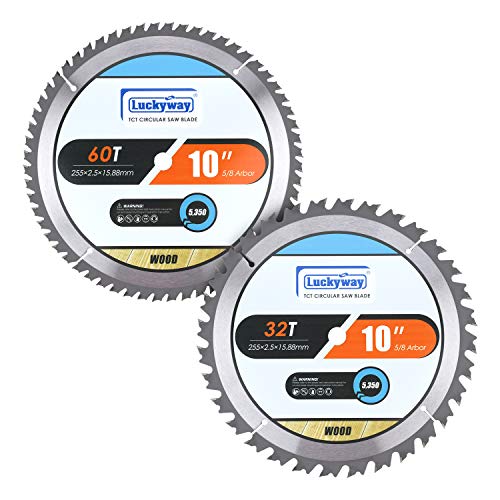 Luckyway 10-Inch 32T and 60T Table and Miter Saw |
8.4/10 | Buy | |
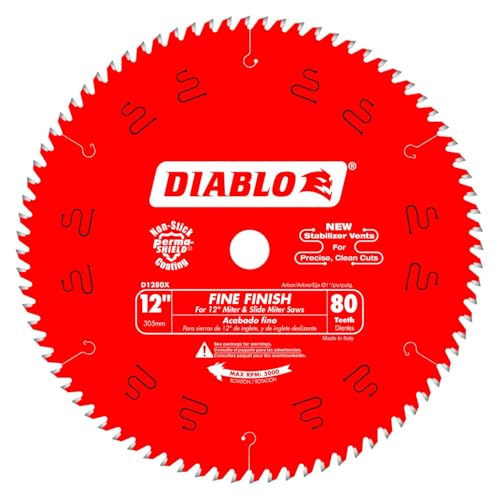 Diablo 12-Inch 80-Tooth Hi-ATB Fine Finish Wood |
8.3/10 | Buy | |
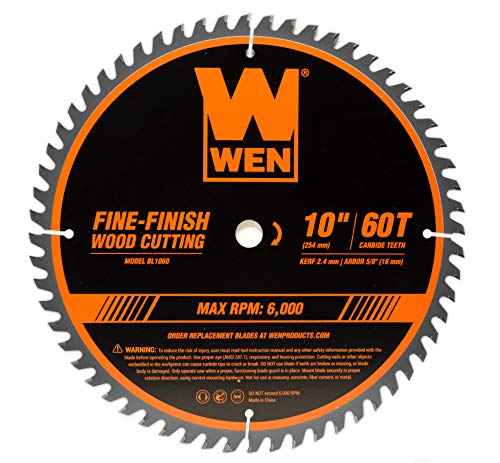 WEN BL1060 10-Inch 60-Tooth Fine-Finish Carbide |
8.0/10 | Buy | |
 FOXBC 12-Inch 60-Tooth Combination Miter Saw Blade |
8.0/10 | Buy |
DEWALT 12-Inch 100-Tooth Fine Finish Miter Saw
The DEWALT DWA112100 is a 12-inch, 100-tooth fine-finish saw blade engineered with ultra-sharp carbide and precision tensioning to minimize vibration and cut deflection. It is an excellent upgrade for finish carpenters, trim specialists, and woodworkers seeking crisp, clean crosscuts on moldings, trim, and pre-finished materials.
Pros
- High 100-tooth count delivers exceptionally clean crosscuts with minimal tear-out on delicate trim
- Patented vibration slots help control blade resonance and chatter during operation
- Precision plate tensioning enhances stiffness to resist blade deflection on compound angles
- Ultra-sharp carbide construction engineered for extended cutting life compared to standard construction blades
Cons
- Not suitable for heavy-duty ripping or rough framing cuts where high feed rates and fast chip evacuation are required
- High tooth count can generate heat and potential burning if fed improperly through thick, dense hardwoods
- Requires a 12-inch saw capacity and will not fit smaller 7-1/4-inch or 10-inch miter saws
WEN BL1080 10-Inch 80-Tooth Carbide-Tipped
The WEN BL1080 is a 10-inch, 80-tooth carbide-tipped saw blade engineered for ultra-fine finish crosscuts on compatible miter and table saws. With an ultra-thin 1/10-inch kerf and a 6000 RPM rating, it provides woodworkers and trim carpenters a practical way to minimize tear-out in hardwoods and softwoods.
Pros
- 80 carbide-tipped teeth provide ultra-fine finish cuts across both hardwoods and softwoods
- Ultra-thin 1/10-inch (2.4 mm) kerf reduces motor drag and material waste
- Fits standard 5/8-inch arbors on most 10-inch table saws and miter saws
- Rated up to 6000 RPM for clean high-speed cutting
Cons
- High tooth count is not intended for ripping thick lumber, which can lead to heat buildup
- Ultra-thin kerf requires steady feed pressure to prevent blade deflection in dense timbers
- Designed strictly for wood cutting and not suited for metal, masonry, or composite decking
FOXBC 12-Inch 100T Ultra-Thin Kerf Miter Saw Blade
The FOXBC 12-inch 100-tooth miter saw blade produces ultra-smooth cuts in delicate trim, veneered plywood, and hardwoods using an axial shear grind and a 0.098-inch thin kerf. It is an excellent, cost-effective choice for finish carpenters, cabinetmakers, and workshop woodworkers seeking crisp edges with reduced motor strain.
Pros
- 100-tooth double-side grind delivers exceptionally smooth crosscuts on molding, cabinet trim, and melamine panels
- 0.098-inch ultra-thin kerf eases strain on saw motors and cuts down on material waste on expensive hardwoods
- Axial shear-face grind slices cleanly through delicate surface veneers to prevent ragged edges and splintering
- Durable foxcarbide carbide tips retain their sharp cutting edges through extensive hardwood and softwood cutting tasks
Cons
- 100-tooth layout is designed strictly for fine crosscutting and sheet goods, making it prone to burning if used for ripping thick lumber
- Comes with a 1-inch arbor bore and does not include a 5/8-inch adapter bushing for smaller arbor shafts
- Ultra-thin kerf steel plates can deflect if pushed too aggressively through dense hardwood stock
Luckyway 12-Inch Miter Saw Blades (32T/80T)
This two-piece combo pairs a 32-tooth general-purpose blade with an 80-tooth fine-finish blade to handle both framing and trim work. Built with tungsten carbide teeth and a standard 1-inch arbor, the set provides versatile crosscutting across hardwoods, softwoods, and composite materials.
Pros
- Two-blade set covers framing and finish work
- Durable tungsten carbide teeth resist heat
- Cuts through dense hardwoods and composites
- Direct fit for standard 1-inch arbors
Cons
- Maximum speed limited to 4,500 RPM
- Fixed 1-inch arbor excludes reducer bushings
FOXBC 12-Inch 80-Tooth Miter Saw Blade
Designed for fine woodworking, this FOXBC 12-inch blade features 80 alternate-top bevel carbide teeth that deliver clean crosscuts across hardwoods, melamine, and veneered plywood. Laser-cut stabilizer vents effectively disperse heat and dampen vibration to prevent blade warping.
Pros
- Tungsten carbide teeth provide extended edge retention
- Laser-cut vents suppress operating noise and blade vibration
- Produces clean, chip-free crosscuts in delicate sheet goods
- Standard 1-inch arbor fits most 12-inch saws
Cons
- Optimized for crosscutting rather than heavy rip cuts
- Requires an adapter for saws with smaller arbors
DEWALT 12-Inch 80T Carbide Fine Finish Circular
The DEWALT DWA11280 is a 12-inch 80-tooth carbide fine finish saw blade engineered with vibration-dampening body slots and optimized tooth geometry for smooth, accurate cuts. It is an excellent choice for trim carpenters, cabinetmakers, and serious DIYers looking for clean results on molding, trim, and fine woodwork.
Pros
- 80-tooth carbide configuration produces clean, splinter-resistant finish cuts on moldings and hardwoods
- Patented body slots dampen vibration to minimize blade chatter during precision crosscuts
- Optimized tooth geometry promotes steady tracking and clean kerf alignment
- Extended-life carbide teeth help maintain edge sharpness longer through repetitive trim cuts
Cons
- High tooth count is unsuitable for fast rough framing cuts or ripping thick dimensional lumber
- Requires a controlled, moderate feed rate in dense hardwoods to prevent heat buildup and burning
- Smaller gullet capacity can collect pitch quickly if used on wet or resinous lumber
Luckyway 10-Inch 32T and 60T Table and Miter Saw
The Luckyway 10-inch 2-pack pairs a 32-tooth general-purpose blade with a 60-tooth fine-crosscut blade, both equipped with tungsten carbide ATB teeth and a standard 5/8-inch arbor. It offers practical cutting versatility for DIYers and home workshop woodworkers looking to handle rough cuts and trim work on a budget.
Pros
- Dual-blade bundle includes both rough/general (32T) and fine finish (60T) cutting options
- ATB carbide tooth grind helps reduce tear-out in plywood and laminated panel edges
- Standard 5/8-inch round bore fits the vast majority of 10-inch power saws
- Hardened steel blade bodies help maintain straight cutlines under moderate feed rates
Cons
- Lacks laser-cut vibration or anti-noise expansion slots found on premium industrial blades
- Not rated for metal cutting, masonry, or nail-embedded demolition lumber
- Standard carbide grade may require more frequent replacement under high-volume production use
Diablo 12-Inch 80-Tooth Hi-ATB Fine Finish Wood
The Diablo 12-inch 80-tooth Hi-ATB saw blade delivers ultra-clean finish crosscuts in hardwoods and softwoods with minimal tear-out. Equipped with TiCo high-density carbide, a super thin kerf, and Perma-SHIELD coating, it is an ideal upgrade for finish carpenters and cabinetmakers using 12-inch saws with a 1-inch arbor.
Pros
- High 80-tooth Hi-ATB grind yields exceptionally smooth crosscut edges with minimal face-grain tear-out
- TiCo high-density carbide teeth deliver long-lasting edge retention across hardwoods and softwoods
- Super thin kerf design minimizes cut resistance and reduces strain on the saw motor
- Perma-SHIELD coating effectively resists pitch accumulation and friction heat during repetitive cuts
Cons
- 1-inch arbor requires a compatible saw or a dedicated reduction bushing for tools using 5/8-inch shafts
- High tooth count is specialized for crosscuts and is prone to burning if used for long ripping operations
- Thin-kerf profile requires steady feed pressure to prevent blade flex in thick hardwoods
WEN BL1060 10-Inch 60-Tooth Fine-Finish Carbide
The WEN BL1060 is a 10-inch, 60-tooth carbide-tipped saw blade engineered for fine-finish crosscuts and rip cuts in softwoods and hardwoods. With an ultra-thin 1/10-inch kerf and standard 5/8-inch arbor, it helps reduce motor drag on jobsite table saws and miter saws, making it a practical choice for budget-conscious woodworkers.
Pros
- Ultra-thin 1/10-inch kerf minimizes motor resistance and reduces workpiece waste
- 60 carbide-tipped teeth deliver smooth finish cuts across softwoods and hardwoods
- Standard 5/8-inch arbor fits the vast majority of 10-inch miter saws and table saws
- High 6000 RPM maximum rating provides safe operation on modern high-speed saws
Cons
- Intermediate 60-tooth count rips thick hardwoods slower than dedicated 24-tooth rip blades
- Thin steel body requires steady, unforced feed rates to avoid lateral blade deflection
- Lacks high-end specialized anti-friction coatings found on premium industrial blades
FOXBC 12-Inch 60-Tooth Combination Miter Saw Blade
The FOXBC 12-inch 60-tooth combination blade delivers versatile crosscutting and ripping capability with a thin .102-inch kerf and tungsten carbide teeth. It is a cost-effective, practical replacement blade for DIY woodworkers and remodelers using 12-inch miter or table saws with a 1-inch arbor.
Pros
- Versatile 60-tooth combination design handles both crosscuts and ripping tasks without swapping blades
- Thin .102-inch kerf reduces stock waste and requires less cutting power from the saw motor
- High-density tungsten carbide teeth provide dependable edge retention in abrasive plywood and hardwoods
- Deep chip gullets promote rapid sawdust evacuation to prevent overheating during longer cuts
Cons
- Fixed 1-inch arbor requires separate reducer bushings if mounting onto saws with 5/8-inch arbors
- A 60-tooth configuration may leave micro-tearout on delicate double-sided veneers compared to dedicated 80-tooth or 100-tooth trim blades
- The 15-degree positive hook angle can feel aggressive on sliding miter saws if feed speed is not carefully controlled
Frequently Asked Questions
{“level”:3}What tooth count is ideal on the Best Miter Saw Blade for trim carpentry?
An 80-tooth or 100-tooth blade is ideal for fine trim carpentry and delicate molding. These high tooth configurations use an alternating top bevel design to shear wood fibers cleanly, which prevents tear-out on delicate pre-finished veneers. Lower counts like 32T or 40T cut faster but leave rough edges that require sanding. Selecting an 80T or 100T disc guarantees crisp joints that fit tightly together.
{“level”:3}Does a thin kerf blade cause deflection on a 12-inch sliding miter saw?
No, quality thin kerf blades resist deflection when equipped with laser-cut stabilizer vents and precision tensioning. While wider full-kerf plates offer inherent rigidity, a thin kerf reduces the load on standard 15-amp motors and preserves expensive hardwood lumber. Blades with dedicated expansion slots absorb heat and vibration during extended sliding cuts, maintaining straight cut paths across wide boards.
{“level”:3}Can you use a 10-inch blade on a 12-inch miter saw?
No, you should never mount a 10-inch blade on a 12-inch miter saw. Most 12-inch saws feature a 1-inch arbor shaft, while 10-inch blades typically use a 5/8-inch bore. Even with an adapter bushing, the smaller diameter reduces vertical cutting clearance, alters guard retraction geometry, and misaligns built-in shadow line indicators.
{“level”:3}Why does a low hook angle matter for sliding miter saws?
A low or negative hook angle prevents the blade from grabbing workpieces and climbing toward the operator. Sliding compound miter saws pull forward during the cut cycle, so teeth angled around 5 to 7 degrees create a controlled slicing action rather than an aggressive bite. This geometry improves cutting safety, reduces chatter, and keeps trim stock firmly planted against the fence.
{“level”:3}How do you know when it is time to replace your best miter saw blade in 2026?
Excessive burning on cut edges, increased push resistance, and fuzzy tear-out indicate your blade is dull or gummed up with pitch. Inspecting the carbide tips under bright light will reveal chipped corners or rounded cutting faces. After squaring your trim cuts, driving fasteners with a heavy-duty brushless drill completes the installation without stressing delicate wood joints.
{“level”:3}What is the difference between ATB and combination tooth grinds?
Alternating top bevel teeth excel at crosscutting, while combination grinds balance crosscuts and rips using grouped teeth and deep gullets. ATB teeth score the wood grain ahead of the chip removal, producing glass-smooth ends on crown molding. Combination patterns handle varied workshop tasks on both miter saws and table saws, making them practical for general carpentry stock.
About the author

Kenny Koehler is an experienced tool reviewer known for combining hands-on testing with a scientific, measurement-focused approach. With a background in biology and chemistry and more than a decade of tool evaluation experience, he has developed repeatable testing methods for comparing drilling speed, fastening performance, runtime, ergonomics, and other measurable characteristics.