
Miter Saw Stand Parts of 2026 Top Picks
Miter Saw Stand Parts keep your saw anchored and materials level for true miter joints in November 2026 without wobbling under heavy lumber.
 By Thomas Gaige
Updated November 5, 2026
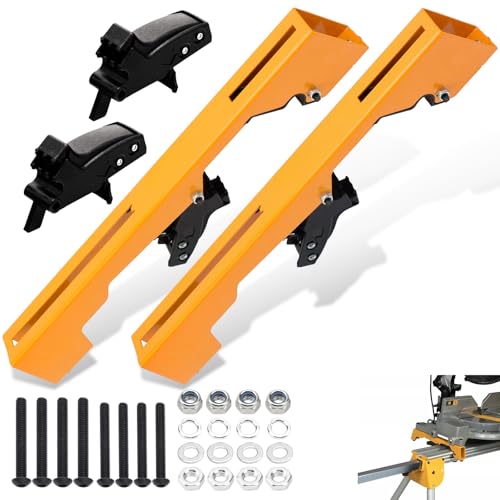
Unstable work surfaces turn simple trim cuts into uneven joints and wasted material. A wobbly saw base ruins fence alignment, causing blade deflection across wider boards and frustrating gaps in finished casing. Reliable miter saw stand parts restore rigid mounting stability so your compound saw stays locked during high-volume crosscuts. Heavy-duty brackets and firm outfeed extensions keep long dimensional boards flat against the table surface, which protects cutting squareness. If you already run a versatile shop with a compact cordless bandsaw for metal cuts, you know that dependable tool support is essential for clean work.
Worn mounting clamps and sagging extension rollers introduce dangerous flex right when you need pinpoint miter detent accuracy. Upgrading to sturdy replacement brackets or dedicated material stops eliminates tool creep during repetitive cuts. Upfront clamp adjustments and non-marring tool feet let you reposition gear without scratching pre-finished stock or fighting rusted hardware. Careful review of bracket dimensions, clamp ergonomics, and rail compatibility ensures your setup handles demanding carpentry jobs without shifting under motor vibration.
| Award | Product | TGH Score About TGH ScoreThe TGH Score is our own rating from 0 to 10, based on performance, design and build, ease of use, and value. It reflects independent research and is never influenced by manufacturers, retailers, or affiliate commissions. Learn more › | |
|---|---|---|---|
| Best Overall |
Braveboy DW7231 Miter Saw Brackets 2-Pack
|
8.9/10 | Buy |
 POWERTEC MT4000MBA Quick-Release Miter Saw Stand |
8.8/10 | Buy | |
 DEWALT DW7232 Miter Saw Work Support and Stop |
8.1/10 | Buy |
Braveboy DW7231 Miter Saw Brackets 2-Pack
Designed as an aftermarket alternative for select DeWalt stands, these Braveboy DW7231 brackets secure miter saws with quick-attach clamps. Integrated non-marring polymer feet also allow tools to sit stably on flat workbenches without scratching work surfaces.
Pros
- Quick-attach clamps allow fast tool installation and removal
- Non-marring polymer feet prevent surface scratches on benchtops
- Allows mounted saws to sit stably on flat surfaces
- Complete set includes all necessary mounting hardware
Cons
- Aftermarket replacement rather than genuine OEM hardware
- Requires manual dimension verification prior to purchase
POWERTEC MT4000MBA Quick-Release Miter Saw Stand
The POWERTEC MT4000MBA Mounting Brackets offer a rugged, powder-coated steel solution for attaching miter saws and benchtop machines to stands with 1-1/2-inch tubular rails. Ideal for carpenters and mobile tradespeople looking to replace lost hardware or quick-swap multiple tools on a single workstation.
Pros
- Heavy-duty powder-coated steel construction holds up to rigorous jobsite use
- Non-marring plastic feet provide stable, scratch-free benchtop use when detached from the stand
- Ergonomic clamp handles make locking and releasing tools smooth and dependable
- Extra bracket sets allow effortless swapping of multiple power tools on a single stand frame
Cons
- Limited strictly to stands with 1-1/2-inch round tubular rails spaced roughly 7 inches apart
- Larger miter saws with wide bolt patterns may require user-supplied plywood adapter boards
- Incompatible with square-beam or proprietary aluminum extrusion rail systems
DEWALT DW7232 Miter Saw Work Support and Stop
Designed for select DEWALT miter saw stands, this dual-purpose accessory stabilizes long workpieces and features a flip-up stop for repetitive cuts. Its vertical height adjusts between 3 7/8 inches and 6 inches to match different saw tables.
Pros
- Flip-up stop enables quick repetitive cut setup
- Height adjusts to align with various saw tables
- Slides easily along stand rails for fast positioning
- Provides dedicated material support during cuts
Cons
- Compatible only with select DEWALT stand models
- Height adjustment tops out at 6 inches
Frequently Asked Questions
Are mounting brackets interchangeable across different miter saw stand brands?
No, mounting brackets are not universal across all miter saw stands. Rail widths and tubing profiles vary significantly between manufacturers, with common frames requiring 1-1/2-inch tubular steel or 7-inch rail spacing. Brackets engineered for DEWALT stands match specific DWX tubular extrusions, whereas aftermarket designs fit designated tubular platforms. Checking your stand frame width before purchasing replacement miter saw stand parts prevents loose fits and wobbling.
How do work support stops improve cut accuracy on long boards?
Yes, work support stops guarantee identical cut lengths by creating a fixed mechanical reference for repeated cuts. Setting a flip-up stop along the stand extension rail eliminates measuring errors across dozens of framing or trim boards. The extra bed support also stops board sag, preventing blade pinch and rough tear-out on wide lumber. Consistent board leveling keeps your stock flush to the fence across every cut.
Can you use miter saw mounting brackets directly on a workbench?
Yes, brackets equipped with rugged polymer or rubber feet allow you to set your saw directly on flat workbenches. These leveling feet stabilize the tool chassis without scratching finished worktops or assembly surfaces. You can detach the saw from the jobsite stand quickly and continue cutting inside a small garage or workshop. Fastening brackets securely with a brushless drill driver ensures mounting hardware stays locked tight during high-vibration cuts.
Why is material support height adjustment necessary on a miter saw stand?
Proper height adjustment aligns the outfeed support pad flush with the miter saw table surface. Compound miter saws feature differing table deck heights, ranging from 3-1/2 inches to over 5 inches above the mounting rails. Misaligned supports push long boards upward, angling the lumber into the blade and ruining 90-degree square cuts. Setting matching heights keeps stock flat against the fence for tight joints.
How do you maintain miter saw stand parts to prevent wobble in 2026?
Inspect clamp levers, tighten mounting hardware, and wipe sawdust from rail contact channels regularly. Heavy vibration from 15-amp motors naturally loosens bracket fasteners over months of framing and trim cutting. Cleaning pitch and resin buildup off the rail channels ensures the quick-release levers lock with full clamping pressure. Replacing stripped hardware or cracked bracket feet keeps your cutting setup secure throughout 2026.
About the author

Thomas Gaige combines mechanical engineering knowledge with extensive hands-on construction experience. His background includes engineering, AutoCAD design, general contracting, residential and light-commercial construction, automotive restoration, cabinetry, fabrication, and workshop projects. This combination gives him a practical framework for evaluating tools based on engineering, performance, usability, and jobsite demands.