
How to Sharpen Lathe Tools With a Belt Sander: Workshop Guide for 2026
Learn how to sharpen lathe tools with a belt sander safely and accurately in this November 2026 guide covering bevel angles, abrasive grits, and cool-grinding bench setups.
 By Doug Mahoney
Updated October 13, 2026

Dull woodturning chisels turn crisp spindle details into rough, torn grain that demands hours of frustrating cleanup. Many turners struggle with conventional high-speed stone grinders that generate excessive friction heat and leave hollow bevels that compromise cutting support. Learning %how to sharpen lathe tools with a belt sander% offers a dependable alternative by producing uniform, flat bevels across turning gouges, scrapers, and skew chisels while keeping metal temperatures under control.
Linear abrasive belts dissipate friction efficiently across their full length, which dramatically lowers the risk of drawing the temper from your expensive high-speed steel tools. Whether you utilize benchtop belt grinders or adapt existing workshop equipment, establishing correct tool rest geometry and selecting suitable abrasive minerals will transform your sharpening routine. Turners exploring dedicated sharpening machinery often inspect dedicated strip sander configurations to maintain precision cutting profiles without investing in specialized water-cooled systems.
| Award | Product | TGH Score About TGH ScoreThe TGH Score is our own rating from 0 to 10, based on performance, design and build, ease of use, and value. It reflects independent research and is never influenced by manufacturers, retailers, or affiliate commissions. Learn more › | |
|---|---|---|---|
| Best Overall |
WEN HB424V 10-Amp 4x24-Inch Variable Speed Belt
|
9.1/10 | Buy |
| Best Premium |
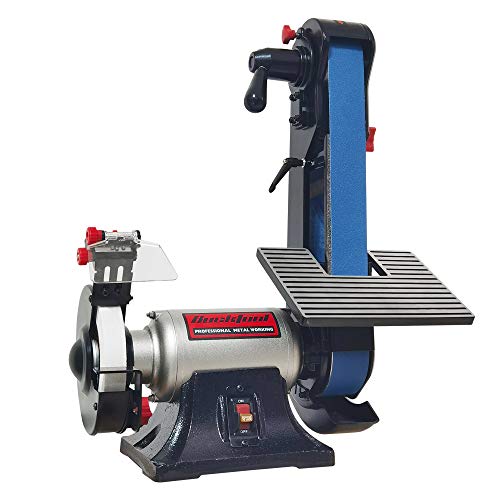 BUCKTOOL 2x42 Belt Sander and 6-Inch Bench Grinder |
8.6/10 | Buy |
| Best Budget |
 SI FANG Mini Benchtop Electric Belt Sander |
8.1/10 | Buy |
 RIKON 50-1305 1x30 Belt and 5 Inch Disc Benchtop |
8.1/10 | Buy | |
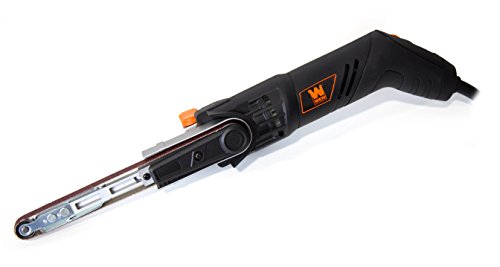 WEN 6307 Variable Speed Detailing File Belt |
8.0/10 | Buy |
WEN HB424V 10-Amp 4x24-Inch Variable Speed Belt
The WEN HB424V combines a 10-amp variable-speed motor with a wide 4-by-24-inch belt for rapid stock removal, panel flattening, and stationary benchtop sanding. It is an ideal pick for woodworkers and DIY renovators seeking heavy-duty leveling power and two-in-one shop versatility.
Pros
- Versatile dual-use design quickly transforms from a handheld sander to a stationary upward-facing bench sander
- Broad 4x24-inch belt dimension covers significantly more surface area per pass than typical 3x21-inch sanders
- Responsive 10-amp motor delivers consistent speed between 660 and 1310 FPM across varying woodworking tasks
- Lock-on power switch and quick-release lever simplify continuous operation and grit changes
- Includes essential mounting hardware, rubber bench pad, and two 80-grit belts right in the box
Cons
- 1.2-inch dust exhaust port requires an aftermarket step-down adapter to fit standard 1-1/4-inch or 1-7/8-inch shop vacuum hoses
- Substantial 4x24-inch footprint and motor weight make vertical or overhead sanding physically demanding
- Passive cloth collection bag fills quickly under heavy stock removal and requires frequent emptying
BUCKTOOL 2x42 Belt Sander and 6-Inch Bench Grinder
The BUCKTOOL 2x42 belt sander and 6-inch bench grinder combo combines a 1/3 HP induction motor with a 4480 FPM belt speed for metal shaping and sharpening. Its 0-90 degree tilting arm and cast iron base make it a dependable choice for knife makers and DIY fabricators.
Pros
- High belt speed of 4480 FPM delivers fast material removal on steel, iron, brass, and dense hardwoods
- Quiet 3.5 Amp induction motor provides reliable rotational power without requiring carbon brush replacements
- Versatile 0 to 90 degree tilting belt housing easily adapts to horizontal, vertical, or angled sharpening setups
- Cast iron base with rubber feet keeps the machine firmly planted and reduces benchtop vibration
- Includes dedicated worktables for both the belt sander platen and the bench grinding wheel
Cons
- Single fixed speed lacks a variable dial to reduce friction heat on delicate wood turnings or heat-treated cutlery
- Induction motor rating of 1/3 HP can experience bogging under aggressive, heavy downward grinding pressure
- Weighs significantly and requires dedicated permanent workbench space due to its 24.5-inch vertical profile
SI FANG Mini Benchtop Electric Belt Sander
The SI FANG Mini Electric Belt Sander is a compact benchtop tool running between 4,000 and 8,000 RPM with seven speed settings. It provides hobbyists, model builders, and blade sharpeners with a versatile platform for detail grinding, deburring, and buffing small workpieces.
Pros
- Ultra-compact metal construction occupies minimal workspace while providing rigid tool support
- Seven-speed adjustment offers flexibility between aggressive small-part grinding and fine polishing
- Tilting worktable adjusts up to 45 degrees for repeatable bevel and edge alignment
- Generous accessory bundle includes 13x1.2-inch belts, two sizes of disc backing pads, and a buffing wheel
Cons
- Lacks an integrated shop vacuum extraction port, requiring manual cleanup and an external dust collection setup
- Compact motor will bog down if excessive downward force is applied during stock removal
- Small 1.2 x 13-inch belt platen is strictly limited to miniature components, craft items, and knife blades
RIKON 50-1305 1x30 Belt and 5 Inch Disc Benchtop
The Rikon 50-1305 delivers compact benchtop versatility by pairing a 1-inch by 30-inch belt with a 5-inch disc driven by a smooth 2.3-amp induction motor. It is an ideal pick for woodcarvers, model builders, knife sharpeners, and hobbyists needing precision shaping on small workpieces.
Pros
- Durable cast metal frame and base provide solid benchtop stability with low operating vibration
- Quiet 2.3-amp induction motor avoids the high-pitched whine typical of universal brush motors
- Dual tilting cast aluminum tables with an included miter gauge make angle grinding straightforward
- Quick-release belt tension lever simplifies belt tracking adjustments and grit changes
- Separate dust ports for both the belt and disc improve debris extraction at the source
Cons
- Modest 1/3 HP motor can bog down if excessive downward pressure is applied during heavy stock removal
- Dual 1-3/8-inch outer diameter dust ports require step adapters to fit standard 1-1/4-inch or 2-1/2-inch vacuum hoses
- The 1-inch belt width and 5-inch disc size are designed strictly for small components and light craft projects
WEN 6307 Variable Speed Detailing File Belt
The WEN 6307 is a compact 1/2-by-18-inch detailing file belt sander engineered for smoothing narrow profiles, deburring metal, and cleaning tight recesses. Operating between 1080 and 1800 SFPM with a 55-degree pivoting arm, it offers woodworkers and metal fabricators an agile solution for confined spaces.
Pros
- Narrow 1/2-inch belt profile fits into confined spaces where conventional sanders cannot reach
- Pivoting head adjusts up to 55 degrees for enhanced ergonomic control and clearance
- Variable speed dial provides flexibility across a range from 1080 to 1800 SFPM
- Lightweight 2.4-pound overall weight minimizes hand and arm strain during detailed work
- Tool-free release lever allows for swift, hassle-free belt replacements
Cons
- Narrow contact area makes this tool unsuitable for leveling broad panels or wide boards
- Included dust port attachment may require third-party adapters to connect to standard vacuum hoses
- Excessive lateral force on the arm can cause narrow belts to deflect or stretch prematurely
The Mechanics and Technique of Belt Sander Lathe Tool Sharpening
Sharpening woodturning tools on a belt sander combines rapid material removal with exceptional bevel control. Understanding the mechanical interaction between tool steel and moving abrasive belts enables turners to shape razor-sharp cutting edges safely and reliably.
Belt Sanders Versus Traditional Bench Grinders for Turning Tools
Traditional woodturners frequently rely on high-speed bench grinders equipped with friable aluminum oxide vitrified wheels. While those spinning wheels establish functional edges quickly, their circular radius cuts an unavoidable concave hollow grind into the tool bevel. Belt sanders feature a flat steel or cast-iron backing platen that produces a continuous, flat primary bevel across the entire cutting profile.
Flat bevels provide distinct handling advantages when working at the lathe because the heel and cutting edge contact the spinning timber simultaneously. This continuous contact delivers clearer tactile feedback as you ride the bevel through delicate spindle beads and deep bowl contours. A flat grind also strengthens the cutting edge by preserving more supporting steel directly behind the sharp apex compared to a hollowed profile.
Linear belt motion runs significantly cooler than high-speed grinding wheels because the abrasive surface has time to cool during each rotation cycle. A standard abrasive belt travels across several feet of total circumference, whereas a grinding wheel concentrates friction along a compact circular track. This lower operating temperature preserves cutting edge hardness and protects vintage carbon steel chisels as well as modern high-speed steel alloys.
Critical Fire Safety and Dust Preparation Before Grinding Metal
Repurposing a woodshop belt sander for metal tool sharpening introduces a severe fire hazard if combustible sawdust remains inside the housing. Glowing metal sparks thrown from grinding high-speed steel readily ignite fine wood dust collected in internal chambers, exhaust ports, or fabric bags. Before touching any turning tool to an abrasive belt, you must clean out all residual wood particles completely.
Detach the fabric collection bag, open the access doors, and thoroughly clean the sander housing using an industrial vacuum. Never connect an active dust collector or shop vacuum to a sander while grinding metal, as hot sparks will ignite the vacuum filter or combustible debris. Operators must always wear impact-resistant safety glasses, a full face shield, and a particulate respirator to prevent inhaling fine metallic swarf and abrasive grit.
Mounting the sander securely to a stable benchtop prevents dangerous shifting during delicate sharpening maneuvers. Machine vibration compromises grinding consistency and can cause turning chisels to catch violently against moving abrasive belts. Heavy cast-iron bases, rubber mounting pads, and secure bench clamps dampen operational vibration, ensuring smooth, predictable tool contact across the belt platen.
Selecting the Right Abrasive Belts and Grit Progression
Standard open-coat woodworking belts with paper backings break down rapidly when subjected to the hard, narrow contact points of tool steel. Sharpening lathe gouges demands durable, cloth-backed abrasive belts manufactured with aluminum oxide, zirconia alumina, or ceramic grain minerals. Ceramic belts deliver exceptional performance on high-speed steel because the micro-crystalline grains fracture under pressure to expose fresh, razor-sharp cutting edges continuously.
Reshaping a damaged cutting edge or establishing a new bevel profile requires a coarse belt, typically between 80 and 120 grit. Coarse abrasive belts remove metal efficiently without requiring heavy downward pressure that could generate excessive friction heat. Once you achieve the desired bevel geometry, progressing to 180 or 240 grit refines the scratch pattern and prepares the edge for precision turning.
Finishing belts spanning from 400 to 600 grit produce a polished secondary bevel that slices cleanly through difficult wood grain. Skipping grit steps traps coarse scratch valleys beneath the surface, which causes premature micro-chipping along the cutting edge under lathe loads. Following an orderly progression clears prior scratch marks, creating a refined cutting edge that retains sharpness through lengthy turning sessions.
Tool Rest Geometry and Bevel Angle Alignment
Achieving consistent sharpness requires repeatable tool presentation against the flat backing platen. A rigid, angle-adjustable worktable allows turners to lock in precise bevel angles before the cutting edge ever touches the abrasive belt. Skew chisels typically demand a clean 25 to 30-degree primary bevel, while heavy-duty woodturning scrapers require a blunt 70 to 80-degree angle to resist chatter.
Setting tool rest angles between 40 and 50 degrees accommodates standard spindle roughing gouges and detail gouges effectively. Bowl gouges featuring swept-back fingernail grinds often benefit from specialized pivoting arm jigs or shop-built grinding platforms that guide the tool handle through smooth sweeping arcs. An unstable or flexing work table produces faceted bevels, destroying the smooth geometry needed for clean cutting action.
Check the angle between the work rest and the belt platen using a dedicated protractor or angle template before turning on the motor. Fasten all adjustment knobs and locking levers tightly so machine vibration cannot loosen the rest during grinding. Resting the tool on the platform with the power turned off allows you to verify physical clearance and confirm unhindered movement across the belt path.
Step-by-Step Sharpening Procedure for Primary Lathe Tools
Sharpening flat-edged tools such as parting tools and skew chisels begins by resting the blade firmly on the pre-set support table. With the motor running, bring the tool bevel into light, flat contact with the moving belt against the rigid platen. Glide the blade steadily across the width of the belt to distribute abrasive wear evenly and prevent localized grooving across the belt surface.
Spindle roughing gouges and shallow detail tools require a steady rolling movement rather than a linear sweeping pass. Anchor the tool shank against the rest, align the bevel with the platen, and rotate the tool smoothly from one outer wing to the other. Maintain a uniform rotational speed so the center nose receives the exact same abrasive contact as the delicate side cutting edges.
Deep-fluted bowl gouges with swept-back wings require sweeping the tool handle through a continuous compound arc while rotating the shaft. Keep the steel moving constantly across the belt surface to prevent flat spots from developing along the curved cutting edge. Lingering in one position for even a brief fraction of a second grinds unsightly facets that will cause the gouge to bounce during turning.
Scrapers require direct, flat presentation against the belt to raise a sharp, uniform cutting burr along the top face. Place the scraper flat on a support table set at an 80-degree angle and touch the curved nose lightly against the belt in one fluid motion. A single, controlled pass across the moving abrasive raises the micro-burr needed for smooth finishing cuts across dense end-grain timber.
Managing Friction Heat and Preserving Steel Temper
Modern lathe tools are generally manufactured from M2 high-speed steel or advanced cobalt alloys engineered to endure high operating temperatures. High-speed steel retains its cutting hardness even when friction produces straw or bronze thermal discoloration during aggressive grinding. However, older turning tools and economical carving chisels often utilize high-carbon steel, which permanently softens if temperatures exceed 400 degrees Fahrenheit.
Even high-speed steel can develop microscopic thermal stress fractures along the thin cutting apex when subjected to intense localized friction. Applying feather-light contact pressure and using fresh, sharp abrasive belts significantly minimizes heat generation during metal removal. Pressing the tool aggressively into the belt does not speed up grinding; it merely bogs the drive motor and overheats delicate cutting tips.
Keep a container of clean water beside your grinding station to quench the tool steel periodically between passes. If you observe darkening or blue discoloration forming on high-carbon steel, quench the blade immediately and grind back past the softened zone. Sanders equipped with variable-speed dials allow operators to reduce belt velocity, dramatically lowering friction heat when touching up delicate edges.
De-burring, Flute Honing, and Edge Inspection
Grinding against the external bevel naturally forces a microscopic wire burr over the edge and into the internal flute of turning gouges. Leaving this fragile burr intact produces torn grain on wood turnings and causes the cutting edge to dull almost immediately. Honing the internal flute with a shaped slipstone or fine diamond paddle removes this metal burr cleanly.
Place the rounded slipstone completely flat inside the concave flute, maintaining parallel alignment with the steel channel. Stroke the stone forward toward the cutting nose several times without rolling over the sharpened bevel lip. This manual honing stroke shears off the delicate wire burr, leaving two polished steel surfaces intersecting at a crisp, durable cutting edge.
Examine the sharpened edge under a focused, low-angle task light to verify that the bevel reflects a uniform, clean grind pattern. Any bright white reflections along the absolute cutting apex indicate dull spots where the bevel failed to meet the flute fully. You can also make a light test cut on a scrap piece of dry hardwood to confirm that the tool shears fibers cleanly without tear-out.
Matching Belt Sander Formats to Woodturning Workflows
Stationary bench grinders equipped with two-inch by forty-two-inch belts provide outstanding power and stability for rigorous metal sharpening tasks. Their heavy induction motors, cast-iron worktables, and adjustable tilting housings supply the rigid support needed for heavy tool profiling. The extended belt length also enhances heat dissipation, making this configuration well-suited for turners who regularly reshape large bowl gouges.
Compact one-inch by thirty-inch belt units deliver an effective, space-saving sharpening solution for smaller home workshops and craft turning. The narrow belt design provides ample clearance around delicate gouge wings, allowing turners to swing tool handles freely without bumping the chassis. However, the shorter belt perimeter warms up faster during extended sessions, necessitating lighter tool contact and frequent cooling pauses.
When comparing equipment, woodturners often evaluate dedicated grinders alongside versatile all-round workshop sanders to determine whether a single machine can handle both rough edge shaping and general woodworking chores. Handheld belt units featuring benchtop inversion clamps allow turners to lock tools upside-down, transforming portable sanders into stationary sharpening stations. Variable-speed controls on these combination machines help regulate surface feet per minute, keeping grinding friction under control.
Specialized miniature belt sharpeners and narrow detailing file sanders fill specialized roles when working with micro-turning tools and carving gouges. Compact multi-speed sharpeners offer adjustable work surfaces and fine abrasive belts ideal for honing miniature detailing chisels. Narrow half-inch file sanders provide maneuverability in tight profiles, allowing woodworkers to clean up custom scrapers and contoured cutting edges with ease.
Troubleshooting Common Sharpening Defects and Edge Imperfections
Faceted bevels represent the most common defect encountered when turners sharpen curved gouges across a flat backing platen. Faceting occurs when an operator pauses or stutters during the rolling motion, creating distinct flat spots rather than a continuous curve. To eliminate faceting, practice rolling the gouge across the tool rest with the sander switched off until the motion becomes second nature.
Convex rounding across flat skew chisels typically results from grinding against the flexible slack section of the belt rather than the platen. While slack-belt grinding works well for convex knife edges, woodturning chisels require the firm support of a rigid platen to maintain straight bevel geometry. Ensure your tool contacts the belt directly over the flat platen area, avoiding the unsupported belt spans above and below.
Asymmetrical gouge wings develop when an operator exerts uneven lateral pressure or lingers too long on one side during rotation. Stop the machine periodically and view the tool nose from directly in front to verify that both wings match in length and curvature. Correcting uneven profiles early prevents wasteful steel removal later and extends the usable lifespan of valuable turning tools.
Integrating a belt sander into your sharpening setup gives you dependable control over bevel angles and cutting edge sharpness. Taking the time to secure your work rest, select durable ceramic abrasives, and maintain a light, fluid touch protects your turning tools from overheating. With razor-sharp edges established across all your lathe chisels, you can produce smooth, clean cuts that minimize tearing and reduce subsequent finish sanding.
About the author

Doug Mahoney is an experienced home-improvement and tool writer with a professional background in carpentry, jobsite supervision, renovation, and hands-on product evaluation. He has spent years covering tools and outdoor power equipment and brings practical construction experience to product research, helping readers understand performance, usability, durability, and the real-world differences between competing equipment.