
7 Best Belt Sander of 2026 For Rapid Stock Removal
Level uneven timber quickly with the best belt sander picks updated for November 2026, offering high torque and reliable belt tracking.
 By Doug Mahoney
Updated October 13, 2026

Uneven glue seams and cupped lumber can ruin a tabletop build before finishing even begins. While random orbital tools handle gentle prep, tackling heavy flattening demands serious torque and flat surface contact. That is where grabbing the best belt sander makes all the difference for aggressive timber smoothing. Motor power ranging from 6.0 to 10 amps prevents frustrating stalls when pressing into dense maple or dried oak. Pairing raw power with steady balance ensures you flatten wide boards without gouging deep valleys into soft grain.
Modern models also improve workshop air quality through integrated dust ports and efficient collection canisters. Whether you need a benchtop combo unit for squaring small components or a portable frame for leveling outdoor decks, matching belt size to your workload is essential. Many woodworkers who step up from versatile all-round sanders appreciate how much time a wide abrasive belt saves during rough prep. Based on product specifications and user feedback across top workshop tools, tracking reliability and comfortable vibration dampening separate reliable workhorses from frustrating shop clutter.
| Award | Product | TGH Score About TGH ScoreThe TGH Score is our own rating from 0 to 10, based on performance, design and build, ease of use, and value. It reflects independent research and is never influenced by manufacturers, retailers, or affiliate commissions. Learn more › | |
|---|---|---|---|
| Best Overall |
Jellas 7-Amp 3x21-Inch Corded Belt Sander
|
9.2/10 | Buy |
| Best Budget |
 WEN HB321V 7.5-Amp 3x21 Variable Speed Belt |
9.1/10 | Buy |
| Best Value |
 WEN HB424V 10-Amp 4x24-Inch Variable Speed Belt |
9.1/10 | Buy |
| Best Premium |
 Makita 9403 4x24 Belt Sander Review |
8.9/10 | Buy |
 DEWALT 20V MAX XR Cordless Brushless Belt Sander |
8.4/10 | Buy | |
 SKIL 7510-01 6-Amp 3x18 Inch Belt Sander |
8.0/10 | Buy | |
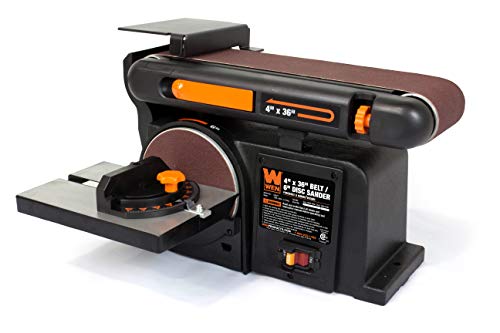 WEN 6502T Benchtop Belt and Disc Sander |
8.0/10 | Buy |
Jellas 7-Amp 3x21-Inch Corded Belt Sander
The Jellas 7-Amp 3x21-Inch Belt Sander provides rapid stock removal and converts into an inverted benchtop sander with the included C-clamps. It is a versatile, budget-friendly option for DIYers, deck builders, and woodworkers tackling rough lumber leveling and finish stripping.
Pros
- Included metal C-clamps and trigger lock button quickly transform the tool into a stationary bench sander for shaping small workpieces
- Long 10-foot power cord offers superior jobsite and workbench mobility compared to tools with standard short cords
- Ships with a 2-in-1 vacuum adapter (32mm and 35mm) for connecting directly to common shop vacuums and extractors
- Generous starter pack of 10 aluminum oxide belts covering coarse stripping to medium finish preparation right out of the box
- Variable-speed dial provides flexibility across rapid stock removal on softwoods and controlled passes on hardwoods
Cons
- Aggressive linear material removal requires continuous movement to prevent gouging or dishing flat wood panels
- Passive fabric dust bag fills rapidly under heavy stock removal and requires frequent emptying when not paired with a vacuum
- Connecting to larger American 1-7/8-inch or 2-1/2-inch vacuum hoses requires separate step-up adapters
WEN HB321V 7.5-Amp 3x21 Variable Speed Belt
The WEN HB321V is a compact 7.5-amp 3-by-21-inch corded belt sander engineered for rapid stock removal, panel flattening, and finish stripping across hardwoods and softwoods. Offering an adjustable 620 to 1,200 FPM speed range and a manageable 6.4-pound frame, it delivers dependable leveling power for DIYers and home woodworkers.
Pros
- Wide variable speed range (620 to 1,200 SFPM) helps prevent timber glazing and friction burning on softer woods
- Weighs only 6.4 pounds, making it significantly easier to control and maneuver than bulkier heavy-duty belt sanders
- Quick-release tension lever allows straightforward, tool-free abrasive changes between different grits
- Built-in 1-1/4-inch dust port provides direct compatibility with common small shop vacuum hose ends
- Trigger lock-on button reduces hand fatigue during extended flattening and stock-removal sessions
Cons
- Aggressive linear sanding action requires careful two-handed guidance to prevent accidental surface gouging or dishing
- Passive fabric dust bag fills rapidly during heavy material removal, making active vacuum extraction preferable
- Corded design requires an extension cord when working across wide outdoor decks or larger jobsite surfaces
WEN HB424V 10-Amp 4x24-Inch Variable Speed Belt
The WEN HB424V combines a 10-amp variable-speed motor with a wide 4-by-24-inch belt for rapid stock removal, panel flattening, and stationary benchtop sanding. It is an ideal pick for woodworkers and DIY renovators seeking heavy-duty leveling power and two-in-one shop versatility.
Pros
- Versatile dual-use design quickly transforms from a handheld sander to a stationary upward-facing bench sander
- Broad 4x24-inch belt dimension covers significantly more surface area per pass than typical 3x21-inch sanders
- Responsive 10-amp motor delivers consistent speed between 660 and 1310 FPM across varying woodworking tasks
- Lock-on power switch and quick-release lever simplify continuous operation and grit changes
- Includes essential mounting hardware, rubber bench pad, and two 80-grit belts right in the box
Cons
- 1.2-inch dust exhaust port requires an aftermarket step-down adapter to fit standard 1-1/4-inch or 1-7/8-inch shop vacuum hoses
- Substantial 4x24-inch footprint and motor weight make vertical or overhead sanding physically demanding
- Passive cloth collection bag fills quickly under heavy stock removal and requires frequent emptying
Makita 9403 4x24 Belt Sander Review
The Makita 9403 is a heavy-duty corded 4-inch by 24-inch belt sander operating at 1,640 ft./min. for rapid material removal with an 84dB operating noise rating. Its 13-pound chassis, labyrinth dust sealing, and flush-sanding body make it a strong choice for woodworkers and contractors leveling wide slabs or working along walls.
Pros
- High-speed 1,640 ft./min. belt speed provides rapid material removal on wide hardwoods and rough stock
- Flush sanding design on both the nose and side reaches tight boundaries and vertical wall junctions
- Relatively low operating noise rated at 84dB for greater user comfort compared to typical belt sanders
- Durable labyrinth motor construction helps shield internal bearings from aggressive sanding dust
- Solid 13-pound weight provides natural downward pressure for leveling uneven joints
Cons
- Fixed single speed of 1,640 ft./min. limits control on heat-sensitive finishes or delicate thin veneers
- At 13 pounds, the sander requires noticeable physical effort during vertical tasks or transport across worksites
- Aggressive removal rate demands attentive two-handed handling to prevent accidental cross-grain gouging
DEWALT 20V MAX XR Cordless Brushless Belt Sander
The DEWALT 20V MAX XR Belt Sander (DCW220B) brings heavy-duty brushless stock removal to a cordless platform with a 25-speed dial and Wireless Tool Control. It is an exceptional bare-tool option for woodworkers, carpenters, and contractors who need portable panel flattening and rapid wood stripping.
Pros
- Powerful brushless motor provides aggressive material removal without the restriction of an electrical cord.
- 25-speed dial and variable trigger give precise speed regulation across varied wood species and grain densities.
- 9.26-pound bare-tool heft keeps the platen flat on horizontal surfaces without requiring excessive downward operator pressure.
- Tool-free belt tension release makes grit changes fast and straightforward in busy shop settings.
- Wireless Tool Control capability links directly to compatible DEWALT vacuums for cleaner indoor work areas.
Cons
- High-draw belt sanding drains compact battery packs quickly, requiring higher-capacity 20V MAX batteries for extended jobs.
- DEWALT Airlock connector is sold separately if connecting to standard third-party shop vacuum hoses.
- Bare-tool package does not include a battery, charger, or dust extraction adapter in the box.
SKIL 7510-01 6-Amp 3x18 Inch Belt Sander
The SKIL 7510-01 is a compact 6-amp corded 3x18-inch belt sander engineered for rapid stock removal, panel leveling, and finish stripping. Featuring real-time pressure control feedback and automatic belt tracking, it provides controlled sanding power ideal for DIY woodworkers and home renovators.
Pros
- Pressure control indicator warns when pushing down too hard, helping avoid accidental surface gouges
- Auto-track system keeps the 3x18-inch belt properly aligned without needing constant adjustments
- Flush-edge side profile sands directly against adjoining vertical edges and cabinet faces
- Built-in micro-filtration container plus direct compatibility with standard 1-1/4-inch vacuum hoses
- Balanced 5.51-pound build provides sufficient downward stability while minimizing user fatigue
Cons
- 3x18-inch sanding belt footprint requires more passes on massive slabs than wider 4x24-inch sanders
- 6.0-amp motor rating is geared toward DIY and light shop duty rather than all-day industrial stock removal
- Direct vacuum fitment is sized specifically for 1-1/4-inch hoses, requiring adapters for larger 1-7/8-inch or 2-1/2-inch shop vacuums
WEN 6502T Benchtop Belt and Disc Sander
The WEN 6502T combines a 4x36-inch belt and a 6-inch sanding disc powered by a 4.3-amp motor, offering versatile material shaping and edge smoothing for DIY workshops. Its cast iron base helps suppress bench vibration, making it a dependable choice for hobbyists and makers squaring or deburring workpieces.
Pros
- Heavy cast iron base dampens motor vibration for steady benchtop operation
- Tilting belt bed adjusts anywhere from 0 to 90 degrees for horizontal or vertical workpiece support
- Quick-release tension lever makes swapping 4 x 36-inch sanding belts fast and straightforward
- Dual 4x36 belt and 6-inch disc setup provides great flexibility for small-to-medium shaping tasks
- Dependable 4.3-amp motor handles light-to-moderate wood shaping and metal deburring
Cons
- The 4.3-amp motor may bog down under heavy downward pressure during aggressive stock removal on dense hardwoods
- Fixed operating speed up to 3600 RPM lacks variable speed tuning for delicate or heat-sensitive materials
- Benchtop footprint of 22 x 11 inches requires dedicated stationary workshop space
Frequently Asked Questions About Belt Sanding
What belt size works best for general workshop tasks?
A 3×21-inch belt offers the best balance of maneuverability and surface area for most workshop tasks. This format gives sufficient width to flatten glue-ups while remaining light enough to control without quick arm fatigue. Larger 4×24-inch belts remove material much faster across broad panels, but their extra weight demands steady two-handed control. For smaller craft projects, compact 3×18-inch options deliver superior balance.
How do you prevent a high-torque sander from gouging lumber?
Keeping the tool moving constantly and letting its own weight do the cutting prevents accidental gouging. Pressing downward tilts the front roller, which quickly digs deep ruts into soft pine or cedar. Starting the motor before touching the workpiece and feathering the tool onto the wood ensures smooth, flat stock removal. For delicate trim work or cabinet frames, switching to dedicated face frame sanders provides safer edge control.
Can standard shop vacuums connect to these dust ports?
Yes, most modern tools feature dust ports between 1-1/4 inches and 1.2 inches that connect directly or via adapters to shop vacuums. Using active suction rather than a passive cloth bag captures fine airborne wood dust before it fills the room. Some cordless systems even integrate wireless tool activation with compatible extractors. Checking the port outer diameter ensures your vacuum hose seals securely without slipping off during rapid passes.
Why does a sanding belt continuously track off center?
Uneven belt tension or an uncalibrated tracking knob causes the abrasive loop to drift against the tool housing. Adjusting the manual tracking screw while the motor runs slowly centers the abrasive between the drive rollers. Installing belts in the direction indicated by the internal directional arrow also prevents seam failure and wandering. Damaged or stretched belts will never track true and require immediate replacement.
Is variable speed control necessary on the best belt sander in 2026?
Variable speed control is essential if you plan to strip old paint, sand resinous softwoods, or work near delicate veneer. Dropping the belt speed below 1,000 feet per minute prevents friction heat from melting finishes or loading the abrasive grit with gum. Full speed remains ideal for rapid stock removal on raw hardwoods like maple and walnut. A multi-dial motor gives you the versatility to transition smoothly between rough leveling and controlled surface prep.
When should you choose a benchtop belt sander over a handheld tool?
Stationary benchtop models excel at shaping small parts, end-grain chamfering, and precision miters rather than wide board flattening. Fixed tables provide solid 90-degree backing, whereas handheld units must be guided across large horizontal surfaces. If your workflow involves intricate contours or tight metalwork, exploring specialized strip sanders may prove more effective than a wide-belt portable sander. Handheld models remain the top choice for decking, tabletops, and stationary timbers.
About the author

Doug Mahoney is an experienced home-improvement and tool writer with a professional background in carpentry, jobsite supervision, renovation, and hands-on product evaluation. He has spent years covering tools and outdoor power equipment and brings practical construction experience to product research, helping readers understand performance, usability, durability, and the real-world differences between competing equipment.