
How to Miter Cut With a Circular Saw: Practical Guide for 2026
Learn how to miter cut with a circular saw cleanly and safely with this practical guide, updated with setup tips and angle guides for November 2026.
 By Thomas Gaige
Updated November 5, 2026

Making accurate angled crosscuts across framing lumber or deck boards often happens far from a stationary chop saw station. While dedicated benchtop equipment provides a fixed turntable, learning how to miter cut with a circular saw gives woodworkers and carpenters immediate cutting versatility directly on the sawhorses. Achieving clean, gap-free joints requires a reliable guiding reference, a steady feed rate, and sharp carbide teeth. Whether you are cutting dimensional 2×4 framing or trimming exterior cladding, a handheld circular saw can produce remarkably crisp angles when paired with the right mechanical guides.
Success starts with understanding how the base shoe interacts with an external straightedge or a sturdy layout square. Direct-drive sidewinders and high-torque saws provide ample cutting power, but user control dictates the final accuracy of the cutline. Upgrading to rigid magnesium circular saws can also reduce arm fatigue during repetitive cuts while keeping the shoe plate perfectly flat against your layout guide. By securing your workpiece properly and maintaining constant pressure against a reference fence, you can cut precise miters cleanly without needing to transport heavy stationary machinery to your jobsite.
| Award | Product | TGH Score About TGH ScoreThe TGH Score is our own rating from 0 to 10, based on performance, design and build, ease of use, and value. It reflects independent research and is never influenced by manufacturers, retailers, or affiliate commissions. Learn more › | |
|---|---|---|---|
| Best Overall |
SKIL 10-Inch Dual Bevel Sliding Compound Miter Saw
|
9.2/10 | Buy |
| Best Value |
 Metabo HPT C10FCG2 10-Inch Compound Miter Saw |
9.1/10 | Buy |
| Best Premium |
 Evolution R185SMS+ 7-1/4-Inch Sliding Miter Saw |
9.1/10 | Buy |
| Best Budget |
 CRAFTSMAN 12-Inch Hand Miter Saw and Clamping Box |
8.8/10 | Buy |
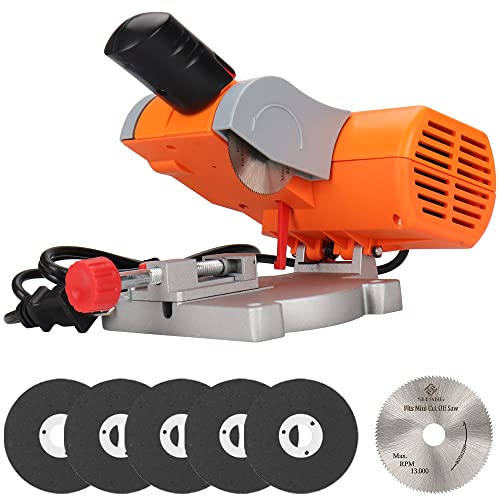 SI FANG 110V Mini Miter Chop Saw |
8.8/10 | Buy | |
 Yumark 10-Inch 6000 RPM Miter Saw |
8.8/10 | Buy | |
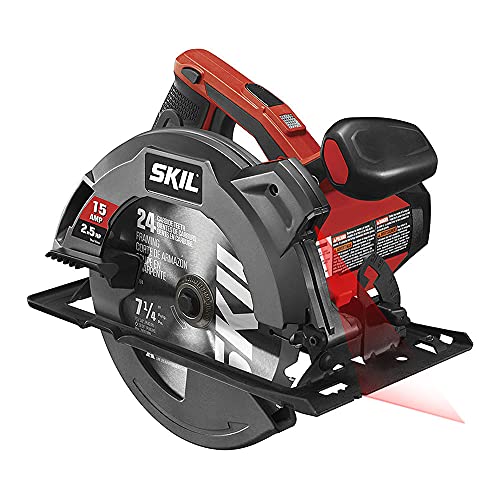 SKIL 5280-01 15-Amp 7-1/4-Inch Circular Saw |
8.4/10 | Buy | |
 Hoteche Manual Miter Box with 550mm Hand Saw Guide |
8.1/10 | Buy | |
 Evolution R8MTS 8-1/4-Inch Convertible Miter |
8.1/10 | Buy | |
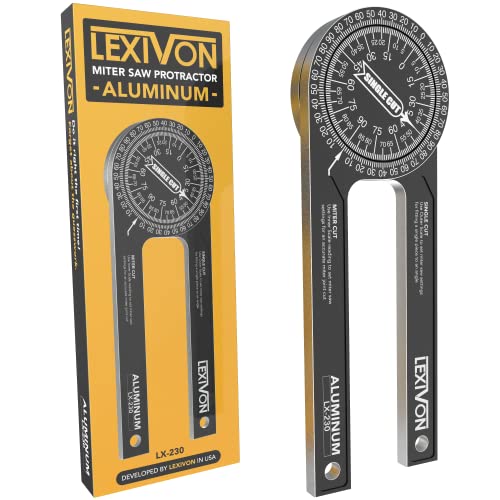 LEXIVON 7-Inch Aluminum Miter Saw Protractor |
8.0/10 | Buy |
SKIL 10-Inch Dual Bevel Sliding Compound Miter Saw
The SKIL MS6305-00 is a corded 15-amp, 10-inch sliding compound miter saw featuring dual-bevel capability and an accurate LED shadow cutline. Crosscutting up to 2x12 lumber at 90 degrees, it delivers exceptional capacity and setup versatility for DIYers, deck builders, and remodelers.
Pros
- Dual-bevel action saves substantial time on crown molding and baseboard by eliminating the need to invert workpieces
- Broad 2x12 crosscut capacity at 90 degrees easily clears wide shelving, stair treads, and framing lumber
- LED shadow line casts a direct blade-kerf shadow that remains accurate regardless of blade changes or vibrations
- Miter range reaches 50 degrees both left and right with 11 detent stops for common interior trim angles
- At under 40 pounds, the chassis remains manageable to carry across jobsites or store on a compact stand
Cons
- Rear-sliding rail configuration requires dedicated rear wall clearance, increasing overall bench footprint
- Pre-set factory bevel and miter stops should be verified with a machinist square prior to fine finish trim cuts
- Standard passive dust collection bag requires coupling to a dedicated shop vacuum for cleaner indoor operation
Metabo HPT C10FCG2 10-Inch Compound Miter Saw
The Metabo HPT C10FCG2 is a lightweight 24.2-pound 10-inch single-bevel compound miter saw driven by a 15-amp motor reaching up to 5,000 RPM. It offers an accessible, highly portable cutting solution for DIY homeowners, remodelers, and punch-list carpenters who need reliable crosscutting and beveling capabilities without hauling heavy equipment.
Pros
- Extremely lightweight at 24.2 pounds, making it easy to carry around the jobsite or store in compact shops
- Strong 15-amp motor delivers dependable 5,000 no-load RPM for clean crosscuts in standard lumber
- Wide miter angle capacity of 0 to 52 degrees left and right offers versatility for custom trim angles
- Included material clamp secures workpieces safely against the fence to prevent shifting during cuts
- Generous 5-year warranty backing provides added confidence for budget-conscious tool buyers
Cons
- Single-bevel architecture tilts only to the left (0 to 45 degrees), requiring workpieces to be flipped for opposing bevels
- Non-sliding fixed arm configuration limits overall crosscut width capacity compared to sliding compound miter saws
- Lacks an integrated LED shadow line indicator or optical laser guide for rapid cutline sighting
Evolution R185SMS+ 7-1/4-Inch Sliding Miter Saw
The Evolution R185SMS+ is a compact 7-1/4-inch sliding miter saw engineered for multi-material cutting across wood, plastics, and mild steel with minimal heat or sparks. Featuring a 210 mm slide crosscut capacity, 45-degree bevel, and 50-degree miter range, it provides versatile cut capability for DIYers, remodelers, and small-space workshop builders.
Pros
- Versatile multi-material cutting capability handles wood, plastic, and mild steel with one machine
- 210 mm sliding stroke offers expanded crosscut width compared to standard non-sliding 7-1/4-inch chop saws
- Miter range up to 50 degrees and bevel tilt up to 45 degrees provide solid compound cutting flexibility
- Dry-cutting action produces minimal sparks and heat without requiring messy liquid coolants
- Rigid cast aluminum base provides sturdy support for dimensional lumber and metal stock
Cons
- Compact 7-1/4-inch blade diameter limits maximum vertical cutting depth compared to 10-inch or 12-inch miter saws
- Retail product listing features conflicting chop saw descriptions that require buyers to verify included accessories
- Cutting ferrous metals produces fine metallic swarf that requires frequent cleanup to avoid contaminating woodworking projects
CRAFTSMAN 12-Inch Hand Miter Saw and Clamping Box
The CRAFTSMAN CMHT20600 combines a 12-inch hand saw with a honeycomb-base clamping miter box, offering preset 90, 45, and 22.5-degree cutting guides for trim molding and small DIY wood projects. It is an affordable, portable manual cutting solution for homeowners, hobbyists, and punch-list trim repairs where setting up a power saw is impractical.
Pros
- Cam-action clamping pins lock stock into the honeycomb grid without requiring external clamps
- Dedicated slots provide quick setup for 90-degree, 45-degree, and 22.5-degree angle cuts
- Base overhang lip stabilizes the unit against tabletop and bench edges during cutting strokes
- Built-in storage slots prevent misplacing the cam pins and marking tools
- Operates quietly and cleanly for indoor trim work without power cords, chargers, or heavy equipment
Cons
- Cutting capacity is limited to smaller trim profiles, moldings, and craft stock rather than dimensional lumber
- Plastic guide slots can widen or wear over time if the hand saw blade is forced against sidewalls
- Requires manual sawing effort and consistent hand pressure to maintain perpendicular cuts
SI FANG 110V Mini Miter Chop Saw
The SI FANG Mini Miter Chop Saw is a compact 110V benchtop tool running at 6000 RPM with a 1/2-inch cutting depth capacity. Designed for trimming brass casings, sizing carbon arrows, and making angled cuts in miniature wood moldings, it offers dedicated small-part cutting without occupying valuable shop space.
Pros
- Ultra-compact footprint fits easily on small craft desks, reloading stations, and hobby benches
- High 6000 RPM motor speed facilitates clean cuts on brass cases, carbon shafts, and thin wood dowels
- Supplied with both a 100T HSS blade for wood and soft metals and a 2-inch abrasive wheel for steel and carbon
- Miter gauge adjusts from 0 to 45 degrees to support small-angle craft joints
Cons
- Cutting depth is strictly limited to 1/2 inch, making it unsuitable for standard dimensional lumber or construction trim
- Does not include a dust collection port or vacuum shroud, requiring manual cleanup of fine metal shavings and dust
- Miniature miter gauge lacks positive detent stops and requires checking with a small square for precise angular alignment
Yumark 10-Inch 6000 RPM Miter Saw
Built for mobile job sites and compact workshops, the Yumark 10-Inch Miter Saw combines an energetic 6,000 RPM motor with a lightweight sub-20-pound frame. Its dual 45-degree adjustable table offers dependable precision for cutting wood, plastics, and non-ferrous metals on the go.
Pros
- Lightweight 19.8-pound body is easy to transport
- Fast 6,000 RPM motor handles soft metals and wood
- Dual 45-degree miter table allows flexible angle cuts
- Vibration-damping handle improves user comfort
Cons
- Corded design requires continuous access to an outlet
- Non-sliding mechanism limits maximum cut width
SKIL 5280-01 15-Amp 7-1/4-Inch Circular Saw
The SKIL 5280-01 is a corded 7-1/4-inch circular saw featuring a 15-amp motor delivering 5,300 RPM, an integrated single beam laser, and a 51-degree bevel capacity. It provides dependable cutting performance for DIY homeowners, weekend woodworkers, and remodelers tackling dimensional lumber and sheet goods.
Pros
- Powerful 15-amp corded motor maintains 5,300 RPM for reliable crosscutting and ripping
- Wide 51-degree bevel range with a positive detent at 45 degrees expands cutting options
- Integrated dust blower and single beam laser improve cutline awareness during operation
- Manageable 8.7-pound weight reduces operator fatigue during overhead or repetitive cutting
Cons
- Lacks an electronic blade brake, meaning the blade coasts to a stop after trigger release
- Laser guide alignment should be checked and verified against a manual square before precision cuts
- Supplied carbide-tipped blade is suited for general rough cutting rather than fine cabinet trim
Hoteche Manual Miter Box with 550mm Hand Saw Guide
The Hoteche Professional Miter Box with Saw Guide provides a cord-free cutting platform featuring a 550mm blade and multi-angle settings from 15 to 90 degrees. It offers generous cutting capacity for DIYers, trim hobbyists, and picture framers seeking clean miters without setting up a power saw.
Pros
- Aircraft-grade aluminum guide frame provides rigid saw tracking across preset angles.
- Extra-wide cutting capacity accommodates stock up to 6.3 inches wide at 90 degrees.
- Long 550mm (21.6-inch) saw blade allows extended, smooth manual stroke action.
- Lightweight 4.8-pound build allows easy transport without needing electrical outlets.
Cons
- Requires manual sawing effort, which can be fatiguing on dense hardwood projects.
- Composite base components require gentle handling compared to heavy cast-iron boxes.
- Limited to predefined miter detents for locked angle cuts.
Evolution R8MTS 8-1/4-Inch Convertible Miter
The Evolution R8MTS combines a compound miter saw and a benchtop table saw into a single compact unit powered by a 12A multi-material motor. It is an ideal space-saving solution for DIYers, remodelers, and small-shop woodworkers who need versatile crosscutting and ripping in one portable tool.
Pros
- Combines compound miter and rip table cutting into a single 28.6-pound compact footprint
- Included multi-material TCT blade cuts hardwood, aluminum, and mild steel without requiring blade changes
- Machined cast aluminum table surface provides a flat, rigid cutting bed for accurate feeds
- Secure pin-locking conversion mechanism makes switching between miter and table modes fast and straightforward
Cons
- Maximum table saw rip depth of 1-1/2 inches restricts ripping to thinner boards and sheet goods
- Crosscut stroke of 4-3/4 inches in miter mode will not clear wide shelving boards in a single pass
- Compact table dimensions require auxiliary outfeed support when handling longer boards
LEXIVON 7-Inch Aluminum Miter Saw Protractor
The LEXIVON LX-230 is a 7-inch CNC-machined aluminum miter saw protractor designed to read inside and outside corners and transfer exact miter and single-cut angles directly to your saw. It eliminates guesswork for finish carpenters and DIYers tackling crown molding and baseboard installations without the flex of plastic gauges.
Pros
- Substantial 1/4-inch thick CNC-machined aluminum build eliminates the flex common in plastic angle gauges
- Smooth Teflon O-ring swivel mechanism holds position without loose play or binding
- Dual direct-reading scales eliminate manual math and angle conversion errors for miter and butt joints
- Laser-etched graduations resist rubbing off from everyday tool pouch friction
Cons
- Lacks a mechanical locking screw to lock the arms firmly in place during rough transit
- Analog reading requires visual alignment against out-of-plumb drywall or heavy mud buildup
- Fine graduation lines require adequate lighting to sight accurately
Mastering Miter Cuts with a Handheld Circular Saw
Learning how to miter cut with a circular saw requires turning a handheld crosscut tool into an accurate angle-cutting system. Because a circular saw lacks an integrated rotating turntable, layout accuracy and guiding fences govern the final fit of the joint. Locking a rigid speed square or clamped straightedge against the board lets you guide the saw base shoe across exact angles with repeatable precision. This guide details the setup steps, depth adjustments, and cutting practices needed to produce clean, tight miter joints on any project.
Understanding Miter Cuts Versus Bevel Cuts on a Circular Saw
Many woodworkers confuse miter cuts with bevel cuts because both produce angled cuts on dimensional lumber. A standard miter cut changes the cutting angle across the wide face of the board while keeping the blade set square at 90 degrees to the surface. A bevel cut tilts the blade carriage using the tool bevel quadrant, angling the cut through the wood thickness. Combining an angled face cut with a tilted blade produces a compound miter cut, commonly used in roof framing and exterior trim.
Handheld circular saws include bevel adjustment levers to tilt the base shoe up to 45 or 51 degrees, but they have no built-in mechanism to angle cuts across the board face. Every miter angle must be established using external layout marks and physical guide fences clamped to the timber. Trying to guide an angled cut freehand causes wavy cutlines, rough edges, and loose joints. Understanding this basic geometry ensures you select and align the right guiding accessories before making your first cut.
Essential Layout Tools and Angle Verification
Accurate miter cuts require rigid layout tools that can guide the metal base shoe of the circular saw without shifting. A standard 7-inch aluminum speed square serves as an ideal guide for 45-degree and 90-degree cuts on 2×4 and 2×6 lumber. The molded lip of the square hooks against the board edge, creating an immediate guide fence for the saw shoe. For non-standard angles such as 22.5 or 30 degrees, carpenters use dedicated angle finders or the LEXIVON Aluminum Miter Saw Protractor to mark and verify precise lines.
Marking your cutline requires close attention to blade kerf, which is the width of material consumed by the spinning teeth. Always mark your angle with a fine pencil or layout knife, noting clearly which side represents the finished board and which is scrap. Aligning the saw blade directly on the line rather than the waste side will leave your finished board short. Sighting the cutline through the shoe notch helps verify blade tracking before you initiate the cut pass.
Guiding the Shoe: Speed Square and Clamped Straightedges
The speed square technique offers the fastest way to make 45-degree miter cuts on narrow framing lumber. Hook the lip of your aluminum speed square against the board edge, aligning the 45-degree edge along your cut path. Hold the square down with firm downward and lateral pressure using your secondary hand, keeping your fingers safely behind the fence. Rest the flat side of the saw base shoe against the square, using it as a solid guide rail throughout the cut.
Calculating shoe offset is necessary whenever you position a guide square next to a marked line. The distance from the blade kerf to the edge of the base shoe varies across different circular saw designs. Measure this offset beforehand, or hold the saw blade against the waste line and pull the speed square against the shoe. Securing the square with a quick-action clamp prevents accidental movement caused by motor vibration and ensures clean tracking.
When mitering wide boards or sheet material, a standard speed square is often too small to guide the entire cut. Clamp a rigid metal straightedge or manufactured saw track across the board face at the intended angle instead. Verify the angle at both ends of the guide using a reliable protractor before locking the clamps tight. A continuous clamped straightedge provides steady support, keeping the saw shoe tracking straight from entry to exit.
Step-by-Step Procedure for Executing a Clean Miter Cut
Disconnect the power cord or detach the battery pack before performing any tool adjustments. Loosen the depth lever and set the shoe so the lowest carbide tooth extends only 1/8 to 1/4 inch beneath the workpiece. Setting minimal blade exposure reduces blade friction, lowers motor heat, and minimizes splintering along the bottom face of the lumber. Lock the depth lever securely to prevent the carriage from shifting while under load.
Reconnect power, establish a balanced stance away from the kickback path, and place the saw shoe against the guide fence. Ensure the blade teeth remain clear of the wood edge before engaging the switch. Squeeze the trigger and let the motor reach full no-load speed before easing the blade into the timber. Entering the cut before the motor achieves full velocity can cause the teeth to grab, resulting in kickback or a damaged board edge.
Advance the saw forward with steady feed pressure, keeping the base shoe registered against your guide fence. Let the carbide teeth cut without forcing the tool, which prevents blade deflection and motor strain. Continue pushing smoothly until the blade completely exits the wood and the lower blade guard snaps closed over the blade. Release the trigger and wait for the blade to stop rotating before lifting the tool away.
Managing Workpiece Support and Preventing Kerf Pinching
Poor workpiece support is the leading cause of blade binding, motor stalling, and dangerous kickback during miter cutting. Never balance a board across two sawhorses while cutting through the unsupported center section. As the cut progresses, gravity pulls the board downward, squeezing the kerf tightly against the revolving blade. This sudden pinching action halts the blade and can propel the circular saw violently backward toward the user.
Always support the main body of the workpiece firmly while allowing the waste cutoff to drop away without restriction. When working with long boards or delicate trim, place a sheet of rigid foam insulation beneath the lumber on a workbench or sawhorses. The foam supports both pieces evenly, keeping the kerf open and level throughout the entire cutting stroke. This solid foundation prevents blade pinching and produces clean, effortless miter cuts.
Blade Selection and Tear-Out Mitigation Across Lumber Types
Standard framing blades with 24 teeth work well for rough framing, but they produce noticeable tear-out on miter cuts. Because miter cuts slice through wood grain at an angle, exposed fibers tend to fray as the upward-spinning teeth exit the top face. Installing a 40-tooth or 60-tooth fine-finish blade with alternate top bevel teeth creates substantially cleaner edges. While stationary shop tools utilize dedicated miter saw blades, matching a high-tooth blade to your circular saw yields smooth cuts on interior and exterior trim.
You can prevent face tear-out by applying painter tape across the layout line before guiding the saw across the wood. The tape adhesive supports surface fibers, keeping them intact as the carbide teeth slice through the timber. Scoring the cutline with a sharp utility knife before making your pass provides an additional barrier against splintering. The severed top grain prevents chips from pulling away beyond the cutline, leaving a crisp edge.
Addressing Lower Guard Snagging and Cut Drifting
Cutting acute miter angles can cause the retractable lower blade guard to catch on the leading corner of the board. The angled wood profile often resists the guard roller, preventing it from swinging open smoothly. Never tie back or remove the lower blade guard, because doing so creates severe operating hazards. Use the guard retraction lever with your thumb to lift the guard slightly just as the blade meets the wood, letting go once the blade enters the cut.
Cut drifting happens when the saw blade wanders away from the guide rail, creating an uneven cut that ruins joint alignment. Drifting is typically caused by thin-kerf blade deflection, a warped base shoe, or excessive sideways force against the guide. Check that your saw shoe is flat and parallel to the blade body using a precision square. Adjust your forward feed rate so the blade cuts naturally without requiring excessive lateral pressure.
Handheld Circular Saws Versus Dedicated Miter Saws for Jobsite Angled Cuts
A handheld circular saw, such as the corded SKIL 15 Amp 7-1/4 Inch Circular Saw with Single, provides outstanding portability for outdoor deck builds and structural framing. You can carry the saw onto scaffolding or move easily across a jobsite without dragging bulky equipment. Setting up a guide square for individual cuts takes time, but the agility of a handheld saw remains unmatched. It handles rough lumber crosscuts and angled trimming wherever work needs to be completed.
When projects require dozens of repetitive, identical angled cuts, dedicated miter saws provide greater speed and convenience. Benchtop tools like the SKIL 10″ Dual Bevel Sliding Compound Miter and Metabo HPT 10-Inch Compound Miter Saw, 15-Amp feature rotating turntables with positive detents at common angles. Woodworkers also depend on crosscut sleds fitted to stationary table saws to batch out clean joints quickly. Stationary tools save setup time by eliminating the need to clamp individual guides for each cut pass.
Versatile shop saws like the Evolution R8MTS 8-1/4″ Convertible Miter/Table Saw and Evolution Power Tools R185SMS+ Sliding Miter Saw provide multi-material cutting versatility for diverse workshop projects. Compact options like the CRAFTSMAN Mitre Saw, 12-Inch Saw & Clamping Box and SI FANG Mini Miter Cut-Off Chop Saw Arrow Cutter suit delicate hobby mouldings. However, for quick jobsite modifications and heavy framing lumber, a standard handheld circular saw remains one of the most flexible tools you can own.
Practical Verification and Final Quality Checks
Inspect every cut edge with a layout square to verify angle accuracy and face perpendicularity. Place the square against the cut face to ensure the blade stayed at a true 90-degree angle through the board thickness. If light passes between the square and the cut edge, check whether the bevel quadrant shifted or the shoe flexed. Test-fitting mating pieces on a flat surface confirms that two 45-degree angles form a tight, gap-free corner.
Making a quick test cut on scrap wood verifies your guide offset and kerf alignment before cutting costly finish materials. Proper workpiece support, a sharp finishing blade, and a clamped reference square ensure your circular saw produces reliable, professional miter cuts. Practicing this workflow builds confidence and ensures clean results across all your carpentry tasks.
About the author

Thomas Gaige combines mechanical engineering knowledge with extensive hands-on construction experience. His background includes engineering, AutoCAD design, general contracting, residential and light-commercial construction, automotive restoration, cabinetry, fabrication, and workshop projects. This combination gives him a practical framework for evaluating tools based on engineering, performance, usability, and jobsite demands.