
Best Japanese Flush Cut Saw of 2026 For Clean Cuts
Trim dowels cleanly with the best japanese flush cut saw picks for October 2026, reviewed for flexible blades and zero marring.
 By Phil Harrington
Updated October 2, 2026
By Phil Harrington
Updated October 2, 2026

Ragged tear-out and scratched wood surfaces quickly ruin an otherwise immaculate joinery project. Traditional Western push saws tend to buckle on delicate stock, leaving gouges right where you need an ultra-flat finish on dowels, wedges, or exposed tenons. Switching to a pull-stroke design solves this headache because continuous tension keeps ultra-thin steel dead straight through the cut. Discerning woodworkers seeking pristine joinery frequently rely on the best japanese flush cut saw to achieve razor-smooth trimming without scratching delicate adjacent grain.
Careful analysis of tool specifications, flexible SK5 carbon steel blades, tooth geometry, and verified woodworker feedback reveals how critical tooth pitch and blade flexibility truly are. Premium Japanese flush saws feature triple-ground teeth ground without aggressive alternate sets, which lets the blade flex flat against finished lumber without gouging the work surface. From trimming protruding walnut dowels on custom furniture to leveling oak plugs on flooring, picking a saw with induction-hardened teeth and a balanced handle delivers effortless control and clean results.
| Award | Product | TGH Score About TGH ScoreThe TGH Score is our own rating from 0 to 10, based on performance, design and build, ease of use, and value. It reflects independent research and is never influenced by manufacturers, retailers, or affiliate commissions. Learn more › | |
|---|---|---|---|
| Best Overall |
JORGENSEN Japanese Flush Cut Saw
|
9.2/10 | Buy |
| Best Budget |
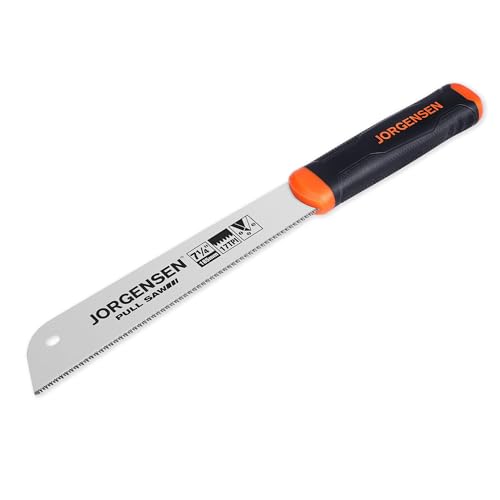 JORGENSEN Japanese Pull Saw
|
9.1/10 | Buy |
| Best Premium |
 Temple Tool Co. Japanese Flush Cut Saw
|
9.1/10 | Buy |
 SUIZAN Flush Cut Saw 5"
|
8.6/10 | Buy |
Frequently Asked Questions
Why does a Japanese flush cut saw cut on the pull stroke?
Pull-stroke action keeps the saw blade under tension during the cut, preventing the blade from buckling or bending under pressure. Because pulling stabilizes the metal, manufacturers can use an ultra-thin kerf blade that requires noticeably less cutting force than a conventional Western push saw. This tension produces narrower cuts, removes less stock, and yields glass-smooth surfaces on delicate woodworking joints.
What does zero tooth set mean on a flush cut saw?
Zero tooth set means the saw teeth do not bend outward past the thickness of the blade plate. On traditional saws, teeth alternate left and right to clear sawdust, which would immediately scratch finished surfaces during flush cuts. A specialized flush cut pull saw features flat ground teeth so the smooth side of the blade can rest directly against your workpiece without leaving ugly gouges.
What TPI count works best for hardwoods compared to softwoods?
Hardwoods generally require a higher tooth density, typically between 18 and 25 TPI (teeth per inch), for clean crosscuts without tear-out. Softwoods cut faster with a slightly coarser 14 to 17 TPI configuration that clears fibrous chips without clogging. Many double-edge saws combine both profiles on a single blade, giving you versatile teeth tailored for oak, maple, pine, and spruce.
Can flexible SK5 steel blades bend permanently during flush cuts?
No, high-grade SK5 Japanese steel is engineered with exceptional elasticity to spring back flat after gentle bending. While you can lightly flex the blade plate flat against a surface to clear handle clearance, excessive force or aggressive twisting can kink the metal. Applying light pressure on the pull stroke protects the blade integrity and keeps your cuts true.
Are blades on the best japanese flush cut saw replaceable?
Blade replacement depends entirely on the specific saw model and handle mounting design. Saws like the Jorgensen models feature convenient screw-retention handles that allow quick blade swaps when the teeth wear down. Traditional artisan saws, including select SUIZAN models, use fixed blades with induction-hardened teeth that maintain edge sharpness for years before needing tool replacement.
How do you prevent surface scratching when flush cutting dowels?
Placing a thin scrap piece of paper, painter tape, or a 0.010-inch plastic shim underneath the blade protects pre-finished lumber from light friction. Once the protruding peg or tenon is cut 99 percent through, you can finish the cut and sand the remaining micro-fraction perfectly flush. This proven workshop method ensures your 2026 cabinetry projects stay pristine.
About the author
Phil Harrington is an astronomy educator, author, and experienced optical equipment reviewer with decades of experience exploring the night sky. He has written extensively about telescopes, binoculars, and astronomical observation, combining technical knowledge with practical guidance that helps astronomy enthusiasts understand and select suitable observing equipment.