
Best Crosscut Saw for Woodworking of 2026 for Precision Cuts
Best Crosscut Saw For Woodworking options for November 2026 prevent splintered tear-out and blade drift. Compare top pull saws and push saws for accurate cuts.
 By Thomas Gaige
Updated October 2, 2026
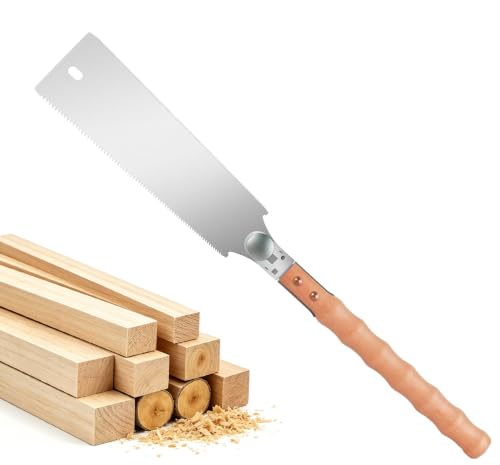
Ragged tear-out across dense grain lines ruins fine furniture joints faster than almost any workshop mistake. Blade deflection often pulls hand cuts off a square layout mark, leaving frustrating gaps that no amount of clamping pressure can hide. Selecting the best crosscut saw for woodworking requires checking tooth geometry, plate thickness, and kerf width to match your specific lumber dimensions. Traditional western push designs with heavy spines contrast sharply with ultra-thin Japanese pull blades that tension under cutting force. Careful analysis of manufacturer tooth profiles and verified woodworker feedback indicates that balanced plate tension delivers the straightest cross-grain cuts in cabinet timber.
High-precision crosscutting demands a saw that tracks smoothly without binding midway through seasoned oak or maple. Hand saws featuring triple-ground teeth and high-frequency hardening slice through cross-grain fibers rather than tearing them away. Thin kerfs reduce sawdust waste while lowering physical cutting fatigue on long shop days. Evaluating specs like tooth pitch, taper-ground saw plates, and handle ergonomics ensures clean lines on every pass. Investing in reliable cutting gear gives you predictable joint fits on every build.
| Award | Product | TGH Score About TGH ScoreThe TGH Score is our own rating from 0 to 10, based on performance, design and build, ease of use, and value. It reflects independent research and is never influenced by manufacturers, retailers, or affiliate commissions. Learn more › | |
|---|---|---|---|
| Best Overall |
welltoy 10-Inch Japanese Pull Saw
|
8.9/10 | Buy |
| Best Premium |
 SUIZAN 9.5-Inch Dozuki Dovetail Japanese Pull Saw |
8.9/10 | Buy |
 Disston D8 26-Inch Cross Cut Hand Saw |
8.6/10 | Buy | |
| Best Value |
 SUIZAN 7-Inch Ryoba Double Edge Japanese Pull Saw |
8.4/10 | Buy |
 SUIZAN 9.5-Inch Ryoba Double Edge Japanese Pull |
8.4/10 | Buy | |
| Best Budget |
 VPQZUPG 6-Inch Japanese Pull Saw |
8.3/10 | Buy |
 HAUTMEC 14-Inch Hand Saw Review |
8.3/10 | Buy | |
 Spear & Jackson 22-Inch 10 PPI Skew Back |
8.3/10 | Buy | |
 Taytools Lynx 14-Inch Tenon Saw by Thomas Flinn |
8.1/10 | Buy | |
 RUITOOL 6-Inch Japanese Ryoba Pull Saw |
8.0/10 | Buy |
welltoy 10-Inch Japanese Pull Saw
This 10-inch double-edge Japanese pull saw features an SK5 spring steel blade with gradient rip teeth on one side and an 18 TPI crosscut edge on the other. It offers woodworkers and DIY remodelers clean joinery cuts, flush-trim flexibility, and steady manual control at an accessible price point.
Pros
- Dual-sided blade covers both fast rough ripping and clean, splinter-resistant crosscuts.
- Flexible SK5 blade plate allows flush trimming flush to finished surfaces.
- Textured beech handle with bamboo-joint profile provides solid grip ergonomics.
- Triple-ground teeth track straight and cut efficiently on the tensioned pull stroke.
- Includes a bonus 4-inch drywall jab saw for wallboard and rough utility cuts.
Cons
- Thin, flexible blade can kink if pushed forward aggressively into a bound cut.
- Lacks the rigid spine of a Dozuki saw for ultra-deep, perfectly guided joinery cuts.
- Impulse-hardened teeth cannot be sharpened with standard triangular saw files.
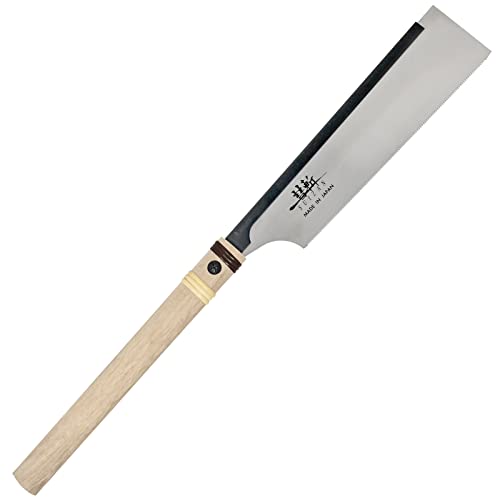
SUIZAN 9.5-Inch Dozuki Dovetail Japanese Pull Saw
The SUIZAN 9.5-inch Dozuki pull saw pairs an ultra-thin 0.012-inch Japanese steel plate with a dense 25 TPI crosscut tooth pattern, creating an exceptionally clean 0.02-inch kerf. It is an outstanding hand tool for cabinetmakers, finish carpenters, and woodworkers cutting precise dovetails, tenon shoulders, and delicate trim.
Pros
- Ultra-thin 0.02-inch kerf removes minimal material and requires far less cutting effort than Western-style push saws
- Fine 25 TPI crosscut tooth configuration yields remarkably smooth, splinter-free surfaces in hardwoods and softwoods alike
- Crafted in Japan with authentic Japanese tool steel for dependable blade flatness and sharp tooth profiles
- Featherweight 0.42-pound build allows effortless guidance along marked layout lines without hand strain
Cons
- Extremely thin 0.012-inch steel plate can bend or kink if forced forward aggressively on the push return stroke
- Dense 25 TPI tooth pitch cuts slowly in deep rip cuts compared to dedicated ryoba rip saws
- Rigid Dozuki backer spine limits maximum cutting depth on wide stock and panel work
Disston D8 26-Inch Cross Cut Hand Saw
The Disston D8 26-inch hand saw combines a taper ground steel blade with an American Black Walnut handle for smooth, binding-free manual crosscutting. It is an exceptional choice for fine furniture makers, cabinetmakers, and traditional hand tool woodworkers who value classic sawing efficiency.
Pros
- Taper ground blade significantly reduces friction and binding without requiring excessive tooth set
- Custom carved American Black Walnut handle provides classic D8 ergonomics and comfortable control
- 10 TPI crosscut configuration delivers clean, tear-resistant cuts across hardwood grain
- Full 26-inch length provides excellent stroke efficiency compared to compact hand saws
Cons
- Traditional carbon steel teeth require periodic sharpening with needle files rather than disposable blade swaps
- Large 32-inch overall footprint requires dedicated saw till storage and does not fit compact toolboxes
- Carries a premium price point compared to mass-market impulse-hardened utility saws
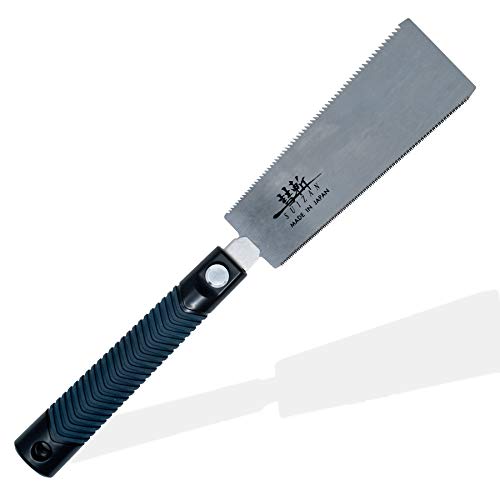
SUIZAN 7-Inch Ryoba Double Edge Japanese Pull Saw
The SUIZAN 7-inch Ryoba double edge pull saw combines dedicated rip teeth and a fine 19 TPI crosscut edge with an ultra-thin 0.03-inch kerf for clean, controlled cuts in joinery and trim. It is an excellent manual addition for cabinetmakers, finish carpenters, and DIY woodworkers who value precise tracking and minimal material waste.
Pros
- Dual-sided blade allows seamless transitions between ripping along the grain and fine 19 TPI crosscutting.
- Ultra-thin 0.03-inch kerf significantly reduces cutting effort and leaves smooth cut surfaces in furniture woods.
- Pull-action cutting mechanism naturally tensions the steel blade to improve cutline tracking on fine layout marks.
- Lightweight 0.37-pound design reduces wrist and forearm fatigue during extended bench joinery sessions.
- High-grade Japanese steel construction provides sharp, durable tooth profiles out of the box.
Cons
- Thin 0.02-inch blade body will kink or buckle if forward pushing pressure is applied during use.
- Compact 7-inch blade length requires more strokes and time when attempting to crosscut thicker dimensional lumber.
- Delicate fine-tooth profile is susceptible to chipping if it strikes hidden nails, hardened glue, or dense knots.
SUIZAN 9.5-Inch Ryoba Double Edge Japanese Pull
The SUIZAN 9.5-Inch Ryoba Japanese Pull Saw features high-grade Japanese steel and a dual-edge design with 9 TPI for rip cuts and 15 TPI for clean crosscuts. Operating on the pull stroke with an ultra-thin 0.03-inch kerf, this lightweight hand saw is an excellent choice for cabinetmakers, finish carpenters, and woodworkers seeking clean, controlled joinery.
Pros
- Dual 9 TPI and 15 TPI tooth patterns eliminate the need to switch between separate rip and crosscut hand saws
- Thin 0.03-inch kerf requires noticeably less physical effort to pull through hardwoods and softwoods
- Lightweight 0.44-pound construction enables precise control on fine joinery and detailed trim work
- Long hand-wrapped handle allows varied grip positions for maximum leverage or delicate sighting
Cons
- Requires manual assembly to mount the blade securely into the handle prior to first use
- Thin 0.02-inch steel blade is susceptible to bending or tooth damage if subjected to aggressive push strokes or twisting
- Traditional hand-wrapped handle may show natural aesthetic irregularities and superficial surface checks
VPQZUPG 6-Inch Japanese Pull Saw
The VPQZUPG 6-inch Japanese pull saw features an SK5 steel blade with dual 14 and 17 TPI cutting edges, offering excellent manual control on the pull stroke for flush-trimming dowels and small joinery. It serves as an accessible, compact cutting tool for hobbyists, craft makers, and detail woodworkers.
Pros
- Dual 14 and 17 TPI cutting edges provide versatility for both coarse and fine hand cuts
- Pull-cut design requires less starting force and tracks accurately along penciled lines
- SK5 steel blade delivers good resilience and edge retention for small-scale wood projects
- Lightweight wood handle and compact 12-inch total length offer easy control in tight spaces
Cons
- Compact 6-inch blade length is not designed for thicker dimensional framing lumber or deep rip cuts
- Thin blade plate requires proper pull technique to avoid bending or binding on forward strokes
- Fixed handle configuration does not include a tool-free quick-change replacement blade system
HAUTMEC 14-Inch Hand Saw Review
The HAUTMEC 14-Inch Base Hand Saw delivers reliable manual cutting performance with its 0.9mm rigid steel blade and impulse-hardened 11 TPI triple-ground teeth. It is an affordable, compact cutting tool ideal for homeowners, DIY remodelers, and plumbers needing clean cuts in lumber, PVC, and molding without hauling out power tools.
Pros
- 0.9mm blade thickness resists bowing significantly better than flimsy flexible pull saws
- 11 TPI triple-edge ground teeth deliver clean crosscut edges on molding and PVC
- Compact 15.75-inch overall length stores neatly in standard portable toolboxes
- Comfortable non-slip rubber grip provides solid control even with damp or sweaty hands
- Includes a protective tooth guard for safer storage in tool bags
Cons
- 14-inch blade length limits stroke efficiency when crosscutting wide timbers or framing lumber
- High-frequency hardened teeth cannot be resharpened with conventional saw files once dull
- Fine 11 TPI tooth spacing can pack with resinous sawdust when cutting wet or green wood
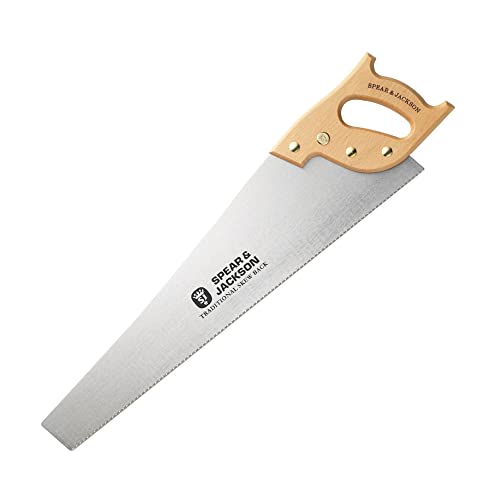
Spear & Jackson 22-Inch 10 PPI Skew Back
The Spear & Jackson 22-Inch Skew Back Hand Saw features resharpenable, precision cross-ground universal teeth configured at 10 PPI for ripping and crosscutting wood-based materials. With its lightweight 1.28-pound profile and friction-reducing skew back design, it offers a dependable manual option for workshop woodworkers and DIY builders.
Pros
- Universal tooth pattern handles both crosscutting and rip cutting tasks
- Teeth can be resharpened with standard saw files rather than discarded when dull
- Skew back blade geometry improves tool balance and helps reduce friction in deep kerfs
- Lightweight 1.28-pound body offers comfortable maneuverability and control
Cons
- Manual cutting requires physical effort and takes more time than corded or cordless power saws
- Periodic resharpening requires dedicated saw filing skills and appropriate maintenance tools
- General-purpose 10 PPI tooth spacing is slower for rough ripping than dedicated coarse-pitch rip saws
Taytools Lynx 14-Inch Tenon Saw by Thomas Flinn
Crafted in Sheffield, England, by Thomas Flinn, this 14-inch Lynx tenon saw pairs a taper-ground alloy spring steel blade with a heavy folded brass spine for rigid, balanced joinery crosscuts. Delivering 3-1/8 inches of cutting depth under the back, it is an ideal back saw for cabinetmakers, furniture makers, and hand-tool woodworkers cutting precise tenon shoulders and joinery components.
Pros
- Heavy folded brass back tensions the blade for straight, vibration-free tracking
- Sheffield alloy spring steel plate is taper ground to minimize binding in deep cuts
- Substantial 3-1/8-inch clearance below the spine handles thick rails and large tenons
- Classic stained European beech handle fastened with durable brass button screws
- Fully resharpenable teeth can be maintained with standard saw files
Cons
- Factory crosscut tooth filing cuts noticeably slower when ripping tenon cheeks along the grain
- Spine design caps maximum cutting depth at 3-1/8 inches for through-cuts
- Non-plated spring steel requires periodic paste wax or oil to prevent surface rust
RUITOOL 6-Inch Japanese Ryoba Pull Saw
The RUITOOL 6-Inch Ryoba is a compact, double-edged Japanese pull saw featuring high-carbon SK5 steel and hardened triple-ground teeth for smooth flush trimming and precision joinery. It is an excellent, budget-friendly manual cutting tool for cabinetmakers, trim carpenters, and detail-oriented woodworkers.
Pros
- Dual tooth pitch layout provides dedicated 14 TPI rip and 17 TPI crosscut edges on one compact blade
- SK5 high-carbon steel flexes smoothly for flat flush cuts without immediately taking a permanent bend
- Hardened triple-edge teeth maintain sharp cutting points through dense hardwoods and end grain
- Lightweight 0.24-pound chassis provides clear tactile feedback for delicate trim carpentry and model making
Cons
- Compact 6-inch blade length limits stroke distance, making it unsuitable for thicker dimensional lumber
- Thin, flexible blade profile can bind or kink if pushed forward aggressively instead of pulled smoothly under tension
- High-frequency hardened teeth cannot be easily resharpened with conventional hand saw files once dulled
Frequently Asked Questions
What makes a crosscut saw different from a rip saw?
Crosscut saws feature knife-like teeth beveled on alternating sides designed to sever wood fibers across the grain cleanly. In contrast, rip saws use chisel-shaped teeth meant to peel along parallel grain lines. Using a rip tooth across the grain causes severe tear-out and splintering. For trim work and precision joinery, a dedicated crosscut tooth geometry leaves a glass-smooth edge on solid wood.
How many teeth per inch (TPI) are ideal on the best crosscut saw for woodworking?
A range between 14 and 25 TPI offers the best balance of cutting speed and clean crosscut edges. Finer joinery saws like a Dozuki saw utilize up to 25 TPI for hairline kerfs in delicate moldings. Coarser hand saws around 10 to 12 TPI clear sawdust quicker in thick dimensional stock. Matching tooth density to lumber thickness prevents tooth binding and tooth chatter during the stroke.
Why do Japanese pull saws cut cleaner crosscuts than Western push saws?
Japanese pull saws cut under pulling tension, allowing the blade plate to remain exceptionally thin without buckling. Thinner plates measure as slim as 0.3mm to 0.5mm, creating an ultra-narrow saw kerf that removes minimal wood material. Western push saws require thicker steel plates to resist bending on the forward thrust stroke. Less blade friction and narrower tooth set allow pull saws to deliver splinter-free crosscuts with minimal hand pressure.
What is the purpose of a reinforced brass or steel back on a crosscut saw?
A reinforced back stiffens the flexible blade plate to eliminate blade deflection and ensure dead-square cuts. Backed saws like a tenon saw or Dozuki dovetail saw keep the cutting edge rigidly aligned with your layout mark. The spine limits the maximum depth of cut to the blade plate height beneath the spine. For deeper crosscuts through wide lumber boards, an unbacked skew back hand saw or Ryoba saw is preferred.
Can you resharpen modern induction-hardened crosscut saw teeth?
No, induction-hardened and high-frequency quenched teeth are too hard for standard saw files to reshape. Most contemporary crosscut saws with hardened impulse teeth feature replaceable blades when the cutting edge dulls. Traditional spring steel plates, such as those found on classic Western saws, can be resharpened repeatedly with a triangular saw file and tooth set tool. Checking product specifications before purchase confirms whether the saw blade is resharpenable or disposable.
How do you stop a hand saw blade from wandering off a square crosscut line?
Establish a distinct starting kerf using light pull strokes guided by your thumb knuckle against the marked cut line. Aligning your forearm, wrist, and saw plate directly with the layout path prevents lateral twist. Let the saw teeth do the cutting work instead of forcing downward feed pressure into the kerf. Premium crosscut blades with a taper ground blade plate also reduce friction against timber walls to maintain a straight tracking path.
About the author

Thomas Gaige combines mechanical engineering knowledge with extensive hands-on construction experience. His background includes engineering, AutoCAD design, general contracting, residential and light-commercial construction, automotive restoration, cabinetry, fabrication, and workshop projects. This combination gives him a practical framework for evaluating tools based on engineering, performance, usability, and jobsite demands.