
Best Drill Bit for Composite Decking of 2026 for Clean Fastening
Prevent composite board mushrooming with the best drill bit for composite decking in October 2026. Clean countersinking stops surface marks on your deck fascia.
 By John Snow
Updated October 2, 2026
By John Snow
Updated October 2, 2026
Surface mushrooming and cracked composite boards cause constant headaches during outdoor deck construction. Standard twist bits chew up dense composite material, leaving raised rings around fastener heads that ruin the clean finish of your project. Securing trim and perimeter boards requires the best drill bit for composite decking designed to manage dense capped composites and seasonal thermal expansion without marring delicate surfaces. Before securing fascia, builders often focus on cutting deck boards cleanly to ensure tight butt joints. Pair that precise prep work with dedicated countersinking accessories to eliminate high fastener friction and prevent motor stalling on repetitive runs.
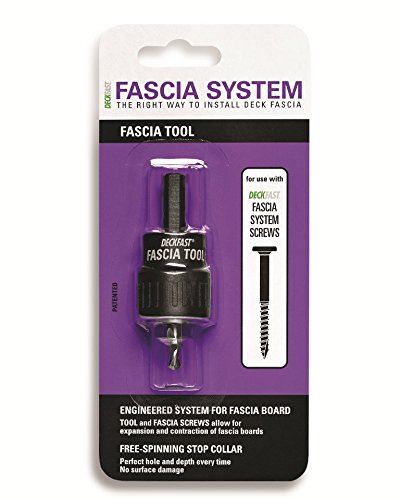
Manufacturer specifications indicate that composite fascia requires oversized pilot holes to let boards slide smoothly during hot and cold temperature shifts. The Starborn Deckfast Fascia Tool addresses this challenge by pre-drilling an intentional clearance hole while setting the countersink depth simultaneously. User feedback highlights that free-spinning stop collars protect capped board faces from burn marks, friction scuffs, and surface gouges. Relying on an engineered countersink setup ensures flush fastener seating across every joist connection without overloading your cordless drill driver or stripping expensive color-matched screws.
| Award | Product | TGH Score About TGH ScoreThe TGH Score is our own rating from 0 to 10, based on performance, design and build, ease of use, and value. It reflects independent research and is never influenced by manufacturers, retailers, or affiliate commissions. Learn more › | |
|---|---|---|---|
| Best Overall |
Starborn Deckfast Fascia Tool
|
8.1/10 | Buy |
Frequently Asked Questions About Composite Deck Drilling
Why do standard wood drill bits fail on composite fascia boards?
Standard twist drill bits lack dedicated clearance for dense composite material and generate excessive heat that melts plastic caps. Standard bits also cut standard-diameter holes that do not allow composite boards to expand and contract under sunlight. Using a dedicated tool with an oversized countersink bit creates enough room for thermal movement, preventing board buckling and unsightly surface cracking over time.
Should you use an impact driver or a drill driver with the Best Drill Bit For Composite Decking?
A standard cordless drill driver with an adjustable mechanical clutch is the better choice for pre-drilling and countersinking. Impact drivers deliver rapid concussive pulses that can jar stop collars loose and damage delicate fascia surfaces. Setting your drill driver to high speed and drilling smoothly gives you full control over the stop collar without marring the composite cap.
How does a spinning stop collar protect composite decking?
An independently spinning stop collar stops rotating the exact instant it contacts the deck board face while the internal bit continues spinning to finish the hole. This mechanism prevents friction burn marks, scratches, and gouges on capped composite materials. It guarantees uniform countersink depth across every single fastener location without relying on visual guesswork.
Can you use standard deck screws with a composite fascia countersink bit?
No, you should pair specialized fascia countersink tools with purpose-built fascia screws that match the countersink profile. The Starborn system specifically pairs with Deckfast fascia screws to accommodate the oversized pilot hole. Installing standard deck fasteners can cause screws to bind or snap when the composite material moves during temperature changes.
What chuck size is required to run composite countersink bits?
A standard 3/8-inch or 1/2-inch keyless drill chuck accommodates these hex-shank countersinking accessories without issue. Most modern 18V or 20V cordless drill platforms provide ample torque and chuck grip to prevent bit slippage during continuous drilling. Proper alignment is just as important as cutting support posts flush when framing a stable substructure.
What thickness of composite fascia does this tool support?
This specialized tool is engineered to support composite and PVC fascia boards ranging from 1/2 inch to 3/4 inch thick. Product documentation specifies this range to ensure the pilot hole and countersink pocket align perfectly with the joist underneath. Operating outside this board thickness range may cause fasteners to sit too shallow or drive too deep into the rim joist.
About the author
John Snow is an established outdoor journalist and equipment editor with decades of experience covering technical innovations, product evaluations, and outdoor equipment. His background in investigative reporting and technical journalism provides a strong foundation for explaining complex product specifications and helping consumers understand equipment performance.