Best Drill for Concrete of 2026 for Tough Masonry
Drilling into cured aggregate demands raw impact energy. Explore the best drill for concrete in October 2026 for heavy masonry jobs.
 By Tony Flanders
Updated October 2, 2026
By Tony Flanders
Updated October 2, 2026
Tackling Cured Slab Resistance Without Motor Strain
Hammering standard carbide bits into dense foundation walls often results in smoking motors, dull cutters, and relentless wrist kickback. Standard drill drivers simply don’t have the electro-pneumatic impact mechanisms needed to shatter hard aggregate without overheating. That is why identifying the best drill for concrete requires looking closely at electro-pneumatic impact energy, solid motor specs, and variable speed control. By analyzing motor construction, chuck durability, and manufacturer documentation, evaluating the right tool becomes far more predictable. Pairing heavy masonry boring with structural framing tasks also demands the right gear, much like selecting proper equipment when cutting planks of wood to prep baseplates.
Dedicated rotary hammers separate themselves from traditional hammer drills through mechanical pistons that deliver genuine impact ratings measured in Joules rather than light surface vibrations. An SDS-Plus chuck mechanism locks bits firmly in place, eliminating the frustrating bit slippage and shank scarring common in standard three-jaw keyed chucks. A dependable safety clutch further prevents violent tool rotation if a masonry bit snags on rebar embedded deep inside a poured slab. Cordless brushless designs now rival corded motors, giving you the freedom to set wedge anchors and tapcon fasteners across job sites without dragging heavy extension cords. Evaluating genuine motor amperage, impact energy, and anti-vibration features will help you pick a model that handles relentless aggregate drilling comfortably.
| Award | Product | TGH Score About TGH ScoreThe TGH Score is our own rating from 0 to 10, based on performance, design and build, ease of use, and value. It reflects independent research and is never influenced by manufacturers, retailers, or affiliate commissions. Learn more › | |
|---|---|---|---|
|
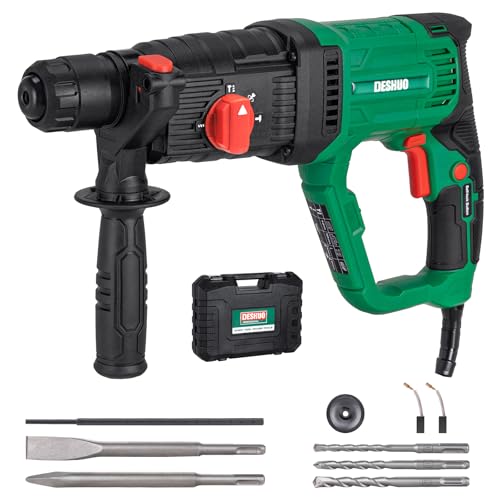
Deshuo 1" SDS-Plus Lightweight Rotary Hammer Drill
|
8.4/10 | Buy | |
 ENEACRO 1-1/4 Inch SDS-Plus 13 Amp Heavy Duty
|
8.8/10 | Buy | |
| Best Overall |
 DEWALT 20V MAX SDS Plus 1 Inch Cordless Rotary
|
9.1/10 | Buy |
| Best Premium |
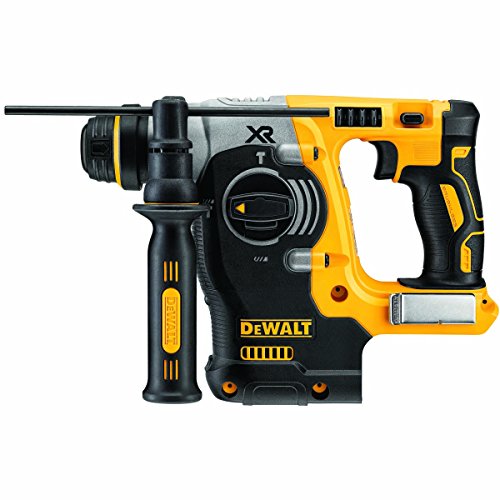 DEWALT 20V MAX SDS Rotary Hammer Drill, Cordless
|
8.4/10 | Buy |
| Best Value |
 DEWALT 20V MAX XR® Brushless Cordless 1/2 in.
|
8.3/10 | Buy |
 DEWALT SDS Rotary Hammer Drill
|
8.0/10 | Buy | |
| Best Budget |
 Hammerhead 7.5-Amp 1/2 Inch Variable Speed Hammer
|
8.8/10 | Buy |
Frequently Asked Questions
What is the difference between a standard hammer drill and an SDS-Plus rotary hammer?
An SDS-Plus rotary hammer uses an electro-pneumatic piston to deliver heavy impact energy, while a standard hammer drill relies on spinning friction plates that create rapid but shallow vibrations. This internal piston allows rotary hammers to blast through hard aggregate significantly faster. Rotary hammers also feature slotted SDS shanks that prevent bit slippage under high torque. For boring large anchor holes or tackling poured slabs, an SDS-Plus platform delivers substantially more power with less physical strain.
Can a 20V Max cordless drill handle solid concrete foundation walls?
Yes, 20V Max cordless rotary hammers can easily drill into solid concrete when equipped with brushless motors and dedicated SDS-Plus chucks. High-efficiency brushless motors deliver up to 2.6 Joules of impact energy, matching corded masonry tools. Standard cordless drill drivers with basic hammer modes struggle in cured foundation slabs and are better suited for brick mortar or cinder block. Pairing the tool with a high-capacity lithium-ion pack ensures sustained power without voltage drop.
Why does a drill bit bind and kick back during masonry drilling?
Bit binding happens when the drill tip strikes rebar, catches loose aggregate fragments, or clogs with accumulated concrete dust inside the borehole. When the bit stops abruptly, motor torque transfers directly into the operator’s wrists. Tools equipped with a mechanical safety clutch or electronic anti-rotation control protect you by immediately disengaging drive power. Clearing debris by pulling the bit back periodically keeps flutes clean and prevents jamming.
What impact energy rating in Joules is recommended for concrete anchors?
An impact energy rating between 2.0 and 3.0 Joules is ideal for drilling concrete anchors up to one inch in diameter. Lighter tasks and small tapcon fasteners require only 1.5 Joules, while heavy demolition chipping demands 5.0 Joules or more. Tools delivering around 2.6 Joules provide the best balance of penetration speed and manageable handling. Higher impact energy lets the tool pulverize tough aggregate so you avoid excessive downward pressure.
Does drilling concrete require specialized masonry drill bits?
Yes, drilling concrete requires carbide-tipped masonry bits designed specifically to endure intense percussion and heat. Standard steel twist bits will immediately dull and melt against dense aggregate. For outdoor construction where masonry anchors support posts, using an electric saw to cut fence posts alongside your drilling setup keeps building lines square. Always match your rotary hammer with quality SDS-Plus bits for clean anchor holes and longer tool life.
About the author
Tony Flanders is an experienced astronomy writer and observer with a background in mathematics, technical research, and science communication. His extensive observing experience includes exploring deep-sky objects through different telescope configurations. He specializes in making complex astronomical concepts accessible to beginners and experienced observers alike.