
Best Hand Dovetail Saw Review of 2026 For Clean Joints
Cut crisp joinery without tear-out using this Best Hand Dovetail Saw Review updated for October 2026 with high-tension pullsaws and stiff backs.
 By Phil Harrington
Updated October 2, 2026
By Phil Harrington
Updated October 2, 2026
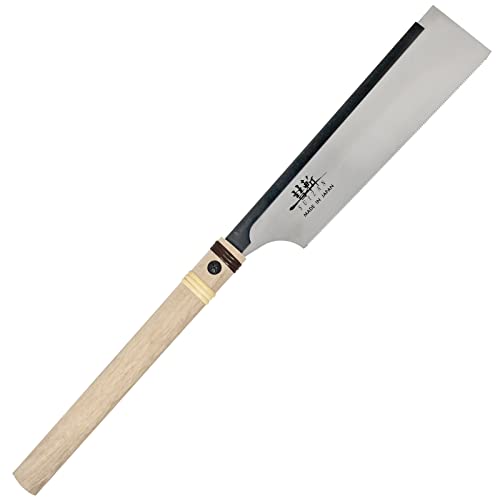
Sloppy dovetail pins and splintered tails usually trace back to an aggressive blade wandering off a scribe line. Fine woodworking joinery requires ultra-thin kerfs and rigid blade control so mating pieces slide together without gaps or wood filler. Researching this Best Hand Dovetail Saw Review reveals that Japanese pull saws and reinforced spine backs make all the difference when cutting hardwood drawer sides or delicate pins. High tooth counts and pull-stroke mechanics keep the steel blade in constant tension, preventing unwanted flex that ruins tight joints.
Precision dovetail work relies heavily on blade tension, tooth geometry, and cutting control. Thin kerf blades like a 0.012-inch blade thickness with up to 25 TPI remove minimal stock while tracking straight along knife walls. Whether you work with dense oak, maple, or softwood pine, matching tooth count to grain direction ensures crisp shoulder cuts without surface tear-out. Based on manufacturer specifications and woodworker feedback, having the right back-stiffened saw turns tedious chisel cleanup into effortless hand-cut joinery.
| Award | Product | TGH Score About TGH ScoreThe TGH Score is our own rating from 0 to 10, based on performance, design and build, ease of use, and value. It reflects independent research and is never influenced by manufacturers, retailers, or affiliate commissions. Learn more › | |
|---|---|---|---|
| Best Overall |
SUIZAN Dozuki Dovetail Saw 9.5" Cross Cut
|
8.9/10 | Buy |
| Best Budget |
 JORGENSEN 10" Dovetail Reversible Saw
|
8.0/10 | Buy |
 RUITOOL Japanese Hand Saw 6 Inch Double Edge Ryoba
|
8.0/10 | Buy | |
| Best Value |
 SUIZAN Dozuki Dovetail Saw 6" Cross Cut
|
8.0/10 | Buy |
Frequently Asked Questions
Why do woodworkers prefer Japanese pull saws for cutting dovetails?
Pull saws keep the steel blade in tension during each stroke, allowing for much thinner blades that track straighter without buckling. Traditional push saws require thicker plates to resist bending on forward strokes, which widens the kerf and demands more cutting effort. With a pull saw like a SUIZAN Dozuki Dovetail Saw, the 0.012-inch blade thickness glides effortlessly through hardwood lines. This minimal kerf creates clean, razor-sharp shoulder lines with virtually no tear-out.
What TPI count works best for fine dovetail joinery in 2026?
A fine tooth pitch between 17 TPI and 25 TPI delivers optimal cut smoothness for precision dovetails. Higher tooth counts, like 25 TPI crosscut blades, take smaller bites that leave smooth surfaces on delicate pins and tails. Coarser tooth counts around 14 TPI cut faster in softwoods but risk splintering fragile edges. Selecting a fine pitch saw from this Best Hand Dovetail Saw Review prevents chatter and ensures tight, gap-free wood joints.
How does a rigid steel spine back benefit dovetail cutting accuracy?
A reinforced steel spine locks the ultra-thin blade flat, stopping lateral deflection along deep cuts. Ultra-thin plates cut fast but can bend if unsupported across their upper edge. Saws featuring a rigid back, such as a traditional Dozuki or back-stiffened jamb saw, maintain a square path directly down your knife line. This stiffness guarantees perpendicular cuts across drawer sides without drifting off plumb.
What is the difference between a Dozuki saw and a Ryoba saw for dovetails?
Dozuki saws feature a stiff spine dedicated to shallow, ultra-precise cuts, while Ryoba saws have dual-toothed edges without a spine for unrestricted cutting depth. The reinforced back on a Dozuki limits cutting depth to roughly two inches, which is ideal for drawer boxes and carcass joinery. A Ryoba, such as the RUITOOL Japanese Hand Saw 6 Inch Double Edge Ryoba, offers 17 TPI crosscut teeth on one edge and 14 TPI rip teeth on the other. This double edge provides versatility for flush cuts and deeper timber ripping.
Can a reversible jamb saw work effectively for fine cabinet dovetails?
Reversible jamb saws can cut basic joints, but their coarser 13 TPI blades and thicker 0.6mm plates are better suited for trim and flush cuts. Models like the JORGENSEN 10″ Dovetail Reversible Saw excel at undercutting door frames and flush trimming flooring against tight baseboards. However, fine cabinet pins require a much thinner kerf to maintain tight tolerances without chipping delicate edges. For fine furniture, high-TPI pull saws provide the micro-thin precision necessary for tight joint fitment.
How do you prevent thin dovetail saw blades from binding in dense hardwoods?
Proper sawing technique requires letting the weight of the saw do the work without downward muscle pressure. Pull saws cut strictly on the draw stroke, so pushing down hard forces the thin teeth to jam into the wood grain. Establishing a shallow starter kerf along the waste side of your line guides the blade straight down without friction. Keeping the saw plate lightly lubricated with camellia oil or paste wax also stops pitch buildup and friction binding in maple and oak.
About the author
Phil Harrington is an astronomy educator, author, and experienced optical equipment reviewer with decades of experience exploring the night sky. He has written extensively about telescopes, binoculars, and astronomical observation, combining technical knowledge with practical guidance that helps astronomy enthusiasts understand and select suitable observing equipment.