
Best Handsaw for Cutting Straight of 2026 For Clean Cuts
Stop blade wandering on wood cuts with the best handsaw for cutting straight picks updated for October 2026 to guarantee square edges and joint accuracy.
 By Andrew McKean
Updated October 2, 2026
By Andrew McKean
Updated October 2, 2026

Wandering cuts and skewed kerfs can quickly ruin expensive trim, timber joints, and square framing. When a flexible blade drifts off your pencil line, salvaging the workpiece often won’t happen without endless rasping, sanding, or scrapping the stock entirely. Getting a true 90-degree cut depends heavily on blade plate stiffness, tooth geometry, and whether the tool operates on a push stroke or pull stroke. Selecting the best handsaw for cutting straight requires balancing blade thickness, tooth count (TPI), and comfortable handle alignment to keep your line of sight unobstructed.
A rigid spine or thicker high-carbon steel plate, such as 65Mn or hardened SK5 steel, resists bowing under feed pressure, while triple-ground teeth slice wood fibers cleanly instead of tearing them. Pull-cut Japanese saws naturally keep the blade under tension, which prevents buckling and minimizes kerf deviation on delicate crosscuts. Meanwhile, traditional hardpoint push saws with 0.9 mm plates provide the necessary backbone for square dimensional lumber trimming. Examining manufacturer specifications, tooth hardness ratings, and real workshop feedback helps identify which blade profile delivers dependable accuracy for your cutting projects.
| Award | Product | TGH Score About TGH ScoreThe TGH Score is our own rating from 0 to 10, based on performance, design and build, ease of use, and value. It reflects independent research and is never influenced by manufacturers, retailers, or affiliate commissions. Learn more › | |
|---|---|---|---|
| Best Overall |
SS SHOVAN Japanese Hand Saw
|
9.1/10 | Buy |
| Best Budget |
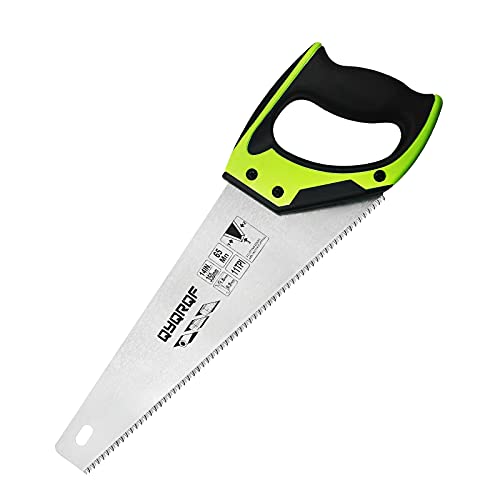 14 in. Pro Hand Saw, 11 TPI Fine-Cut Soft-Grip
|
9.1/10 | Buy |
| Best Premium |
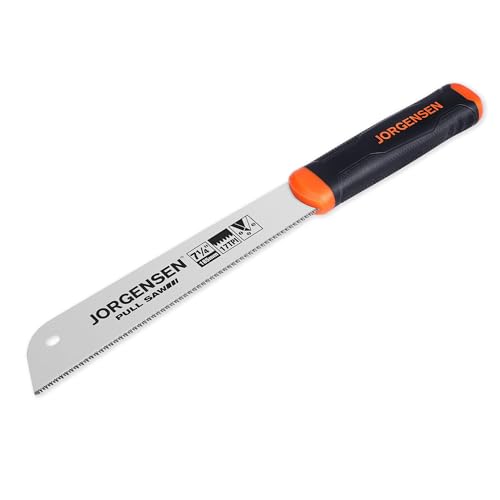 JORGENSEN Japanese Pull Saw
|
9.1/10 | Buy |
 REXBETI 11-Inch Folding Saw, Heavy Duty Hand Saw
|
8.6/10 | Buy | |
 KATA 10 Inch Mini Hacksaw for Metal Cutting
|
7.8/10 | Buy |
Frequently Asked Questions
Why does a handsaw blade wander off a straight line during a cut?
Blade wandering typically happens due to excessive downward pressure, incorrect tooth set, or a flexible blade plate that buckles on push strokes. Forcing the cut rather than letting the teeth work causes the thin steel to flex away from the layout line. Using a saw with adequate plate thickness or switching to a pull stroke keeps the steel in tension, which significantly reduces lateral drift.
Does a Japanese pull saw cut straighter than a traditional Western push saw?
Yes, Japanese pull saws often track straighter for fine cuts because the cutting action pulls the blade into natural tension. Pull-stroke tension allows manufacturers to make the SK5 steel blade much thinner without the risk of buckling. This thinner kerf removes less material and requires less feed effort, helping woodworkers maintain tight square alignment on precision trim and joinery.
What TPI is optimal for cutting straight through wood?
A tooth count between 11 TPI and 17 TPI provides the best balance of speed and directional control for straight cutting. Lower counts like 7 TPI cut fast but leave rough edges and can wander easily on hardwoods, while higher counts like 17 TPI or 24 TPI cut slowly but track true with zero tear-out. For standard crosscutting, an 11 TPI to 14 TPI blade offers reliable tracking across the grain.
How does blade thickness affect cut accuracy and blade deflection?
Thicker saw blades provide greater rigidity, which prevents the plate from bowing sideways during aggressive push cuts. A blade measuring around 0.9 mm, like those found on heavy-duty hand saws, resists flex even when pushing through dense framing lumber or thick plastic pipe. Thinner blades cut faster, but they require steady guide hands or reinforced backs to prevent wavy kerfs.
Can a folding hand saw make precise, square cuts in dimensional lumber?
No, folding hand saws are primarily designed for aggressive pruning, camping, and rough branch trimming rather than square joinery cuts. Most folding saws feature coarse 7 TPI staggered teeth and flexible blades engineered to clear wet wood chips quickly. While they can cut through 2×4 lumber in a pinch, the aggressive tooth pattern often wanders off a marked line.
How can you maintain a straight cut when starting a handsaw kerf?
Guiding the blade against your thumbnail or a scrap wood guide block on the waste side of the line establishes an accurate starter kerf. Drawing the blade backward lightly for two or three strokes creates a dedicated channel before you apply normal sawing pressure. Once the teeth seat inside this track, aligning your forearm directly behind the blade plate prevents steering errors.
About the author
Andrew McKean is an experienced outdoor journalist and optics specialist with extensive experience evaluating binoculars, spotting scopes, and other outdoor optical equipment. His work combines practical field testing with detailed technical analysis, helping readers understand optical performance, durability, and the features that matter when comparing equipment.