
Best Saw for PVC Wall Panels of 2026 For Clean Cuts
Get clean edges using the best saw for pvc wall panels in November 2026. Review top jab saws and hole cutters for precise remodels.
 By Kenny Koehler
Updated October 2, 2026

Cracked edges and chipped tongue-and-groove joints quickly turn a smooth bathroom or garage renovation into a frustrating job. Rough saw blades often snag hollow plastic cladding, leaving jagged burrs that refuse to seat neatly inside corner trims. Selecting the best saw for pvc wall panels requires matching tooth geometry and tool control to the brittle nature of extruded synthetic sheets. Hand jab saws with high teeth-per-inch counts and specialized hole cutters make clean penetrations for plumbing lines and electrical gang boxes without shattering fragile panel faces.
Careful analysis of blade tooth design, bi-metal construction, and user feedback reveals that fine-tooth hand tools offer the precision needed for tight cutouts. Whether you need to notch around shower valves or trim edge sheets flush to a stud wall, rigid blades with deep chip-clearing gullets prevent melting and binding. Using the right cutting equipment keeps your decorative panels intact, reduces costly material waste, and delivers seamless seams across every wall surface.
| Award | Product | TGH Score About TGH ScoreThe TGH Score is our own rating from 0 to 10, based on performance, design and build, ease of use, and value. It reflects independent research and is never influenced by manufacturers, retailers, or affiliate commissions. Learn more › | |
|---|---|---|---|
| Best Overall |
Goldblatt Folding Drywall Saw
|
9.1/10 | Buy |
| Best Premium |
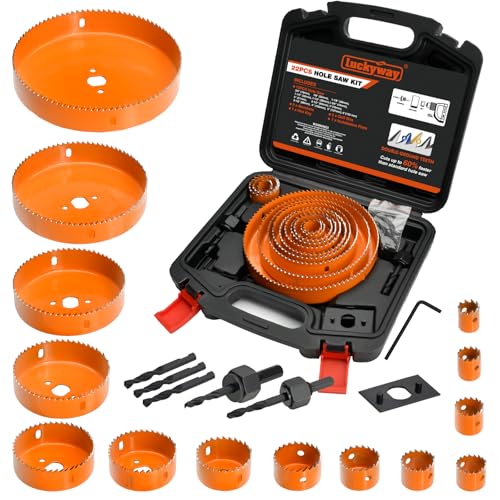 Luckyway 24-Piece Hole Saw Kit (3/4" to 6") |
8.4/10 | Buy |
| Best Budget |
 IRWIN Drywall Jab Saw (2014102) |
8.1/10 | Buy |
 TIFICAL 8-Piece Carbon Steel Hole Saw Kit |
8.1/10 | Buy |
Goldblatt Folding Drywall Saw
The Goldblatt Folding Drywall Saw features a 5.2-inch bi-metal blade with 8 TPI triple-ground teeth and a secure push-button folding lock. It provides smooth bi-directional cutting and safe tool-bag carry for electricians, drywallers, and remodelers.
Pros
- Triple-ground 8 TPI teeth cut cleanly on both push and pull strokes
- Push-button lock prevents unexpected closure during aggressive plunge cuts
- Hardened piercing tip punches through drywall core without pre-drilling
- Foldable design protects hands and tool bags from exposed sharp teeth
Cons
- Manual cutting through dense plywood requires noticeable physical effort compared to a power tool
- 5.2-inch blade reach may be limited when cutting through thick double-layer drywall assemblies
- Drywall dust and gypsum residue can collect inside the folding hinge over time, requiring periodic cleaning
Luckyway 24-Piece Hole Saw Kit (3/4" to 6")
This comprehensive 24-piece carbon steel hole saw kit provides 14 hole saw sizes up to 6 inches with a 1-inch cutting depth, making it a practical and versatile solution for drywall, thin PVC, and softwood drilling. Ideal for DIYers, electricians, and remodelers tackling recessed lighting cutouts and pipe rough-ins.
Pros
- Wide selection of 14 distinct hole saw sizes from 3/4 inch up to 6 inches covers standard lighting and plumbing dimensions
- Complete accessory setup includes two mandrels, five replacement pilot drill bits, two pressure plates, and a hex wrench
- Wide side slots make extracting stubborn drywall and wood plugs straightforward using a flathead screwdriver
- Engineered tooth profile cuts smoothly through softwoods, plasterboard, drywall, and thin plastic panels
Cons
- Maximum cutting depth of 1 inch cannot clear standard 2x4 dimensional framing lumber in a single pass
- Carbon steel teeth are limited to softwoods, plastics, and drywall, and are not designed for hardwoods, metal studs, or masonry
- Requires installing the supplied pressure plate on cups over 2 inches to avoid damaging the mounting interface under load
IRWIN Drywall Jab Saw (2014102)
The IRWIN 2014102 Standard Drywall Jab Saw combines a rigid blade and bi-ground teeth with a traditional hardwood handle for fast manual rough-ins. It is an affordable, dependable hand tool for electricians, plumbers, and remodelers needing quick cutouts in drywall and ceiling tiles.
Pros
- Rigid blade resists excessive flexing during manual plunge entries
- Bi-ground teeth clear drywall gypsum and paper backing efficiently
- Classic hardwood handle offers comfortable balance and firm hand placement
- Compact, lightweight build fits easily into pouches and service bags
Cons
- Manual cutting requires physical effort compared to rotary cutout tools or oscillating saws
- Smooth hardwood handle lacks modern rubber overmolding for slip resistance with sweaty hands
- Fixed blade design cannot be replaced once teeth wear down over extended jobsite use
TIFICAL 8-Piece Carbon Steel Hole Saw Kit
The TIFICAL 8-Piece Hole Saw Kit provides five forged carbon steel cutters ranging from 1 inch to 2-1/8 inches, complete with an arbor mandrel, hex key, and storage case. It offers a budget-friendly hole-cutting solution for residential drywall, soft lumber, and plastic conduit projects using standard rotary drills.
Pros
- Includes five widely used utility hole sizes from 1 inch up to 2-1/8 inches
- Multiple chip-clearing slots help clear sawdust and reduce heat buildup in softer substrates
- Comes with a mounting mandrel, hex wrench, and a dedicated storage case
- Cost-effective cutting solution for occasional home maintenance and light DIY craft tasks
Cons
- Carbon steel build is not rated for drilling through hardwoods, metals, or thick framing lumber
- Requires manual adjustment with the included hex key to swap cutter cups on the arbor
- Not intended for continuous high-load commercial jobsite rough-in work
PVC Wall Panel Cutting Questions and Answers
Can you cut PVC wall panels with a standard jab saw?
Yes, a rigid jab saw with fine bi-ground teeth works well for cutting electrical openings and trimming PVC panels. Rigid steel blades provide direct cut control, which keeps the line straight without wandering through flexible plastic boards. Folding models like the Goldblatt Folding Drywall Saw offer triple-ground teeth that cut on both push and pull strokes to minimize panel vibration.
What tooth count works best for cutting plastic wall panels?
Blades with 8 TPI or higher provide the smoothest cuts in PVC sheet material. Coarse blades with low tooth counts tend to snag brittle plastic, leading to cracked edges and rough burrs. Finer teeth shear cleanly through synthetic wallboards and keep interlocking panel edges intact for easier trim installation.
How do hole saws prevent tear-out when cutting pipe openings in PVC?
Heat-treated carbon steel hole saws with multiple chip-clearing slots remove plastic swarf quickly so teeth do not bind. Kits like the Luckyway Hole Saw Kit Pro 24PCS 3/4″-6″ Hole Saw use an arbor pilot bit to stabilize the cup before the outer teeth contact the surface. Running the drill at moderate speed produces smooth, circular penetrations for shower valves and plumbing pipes.
Should you cut PVC wall panels from the face side or the back side?
Marking and cutting from the finished face side gives the cleanest line when using fine-tooth hand tools. Cutting face up allows you to track pencil lines accurately while preventing teeth from lifting the decorative surface layer. For high-speed rotary cutters or hole saws, backing the panel with scrap softwood helps avoid blowouts on the exit side.
Does cutting PVC panels generate hazardous melting or gummed blades?
Friction can soften thin PVC boards if high-speed cutters lack proper chip evacuation slots. Sets like the TIFICAL 8PCS Hole Saw Kit for Wood, Drywall feature dedicated chip removal openings to vent debris and keep cutting temperatures down. Using controlled manual strokes or steady drill RPM prevents plastic gumming along the saw teeth.
How do you prevent thin PVC wall panels from cracking during plunge cuts?
Starting plunge cuts with a sharp, pointed jab tip like the one on the IRWIN Tools Standard Drywall/Jab Saw (2014102) prevents impact fractures. Pressing the sharpened nose into the panel with steady hand pressure penetrates the material without forceful hammer blows. Once through, light sawing strokes keep thin cladding flat against framing studs.
About the author

Kenny Koehler is an experienced tool reviewer known for combining hands-on testing with a scientific, measurement-focused approach. With a background in biology and chemistry and more than a decade of tool evaluation experience, he has developed repeatable testing methods for comparing drilling speed, fastening performance, runtime, ergonomics, and other measurable characteristics.