
Can You Use Chainsaw in Rain? Safety Risks and Essential Rules for 2026
Can you use chainsaw in rain safely? Learn the operational risks, electrical hazards, and cutting precautions for October 2026 before stepping outside.
 By Thomas Gaige
Updated October 2, 2026
By Thomas Gaige
Updated October 2, 2026

Operating outdoor power equipment during inclement weather introduces severe physical hazards and mechanical challenges. When heavy downpours strike after a storm, property owners often wonder, can you use chainsaw in rain to clear fallen branches and perimeter hazards? While the mechanical answer depends heavily on whether the powerhead is gasoline, battery, or corded electric, running any cutting equipment on slick ground dramatically increases operator risk. Slipping on wet ground or losing grip on a throttle handle can instantly transform standard timber bucking into a life-threatening emergency.
Water saturation alters wood fiber density, impairs bar and chain oil adhesion, and degrades operator visibility through fogged protective eyewear and mesh visors. When light trimming is needed during damp weather, many operators opt for a manual pruning saw for garden work rather than risking high-rpm powered machinery. Understanding the exact mechanical limitations, electrocution risks, and timber-cutting dynamics helps property owners make safe, calculated decisions before pulling a starter cord or latching a battery pack in the damp outdoors.
| Award | Product | TGH Score About TGH ScoreThe TGH Score is our own rating from 0 to 10, based on performance, design and build, ease of use, and value. It reflects independent research and is never influenced by manufacturers, retailers, or affiliate commissions. Learn more › | |
|---|---|---|---|
| Best Overall |
Danger Chainsaw In Use Equipment Hazard Funny Sign
|
8.3/10 | Buy |
| Best Value |
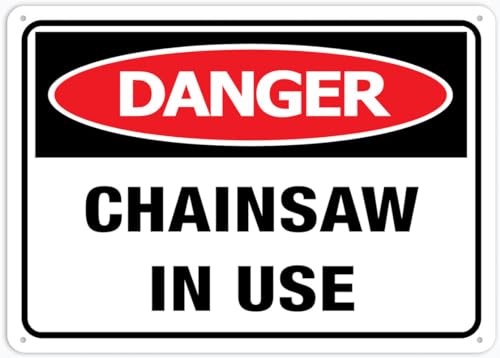 Chainsaw In Use Danger Warning Sign 8"x12"
|
8.1/10 | Buy |
Operational Rules, Mechanical Risks, and Safety Limits for Chainsaws in Wet Weather
Direct Answer: Can You Safely Operate a Chainsaw in the Rain?
The short answer to whether you can run a chainsaw in the rain depends directly on the power source and the intensity of the precipitation. Gasoline powerheads can mechanically fire and cut through steady rain, but cordless battery models and corded electric saws face severe moisture risks that can destroy internal electronics or cause lethal electric shocks. Even when an internal combustion engine continues to run, the overall cutting environment becomes significantly more dangerous due to compromised operator footing, zero-traction bark, and obscured safety eyewear. Most professional arborists and equipment manufacturers strongly advise against cutting in active rainfall unless life safety or critical infrastructure requires immediate emergency clearing.
If emergency storm cleanup forces you to process wind-thrown logs in damp conditions, extreme caution must govern every step. Wet foliage and muddy soil undermine your physical balance, making it difficult to maintain the wide, stable stance required to resist high-velocity rotational kickback. Cutting wet timber also causes sawdust to form an abrasive slurry that clogs guide bar rails and exhausts oiler ports. Deciding whether to start the saw requires balancing the urgency of the timber hazard against the heightened likelihood of severe equipment damage or physical injury.
Corded Electric Chainsaws: Extreme Shock Hazards and Electrical Breakdown
Corded electric chainsaws running on 120-volt household current must never be operated in the rain, standing water, or heavy drizzle. Standard electric powerheads feature ventilated motor housings designed to pull ambient air across the armature and field windings for continuous cooling. Falling raindrops enter these open louvers effortlessly, bridging live copper commutators and short-circuiting the powerhead directly to the tool housing. Even when an outdoor extension cord connects to a ground-fault circuit interrupter outlet, water bridging the plug prongs can trigger instantaneous shutoffs or deliver severe electric shocks to the operator.
Moisture also degrades the rubberized cords and plug connections that drag across damp vegetation and puddles. A tiny crack or pinhole in the cable jacket allows water to establish a conductive path between high-voltage conductors and the wet earth beneath your feet. For property owners cutting structural lumber or outdoor fence lines, relying on electric saws designed for fence posts under dry conditions is standard practice, but introducing rainfall creates unacceptable electrocution hazards. Never bring a mains-powered corded saw into damp weather under any operational circumstances.
Cordless Battery Chainsaws: Water Ingress, Pack Protection, and Thermal Circuits
Modern cordless chainsaws powered by 36-volt, 40-volt, 56-volt, or 80-volt lithium-ion battery platforms offer impressive cutting torque, but they remain highly vulnerable to liquid moisture. While some high-tier commercial battery powerheads feature ingress protection ratings to resist light splashing, most consumer models lack watertight seals. Water penetrating the battery compartment collects around exposed gold-plated or nickel-plated contact terminals. This liquid bridge can cause electrolytic corrosion, trigger false thermal faults, or short-circuit the sensitive battery management system circuit board.
Lithium-ion battery packs contain microprocessors that constantly monitor cell balance, temperature, and current draw during heavy cutting. When moisture enters the pack enclosure through vent holes, it can disrupt these sensitive sensors and cause the electronic controller to shut the tool down unexpectedly. Furthermore, water trapped between high-capacity cylindrical cells can initiate chemical degradation, permanently reducing pack runtime or causing irreversible internal cell damage. Unless the manufacturer explicitly certifies both the powerhead and the inserted battery pack for sustained wet-weather operation, leave cordless saws inside a dry storage area during rainfall.
Gasoline Two-Stroke Powerheads: Engine Air Intake, Moisture in Fuel, and Carburetor Behavior
Gas-powered chainsaws utilizing two-stroke engines are mechanically capable of running in wet weather because their ignition systems are self-contained within sealed magneto assemblies. However, rainfall introduces persistent operational hurdles for the fuel and air intake systems. The engine draws substantial volumes of outside air through the top shroud to supply the carburetor throat, and rain saturates the external felt, nylon, or paper air filter media. Once the air filter becomes waterlogged, air restriction chokes the engine, producing a rich air-fuel mixture that causes bogging, rough idling, and spark plug fouling.
Fuel contamination represents another catastrophic failure mode when operating two-cycle powerheads in active rain. Opening the fuel cap to replenish two-stroke mix while rain falls allows water droplets to enter the fuel tank directly. Because water is denser than gasoline, it sinks to the bottom of the tank where the fuel pickup filter sits, causing instantaneous engine stalling and hard restarting. Water passing into the carburetor jets also disrupts the delicate two-stroke fuel-oil emulsion, which deprives the high-rpm cylinder walls and needle bearings of critical lubrication.
Bar and Chain Lubrication Breakdown: Water Emulsification and Friction Scorching
Guide bar and saw chain systems rely on high-tack bar lubricants to withstand extreme friction as the drive links travel along the steel bar rails at high operational velocities. Heavy rainfall washes over the cutting assembly, interacting with the thin film of petroleum or vegetable-based chain oil. Rainwater emulsifies standard bar oils, breaking down the chemical tackifiers that keep lubricant adhered to the high-speed cutters and drive links. Without adequate tack, centrifugal force flings the diluted lubricant off the guide bar nose before it can reach the bottom cutting rail.
Operating with washed-out lubrication generates excessive heat along the guide bar rails and sprocket nose bearings, despite the surrounding cool rainfall. This intense friction causes thermal discoloration, bar rail splay, and premature cutter dulling. In severe instances, unlubricated drive links will burr and bind tightly inside the guide bar groove, placing massive mechanical drag on the centrifugal clutch assembly. Operators forced to cut damp wood should adjust their automatic oiler pumps to the maximum delivery setting to push fresh, undiluted lubricant through the oil inlet hole continuously.
Timber Physics in Heavy Moisture: Saturated Bark, Swollen Kerfs, and Fiber Binding
Rain significantly alters the physical properties of timber, changing how a guide bar interacts with the wood fibers inside the kerf. Soaked bark absorbs substantial moisture, softening the outer layer while simultaneously holding fine silt, dirt, and sand particles washed down by the rain. When saw chain cutters strike this gritty, saturated bark, the cutting edges dull far more rapidly than in dry conditions, turning sharp semi-chisel or full-chisel teeth into blunt scrapers within a few cuts. Dull cutters produce powdery waste rather than crisp wood chips, forcing the operator to apply excessive downward pressure.
Internal moisture also swells wood cellular structures, increasing friction against the sides of the guide bar body as the chain cuts downward. As green or storm-felled logs settle on wet ground, internal growth tension and compression forces shift unpredictably. A kerf that appears stable can snap shut abruptly onto the guide bar, pinching the chain and stopping the powerhead instantly. Safely cutting swollen, tensioned limbs often requires making shallow relief cuts or using high-visibility felling wedges to keep the kerf open and prevent the bar from becoming trapped.
Clutch Cover Clogging: Wet Wood Paste, Drive Sprockets, and Chip Discharge
Under normal dry cutting conditions, wood chips are propelled smoothly out of the kerf and discharged through the side clutch cover chute by the spinning drive links. In active rain, the sawdust mixes with airborne moisture and chain lubricant to create a dense, sticky paste. This wet slurry clings aggressively to the inside walls of the clutch cover, the chain brake mechanism, and the guide bar mounting pad. Within minutes of sustained bucking, the discharge channel becomes completely packed with wet debris, restricting chip evacuation.
As wet sawdust compacts around the rim or spur sprocket, it exerts outward pressure on the saw chain, causing erratic tension shifts. The chain may become excessively tight as debris wedges beneath the drive links, or it may jump the guide bar rails entirely if the sprocket teeth cannot seat properly. Removing the clutch cover frequently to scrape out packed slurry is essential, but doing so in the rain exposes the oil delivery port to contamination. Clearing wet buildup promptly prevents excessive wear on the powerhead crankshaft seals and bearing assemblies.
Operator Footing and Slip Hazards: Loss of Stance and Escape Route Failure
Safe chainsaw operation depends fundamentally on solid physical footing, balanced body positioning, and a secure stance behind the powerhead. Rain transforms ordinary forest floors, suburban lawns, and timber yards into treacherous, slick terrain covered in slippery mud, wet leaves, and slick moss. If an operator slips while supporting a running powerhead at full throttle, reactive forces like rotational kickback become nearly impossible to control. Primary occupational safety protocols mandate maintaining two secure points of contact with stable ground whenever the chain is spinning.
Establishing a reliable escape route is mandatory when felling trees or bucking tensioned wind-thrown blowdown, but rain severely compromises these pathways. Muddy soil, submerged roots, and saturated brush turn planned 45-degree retreat routes into hazardous slip-and-fall zones. If a tree trunk splits unexpectedly or kicks back off its stump, an operator cannot retreat quickly across muddy terrain. When conditions prevent you from establishing sure, non-slip footing across the entire work area, power down the saw and delay the project until the ground stabilizes.
Impaired Vision and Protective Gear Limitations: Fogging, Droplets, and PPE Weight
Personal protective equipment is critical for operator survival, yet wet weather severely hinders how safety gear functions. Wire mesh forestry helmets catch falling raindrops, creating a web of water droplets directly across the operator’s line of sight that distorts depth perception. Safety glasses worn underneath mesh shields rapidly fog over due to body heat colliding with cold ambient rain and high humidity. Trying to line up precise bucking cuts or inspect overhead limb hazards through fogged, water-streaked lenses drastically elevates the danger of accidental bar contact.
Water saturation also impacts the comfort, fit, and weight of cut-retardant chainsaw chaps and ballistic nylon clothing. Protective chaps constructed from multiple layers of woven polyester, Kevlar, or Aramid fibers become heavy, stiff, and waterlogged when exposed to steady rain. This added weight restricts leg mobility and tires the operator quickly, leading to physical fatigue and slower reaction times. Furthermore, wet leather work gloves lose their grip on rubberized saw handles, increasing the likelihood that the front wrap handle could twist out of your hand during an unexpected reactive bind.
Moisture Impact on Inertia Chain Brakes: Drum Slippage and Band Contamination
The inertia-activated chain brake is the most vital safety mechanism on a modern chainsaw, engineered to stop the spinning chain in fractions of a second during a kickback event. The brake works via a spring-loaded steel band that constricts tightly around the smooth outer surface of the clutch drum when tripped manually or by inertia. When water and wet oily sludge seep into the clutch housing, they lubricate the interface between the brake band and the clutch drum. This moisture film reduces the friction coefficient required to arrest the spinning drum instantly.
A contaminated or wet chain brake band may slip slightly, increasing the stopping distance of the saw chain during an emergency. Even a fractional delay in chain stoppage allows high-velocity cutters to contact the operator before the chain comes to a complete rest. Regular testing of both manual handguard activation and free-fall inertia tripping is critical, but testing is especially vital if the powerhead has been exposed to damp conditions. If the chain fails to stop instantaneously when the front handguard is pushed forward, the saw must be shut down and thoroughly cleaned before making another cut.
Marking Active Cutting Hazards: Perimeter Signage and Bystander Safety
Storm cleanup and residential tree clearing in rainy conditions frequently occur in high-traffic suburban areas or active farmyards where neighbors, family members, or cleanup volunteers are present. Rain and roaring engines severely impair both visual and auditory awareness, making it hard for approaching bystanders to hear shouted warnings. Establishing clear perimeter boundaries around your cutting radius is essential to prevent individuals from wandering into the danger zone of falling limbs or flying wood chips. For manual branch clearing in tighter residential spaces, some operators choose manual hand saws for cutting limbs to reduce noise and maintain greater awareness of nearby helpers.
Staging durable, weather-resistant safety signage around the perimeter helps communicate hazardous operations effectively regardless of precipitation. The Danger Chainsaw In Use Equipment Hazard Funny Sign provides a clear 12×8 inch aluminum visual marker that holds up against wind and rain without rusting, warning approaching individuals of active cutting equipment. Similarly, mounting a Chainsaw In Use Danger Warning Sign 8″x12″ along farm gates, driveway entrances, or woodlot borders establishes a designated safety perimeter. Both metal warning plaques feature pre-drilled holes for rapid mounting to fence posts or trees, ensuring visible, legible warnings even when stormy weather compromises overall visibility.
Post-Cutting Equipment Recovery: Drying Procedures and Corrosion Prevention
If you must operate a gas-powered saw in the rain or damp conditions, thorough post-cutting maintenance is mandatory to prevent long-term corrosion and mechanical decay. Never store a wet chainsaw directly inside a sealed carrying case or damp shed, as trapped condensation will rapidly corrode the guide bar rails, clutch needle bearings, and muffler assembly. Begin by removing the side clutch cover, guide bar, and saw chain, then wipe down all exposed metal surfaces with a dry shop towel. Blow compressed air through the cooling fins, flywheel area, and carburetor shroud to drive out standing water droplets.
Remove the engine air filter and set it in a warm, dry interior room until the filter fabric is completely dry before reinstalling. Inspect the spark plug boot for moisture intrusion, and clean the guide bar groove thoroughly with a putty knife or bar cleaning tool to remove wet, acidic sawdust paste. Spray the guide bar rails, chain cutters, and drive sprocket with a high-grade moisture-displacing lubricant or rust preventative to coat exposed bare steel. Finally, apply a liberal coating of clean bar oil to the chain links before storing the saw with its protective scabbard in a dry, temperature-controlled environment.
Emergency Storm Clearing vs. Postponing the Cut: Practical Decision Guidelines
Determining whether to run a saw during active rain comes down to assessing whether the cutting task represents a genuine emergency or routine property maintenance. When a fallen tree crushes a residential roof, blocks emergency vehicle access, or traps livestock, clearing the obstruction under wet conditions may be unavoidable. In these critical scenarios, equip yourself with full protective gear, verify the security of every footstep, use a gas saw with maximum bar lubrication, and establish clear safety perimeters. Move methodically, evaluate each log bind carefully, and never rush cuts to escape the weather.
For regular firewood bucking, routine limb thinning, boundary clearing, or trail upkeep, operating in the rain is simply not worth the severe physical risks or equipment wear. The combination of slick timber, compromised vision, wet sawdust clogging, and reduced brake friction turns an enjoyable weekend chore into an accident-prone ordeal. Waiting for blue skies allows wood to dry, ground traction to return, and equipment to operate under optimal mechanical tolerances. Prioritize your personal safety and equipment longevity by postponing non-emergency cutting projects until weather conditions clear completely.
About the author

Thomas Gaige combines mechanical engineering knowledge with extensive hands-on construction experience. His background includes engineering, AutoCAD design, general contracting, residential and light-commercial construction, automotive restoration, cabinetry, fabrication, and workshop projects. This combination gives him a practical framework for evaluating tools based on engineering, performance, usability, and jobsite demands.