
How to Remove a Stump With a Chainsaw: Practical Field Guide for 2026
Learn how to remove a stump with a chainsaw using safe flush cuts, grid relief scoring, and potassium nitrate treatments updated for October 2026.
 By Andrew McKean
Updated October 2, 2026
By Andrew McKean
Updated October 2, 2026

Clearing a felled tree from your property often leaves behind an unsightly, stubborn base that disrupts mowing and invites unwanted pests. Homeowners and woodlot owners frequently research how to remove a stump with a chainsaw to avoid the high rental expenses of heavy industrial stump grinders. While a powerhead provides immense cutting torque, working wood close to the earth introduces severe abrasive wear from soil, rocks, and embedded sand. Using the proper technique prevents immediate chain dulling, guide bar pinching, and dangerous reactive kickback forces during the cut.
A successful removal strategy pairs low flush cuts and surface grid scoring with supplemental tools, including chemical rot accelerators or mechanical leverage pullers. Before starting your saw, using a dedicated pruning saw for gardeners to trim back surface root suckers and brush keeps your workspace clear and safe. Understanding how to properly excavate the trunk flare, relieve bar pinch, and cross-hatch the wood fibers allows you to eliminate the stubborn base cleanly while preserving your powerhead and guide bar.
| Award | Product | TGH Score About TGH ScoreThe TGH Score is our own rating from 0 to 10, based on performance, design and build, ease of use, and value. It reflects independent research and is never influenced by manufacturers, retailers, or affiliate commissions. Learn more › | |
|---|---|---|---|
| Best Overall |
Potassium Nitrate Stump Remover - 5lbs
|
9.2/10 | Buy |
| Best Budget |
 Forester Mini Stump Vise with Holster
|
9.1/10 | Buy |
| Best Value |
 Forester Heavy Duty 7” Stump Vise for Chainsaw
|
8.8/10 | Buy |
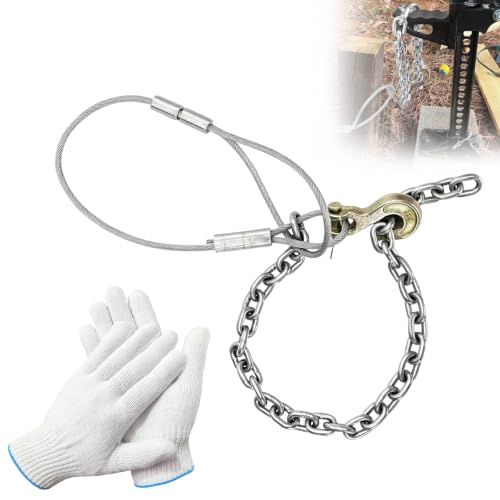 Stump Remover Fence Post Puller
|
8.6/10 | Buy | |
 Hi-Yield Stump Remover
|
8.4/10 | Buy | |
| Best Premium |
 Stump Remover, Heavy-Duty T Post Puller for Tree
|
8.3/10 | Buy |
 Tree Stump Remover Granules (Professional Grade)
|
7.8/10 | Buy |
Complete Operational Guide: Safely Removing and Decomposing Stumps with a Chainsaw
Removing a tree stump with a chainsaw requires a multi-stage approach that balances precise cutting mechanics with long-term wood breakdown methods. Rather than attempting to grind the entire root ball below the soil line, operators make horizontal flush cuts close to the ground and plunge vertical relief cuts into the remaining heartwood. This grid pattern opens deep avenues for chemical rot agents like potassium nitrate or provides anchor points for mechanical post and stump pullers. Proper site preparation and chain maintenance ensure you eliminate the stump without destroying your guide bar or dulling your cutters on subterranean debris.
Site Preparation and Soil Excavation Around the Trunk Flare
Abrasive mineral soil represents the single greatest threat to chainsaw cutters during ground-level work. Running a spinning saw chain into dirt, sand, or hidden gravel strips the razor edge off chrome-plated teeth in less than two seconds. Once cutters strike soil, the saw produces fine powdery dust instead of thick wood chips, causing severe friction, smoking bar rails, and thermal stress. Excavating the perimeter before bringing a powerhead into contact with the wood protects your equipment and ensures a smoother, safer cut.
Begin by digging a continuous trench around the entire base of the stump using a spade, mattock, or trenching shovel. Clear away topsoil, mulch, and embedded rocks to a depth of at least six to twelve inches below your planned cut line. This trench provides essential clearance for the guide bar nose and prevents the powerhead crankcase from dragging in the dirt. Keep the excavation wide enough so the saw can move horizontally without contacting the dirt walls of the pit.
After excavating the soil, wash the entire root flare and exposed bark with a garden hose and a stiff wire brush. Scrubbing away grit from bark crevices removes hidden sand grains that dull chain teeth just as quickly as digging directly into the earth. For small lateral roots and tangled root suckers encroaching on the trench, use manual hand saws for cutting down tree branches and roots rather than risking your powerhead in tight dirt pockets. Taking time to establish a clean, gravel-free wood zone is the foundational secret to successful chainsaw stump work.
Executing the Low Flush Cut Without Bar Binding
The primary objective of the chainsaw in stump management is lowering the protruding trunk flush with or slightly below grade. Position your body with a wide, balanced stance on solid ground, keeping both hands firmly wrapped around the saw handles with thumbs locked. Hold the guide bar completely level, aligning the cutting line as close to the bottom of your excavated trench as possible. Avoid tilting the bar nose downward, which risks driving the spinning chain straight into the floor of the trench.
Stump wood contains irregular internal grain structures and high moisture content, creating immense compression forces as the kerf opens. As the guide bar cuts deeper into the core, the weight of the stump head can settle downward and pinch the guide bar tightly. Drive high-impact plastic felling wedges into the kerf behind the saw chain as soon as the bar penetrates three to four inches. These wedges hold the cut open, preventing costly bar pinching and allowing the engine to maintain wide-open throttle RPM without bogging.
When tackling stumps with diameters wider than your guide bar length, execute the flush cut from opposing sides using overlapping horizontal passes. Cut halfway through the trunk from the first side while keeping your plastic wedges firmly tapped into place. Then, walk around the trench to enter the timber from the opposite side, aligning the second kerf to meet the initial cut cleanly. Throughout this horizontal cutting process, certified cut-retardant chainsaw chaps and a forestry helmet with a mesh face shield provide critical operator protection.
The Grid Method: Criss-Cross Plunge Scoring for Chemical Acceleration
Slicing the top slab off the stump leaves a substantial solid wood base firmly anchored by underground taproots and lateral networks. Removing this stubborn mass entirely by horizontal cutting alone is dangerous because subterranean roots are completely encased in rocks and soil. The most effective mechanical solution is applying the criss-cross grid technique directly into the horizontal face of the remaining wood. This method cuts deep channels across the grain, dramatically increasing surface area and weakening internal structural integrity.
To execute the grid method, hold the chainsaw vertically above the flat surface of the stump with the powerhead securely braced. Using the bottom rail of the guide bar near the bumper spikes, score parallel vertical cuts spaced approximately three to four inches apart across the wood. Plunge these cuts four to six inches deep into the heartwood and sapwood without allowing the bar tip to exit through the subterranean perimeter. Once the first set of parallel lines is established, rotate ninety degrees and cut a perpendicular set of kerfs to form a checkerboard pattern.
Plunge cuts require strict attention to guide bar nose dynamics to avoid dangerous rotational kickback. The upper quadrant of the guide bar nose represents the recognized kickback hazard zone under ANSI B175.1 standards. Always initiate wood contact using the lower rail near the saw body before smoothly pivoting the nose into the kerf at wide-open throttle. This checkerboard scoring pattern produces exposed wood columns that readily absorb external treatments and allow moisture and fungal spores to penetrate deep into the dense core.
Accelerating Decomposition with Potassium Nitrate Stump Removers
Natural stump decomposition can take a decade or longer, depending on tree species, moisture levels, and local soil biology. Applying chemical rot accelerators dramatically hastens this natural breakdown by feeding wood-decaying microorganisms with concentrated nitrogen. Formulations featuring ninety-nine percent pure potassium nitrate provide the ideal fuel source for indigenous fungal networks. Products such as Jackson Chemicals 5-pound Potassium Nitrate Stump Remover, Voluntary Purchasing Group Hi-Yield Stump Remover, and Dibbs Farms professional grade granules deliver targeted decomposition power without specialized machinery.
Application begins immediately after you complete your chainsaw grid scoring. Drill additional vertical holes into the scored columns using a heavy-duty drill equipped with a one-inch wide wood auger or spade bit. Bore these holes eight to twelve inches deep into the top of the stump, spaced three to four inches apart across the entire surface. If the stump sides are exposed above the trench, drill downward-angled holes around the perimeter to intersect the vertical chambers.
Pour the potassium nitrate powder or granules directly into every drilled hole and along the chainsaw score lines. Pouring warm water into each opening dissolves the potassium nitrate crystals, allowing the nitrogen-rich compound to saturate deep into the porous wood fibers. Jackson Chemicals supplies their potassium nitrate in a durable resealable HDPE stand-up pouch, which simplifies pouring and keeps unused product dry and stable in storage. Covering the treated stump with a dark plastic tarp retains internal moisture and creates a warm, fungal-friendly environment that turns solid heartwood spongy and brittle over time.
Mechanical Extraction: Combining Chainsaw Root Severing with Leverage Pullers
For smaller tree stumps measuring under eight to ten inches in diameter, mechanical extraction offers an immediate removal solution that bypasses months of waiting for chemical rot. This method combines tactical root cutting with heavy-duty leverage equipment to physically yank the root core out of the earth. Rather than pulling against every lateral anchor, you use a chainsaw to sever the primary horizontal root flares after carefully excavating the surrounding dirt. Severing lateral roots requires strict attention to gravel avoidance in the bottom of your excavated perimeter trench.
Slice through each large anchor root several inches back from the main central trunk, ensuring the bottom rail of your guide bar stays elevated above the soil floor. If you must cut posts or timber flush in boundary areas near fences, dedicated tools such as an electric saw to cut fence posts can assist with precise vertical cuts without producing exhaust fumes in tight spaces. Once all perimeter roots are severed, the stump remains anchored solely by its central vertical taproot. Mechanical pullers can then apply tremendous upward leverage to snap that remaining taproot without tearing up adjacent landscaping.
Equipment like the DKE&YMQ Stump Remover Fence Post Puller uses rust-resistant hot-dip galvanized aircraft-grade steel cable and a heavy steel chain to grip the timber securely. Similarly, 36-inch alloy steel post and stump pullers provide mechanical advantage through long leverage arms and grabber hooks. Connecting these tools to a standard hydraulic jack or heavy pry bar channels hundreds of pounds of mechanical lifting force directly upward. A pair of sturdy work gloves, often bundled with pullers like the DKE&YMQ kit, protects your hands while manipulating tensioned steel cables during the extraction.
Field Chain Maintenance: Utilizing a Stump Vise for Rapid Cutter Resharpening
Even with rigorous trenching and wire-brushing, cutting near the soil line inevitably introduces micro-abrasives that degrade chain sharpness. Operating a dull saw chain places immense strain on your engine clutch, stretches the saw chain links, and overheats the guide bar rails. Recognizing dull chain symptoms, such as crooked cutting, fine sawdust, and the need for heavy downward muscle pressure, tells you it is time to halt work immediately. Maintaining sharp cutters right at the job site keeps your stump cutting productive, efficient, and safe.
A portable chainsaw stump vise turns any freshly cut wood surface into a rock-solid outdoor sharpening workstation. Tools such as the Forester Mini Stump Vise with Holster and the Forester Heavy Duty 7-inch Stump Vise are engineered specifically for this jobsite requirement. Forged from impact-resistant steel or drop-forged cast iron, these vises feature sharp tapered forks that drive directly into the top of the stump with an axe or hammer blow. Once anchored, the integrated clamping jaws grip the guide bar firmly, immobilizing the saw without any wobble or shake during filing.
With the saw bar locked into the Forester vise, you can file each cutter tooth with precision using both hands. Match your round file diameter to your chain pitch, such as using a 5/32-inch file for 3/8-inch Low Profile chains or a 7/32-inch file for standard 3/8-inch professional chains. Maintain a consistent thirty-degree sharpening angle across all cutter top plates, stroking smoothly from the inside edge of each tooth outward. Setting depth gauge clearance to approximately 0.025 to 0.030 inches with a progressive depth gauge tool ensures each cutter takes a clean wood shaving without grabbing aggressively.
Removing an old stump using a chainsaw is entirely practical when you combine low flush cuts, relief grid scoring, and proven chemical or mechanical breakdown aids. By trenching the soil away from the trunk flare and using a portable stump vise to keep your cutters sharp, you prevent the severe equipment wear that often plagues ground-level timber work. Whether you choose to accelerate natural rot with potassium nitrate granules or yank the severed core with a heavy-duty puller, following disciplined operational steps protects your investment. Proper chainsaw handling, consistent safety gear use, and patient post-cut treatment transform stubborn lawn hazards into smooth, clear yard space.
About the author
Andrew McKean is an experienced outdoor journalist and optics specialist with extensive experience evaluating binoculars, spotting scopes, and other outdoor optical equipment. His work combines practical field testing with detailed technical analysis, helping readers understand optical performance, durability, and the features that matter when comparing equipment.