
Saw to Cut Vinyl Siding of 2026 For Clean Cuts
Get clean, splinter-free siding cuts with the top saw to cut vinyl siding picks for November 2026 to eliminate rough edges and costly material waste.
 By Thomas Gaige
Updated October 2, 2026
Preventing Chipped Edges on Exterior Siding
Vinyl siding becomes brittle in fluctuating temperatures, and an aggressive saw blade will catch the thin PVC profile, shattering edges and leaving jagged tears that no trim piece can conceal. Standard framing blades with coarse carbide teeth simply chew through thin hollow panels with too much violence. Equipping the right saw to cut vinyl siding setup changes everything by substituting aggressive ripping gullets with high-tooth counts that slice smoothly through plastic. Careful evaluation of blade kerf thickness, tooth geometry, and arbor compatibility helps prevent warped cuts and costly material waste on your installation.
High-density thin-kerf carbon steel blades with fine teeth offer clean shearing action without melting or catching the vinyl edge. Specially engineered expansion slots cut into the steel plate keep the blade cool during repeated crosscuts, avoiding thermal warping that binds the motor mid-stroke. Based on manufacturer specifications and contractor feedback, running a dedicated fine-finish circular saw blade delivers dependable, burr-free cuts across panels and soffits. Matching your tool setup to the specific profile ensures square, reliable joints that slide effortlessly into receiving J-channels.
| Award | Product | TGH Score About TGH ScoreThe TGH Score is our own rating from 0 to 10, based on performance, design and build, ease of use, and value. It reflects independent research and is never influenced by manufacturers, retailers, or affiliate commissions. Learn more › | |
|---|---|---|---|
| Best Overall |
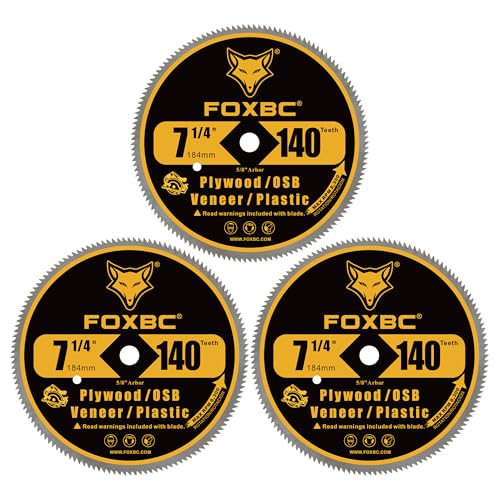
FOXBC 7-1/4 Inch 140-Tooth Fine Finish Circular
|
8.4/10 | Buy |
FOXBC 7-1/4 Inch 140-Tooth Fine Finish Circular
The FOXBC 7-1/4-inch 140-tooth circular saw blade 3-pack features a high-density tooth pattern and a 0.086-inch thin kerf engineered to minimize tear-out in plywood, paneling, and vinyl siding. It offers an affordable, clean-cutting solution for DIY remodelers and finish woodworkers working with delicate sheet goods.
Pros
- 140-tooth design significantly limits edge chipping and face veneer tear-out on delicate sheet goods
- Integrated diamond knockout fits both standard sidewinders and rear-handle worm-drive circular saws
- Thin 0.086-inch kerf minimizes resistance and helps maintain blade speed through plywood
- Three-blade pack delivers practical replacement value for budget-conscious woodworkers
- Thermal expansion slots reduce the risk of heat-induced blade deflection during continuous passes
Cons
- All-steel tooth design wears faster than carbide-tipped blades when cutting abrasive composite materials
- Ultra-high tooth count makes this blade unsuitable for fast framing cuts or thick solid lumber rips
- Fine tooth gullets require a slow, controlled feed rate to avoid friction burning in dense sheet goods
Frequently Asked Questions
What type of blade works best on a saw to cut vinyl siding?
A fine-tooth circular saw blade with 120 to 140 teeth works best for cutting vinyl siding. High tooth counts provide a shearing cut that slices through thin PVC without snagging or shattering brittle panels. Look for a 7-1/4 inch steel blade with a 5/8-inch arbor diamond knockout to ensure stable fitment on standard circular or miter saws.
Should you install the circular saw blade backward for vinyl siding?
Yes, mounting a high-tooth plywood or vinyl blade in reverse is a proven technique for cleaner cuts in 2026. Reversing the blade allows the teeth to grind gently through the hollow plastic instead of biting aggressively into the edge. It minimizes splintering and prevents kickback when trimming delicate siding panels or soffits.
Can you use a standard 24-tooth framing blade to cut vinyl siding?
No, a coarse 24-tooth framing blade will violently catch and crack thin vinyl siding. The large gullets and aggressive hook angle rip apart cold or fragile PVC rather than trimming it flush. Always swap in a dedicated saw to cut vinyl siding accessory with at least 100 teeth to maintain clean edges.
Does cutting vinyl siding dull saw blades quickly?
Vinyl siding generates very little abrasive friction, so quality high-speed steel blades stay sharp through thousands of cuts. Heat buildup poses the main risk rather than abrasive wear. Blades engineered with expansion slots dissipate thermal stress efficiently, keeping the steel plate true during extensive siding jobs.
Can a sliding miter saw handle wide vinyl siding panels?
Yes, a 10-inch or 12-inch sliding compound miter saw easily cuts wide double-4 or dutch lap siding profiles in a single pass. The sliding arm maintains a steady 90-degree square cut while supporting the workpiece securely against the fence. Just make sure to feed the blade slowly to avoid chipping the thin outer lip.
About the author

Thomas Gaige combines mechanical engineering knowledge with extensive hands-on construction experience. His background includes engineering, AutoCAD design, general contracting, residential and light-commercial construction, automotive restoration, cabinetry, fabrication, and workshop projects. This combination gives him a practical framework for evaluating tools based on engineering, performance, usability, and jobsite demands.