
What Is a Worm Style Saw: Mechanics and Jobsite Guide for 2026
Learn what is a worm style saw, how its high-torque hypoid gearing powers through framing lumber, and key jobsite features in November 2026.
 By Kenny Koehler
Updated November 5, 2026

Ripping through dense, wet nominal framing lumber or making repeated compound bevel cuts often exposes the torque limitations of standard handheld circular saws. When a conventional saw bogs down mid-cut or forces awkward sightline adjustments, understanding What Is A Worm Style Saw becomes critical for carpenters and serious woodworkers alike. Unlike common sidewinder designs, a worm drive tool positions its motor inline behind the blade, using specialized spiral gears to generate massive rotational cutting force. While smaller jobs may only demand versatile compact circular saws, heavy framing and gang-cutting sheet goods benefit tremendously from this inline layout.
This mechanical configuration delivers distinct advantages in cutting geometry, sightline visibility, and sustained torque under heavy operational loads. Framing crews frequently rely on worm drive gearing because the blade sits to the left of the motor, offering right-handed operators an unobstructed view of the cut line. Modern models from brands like SKILSAW and DEWALT integrate lightweight magnesium components and advanced motor cooling to reduce physical fatigue across long shifts. Exploring how these robust tools function will help you decide whether their torque-heavy balance aligns with your workshop or jobsite cutting needs.
| Award | Product | TGH Score About TGH ScoreThe TGH Score is our own rating from 0 to 10, based on performance, design and build, ease of use, and value. It reflects independent research and is never influenced by manufacturers, retailers, or affiliate commissions. Learn more › | |
|---|---|---|---|
| Best Overall |
DEWALT FLEXVOLT 60V MAX 7-1/4-Inch Cordless Worm
|
9.2/10 | Buy |
| Best Budget |
 SKIL 7-1/4 In. Lightweight Worm Drive Circular Saw |
8.9/10 | Buy |
| Best Value |
 SKILSAW SPT70WM-01 15 Amp 10-1/4" Magnesium |
8.6/10 | Buy |
 Skil SPT70WM-71 10-1/4-Inch Worm Drive Saw |
8.4/10 | Buy | |
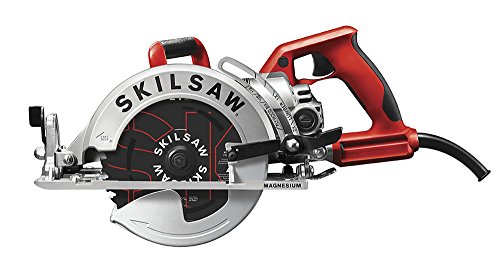 SKILSAW SPT77WML-01 15-Amp 7-1/4-Inch Lightweight |
8.1/10 | Buy | |
 Skil SPT77W-71 7-1/4" Worm Drive Circular Saw |
8.1/10 | Buy | |
| Best Premium |
 Skilsaw SPT70WM-22 10-1/4-Inch Worm Drive Saw |
8.0/10 | Buy |
DEWALT FLEXVOLT 60V MAX 7-1/4-Inch Cordless Worm
The DEWALT DCS577X1 FLEXVOLT 60V MAX circular saw combines rear-handle worm-drive ergonomics with a brushless motor, magnesium shoe, and high-capacity 9.0Ah battery. It is an outstanding choice for framers, deck builders, and contractors demanding clear blade-left sightlines and deep 2-7/16-inch cuts without cord restrictions.
Pros
- Blade-left rear-handle configuration provides clear cutline sightlines for right-handed framers and long sheet ripping
- Substantial 2-7/16-inch cut depth at 90 degrees with versatile bevel capability up to 53 degrees
- Brushless 60V MAX motor coupled with the included 9.0Ah battery provides heavy-duty jobsite cordless capability
- Electronic blade brake and folding rafter hook significantly improve workflow convenience and jobsite handling
Cons
- Working weight of 10.9 pounds is heavier than compact direct-drive sidewinder saws
- Maximum 2-7/16-inch depth cannot cut through nominal 4x4 posts in a single pass
- Rear-handle layout can feel cumbersome for vertical siding trims or confined overhead work
SKIL 7-1/4 In. Lightweight Worm Drive Circular Saw
The SKIL SPT77WML-71 is a 7-1/4-inch corded worm drive circular saw featuring an 11.5-pound lightweight design, a Dual-Field motor, and a die-cast magnesium foot. It provides exceptional torque and secure jobsite power via its twist lock plug, making it an outstanding choice for framing crews, deck builders, and general contractors.
Pros
- Weighs only 11.5 pounds without blade, cord, and wrench, making it significantly lighter than traditional worm drive saws
- Rugged die-cast magnesium foot resists bending, drops, and rough handling on active construction sites
- Dual-Field motor design improves internal cooling airflow for extended operational life
- Twist lock plug prevents frustrating cord pull-outs from extension cords or power distribution boxes
- Includes a 24-tooth carbide-tipped framing blade right out of the box
Cons
- Twist lock plug requires a matching receptacle or adapter to connect to standard three-prong household wall outlets
- Heavier overall form factor than direct-drive sidewinder saws despite being lightweight for a worm drive model
- Does not include an electronic blade brake, requiring the user to wait for blade coast-down after releasing the trigger
Skil SPT70WM-71 10-1/4-Inch Worm Drive Saw
Built for heavy-duty framing and timber work, this worm-drive saw cleanly cuts 4x lumber in a single pass. Its rugged magnesium construction and high-torque 15-amp motor provide relentless power, though its 16.45-pound heft requires considerable stamina to manage.
Pros
- Cuts through 4x materials in one pass
- Powerful 15-amp Dual-Field motor
- Durable magnesium housing
- Twist Lock plug prevents accidental disconnections
- Comes with a 10-1/4-inch blade included
Cons
- Heavy 16.45-pound build increases user fatigue
- Twist Lock plug requires compatible cords or outlets
- Much bulkier than standard 7-1/4-inch circular saws
SKILSAW SPT77WML-01 15-Amp 7-1/4-Inch Lightweight
The SKILSAW SPT77WML-01 pairs a robust 15-amp worm drive motor with a lightweight 11.5-pound magnesium chassis and a 53-degree bevel capacity. It is an outstanding cutting tool for framing contractors, deck builders, and remodelers requiring steady torque for heavy lumber cuts.
Pros
- Significantly lighter than traditional steel and aluminum worm-drive saws at just 11.5 pounds
- High-torque 15-amp worm-drive powertrain resists bogging down in dense or wet framing lumber
- Generous 53-degree bevel range accommodates demanding roof framing and compound angle cuts
- Anti-snag lower blade guard functions reliably during thin trim-offs and shallow-angle passes
Cons
- Does not feature an electric blade brake, requiring the operator to wait for the blade to spin down
- Rear-handle worm-drive body is longer and more front-heavy than compact sidewinder saws
- Lacks an integrated vacuum dust port for direct hookup to workshop dust extractors
Skil SPT77W-71 7-1/4" Worm Drive Circular Saw
Built for heavy framing and demanding jobsite tasks, this worm drive saw pairs a high-torque 15-amp motor with a flexible 51-degree bevel capacity. Its onboard wrench storage and Cut-Ready depth system streamline adjustments without slowing down your workflow.
Pros
- Powerful 15-amp motor handles heavy-duty cuts
- Durable worm drive gears engineered for longevity
- Wide 51-degree bevel capacity
- Convenient on-board wrench storage in foot
- Contoured handle promotes steady control
Cons
- Relatively heavy tool weight at 14.2 pounds
- Twist lock plug requires compatible extension cords
Skilsaw SPT70WM-22 10-1/4-Inch Worm Drive Saw
Built for heavy framing and cutting thick timber, the Skilsaw SPT70WM-22 pairs a 15-amp worm drive motor with a large 10-1/4-inch blade capacity. An integrated electric brake adds quick stopping control to a robust magnesium build.
Pros
- Powerful 15-amp worm drive motor
- Deep 10-1/4-inch cutting capacity
- Integrated electric brake provides quick stops
- Sturdy magnesium frame construction
Cons
- Heavy 16.45-pound weight can cause fatigue
- Bulky footprint requires extra storage room
Defining the Worm Style Saw: Mechanics, Design, and Jobsite Capabilities
A worm style saw is a specialized circular saw configuration featuring an inline motor aligned parallel to the cutting blade and driven by right-angle spiral gears. This mechanical layout distinguishes it fundamentally from standard direct-drive circular saws, providing significantly higher rotational torque at a slightly lower blade speed. Framing carpenters and heavy construction crews rely on this design because the high torque prevents motor bogging when cutting through dense, wet, or pitch-heavy dimensional lumber. The blade also sits on the left side of the motor housing, granting right-handed operators an unobstructed view of the cut line during critical framing tasks.
Gear Reduction Physics and Rotational Torque
At the mechanical core of every worm drive saw sits a hardened steel worm screw meshed against a worm wheel gear oriented at a 90-degree angle. This right-angle hypoid gearing system forces a significant mechanical gear reduction between the motor armature and the saw blade arbor. While standard direct-drive saws spin their blades at roughly 5,800 revolutions per minute, a worm drive saw typically operates between 4,400 and 4,800 RPM. That deliberate reduction in rotational velocity transfers directly into immense turning power, giving the blade exceptional resistance against binding.
This rotational torque makes an immediate difference when cutting dense materials that frequently stall lighter tools. When pushing through wet pressure-treated southern yellow pine or ripping thick sheets of subflooring, internal wood tension often pinches the blade plate. Direct-drive motors tend to bog down or trip circuit breakers under such resistance because they lack mechanical leverage. In contrast, the worm gear assembly maintains steady forward cutting momentum, chewing through tough fibers without sudden motor drop-off.
Inline Architecture and Sightline Geometry
The physical orientation of the motor creates a distinctly elongated profile compared to compact, side-mounted saws. By positioning the motor behind the blade instead of directly beside it, tool manufacturers produce a narrow saw body that tracks easily along tight cut paths. This inline geometry also gives the operator extra physical reach, which proves invaluable when squaring off wide rafters or breaking down full four-by-eight-foot sheet goods. The extended reach allows you to complete long rip cuts without leaning uncomfortably over the workpiece.
Sightline visibility represents another defining trait of the worm drive configuration. Because the blade is situated on the left side of the gear housing, a right-handed user can look straight down at the cut line and blade notch without craning their neck. Standard direct-drive sidewinders place the heavy motor on the left, forcing right-handed operators to peer awkwardly over the tool or rely strictly on baseplate guide notches. This clear visual alignment gives operators superior confidence when tracking pencil lines across rough framing lumber.
Rear-Handle Ergonomics and Cutting Momentum
Handling dynamics differ considerably between worm style saws and traditional top-handle circular saws. The primary grip on a worm drive saw sits behind the motor housing, aligning the operator’s pushing arm directly with the cutting plane. This rear-handle setup enables a natural forward driving motion, utilizing the user’s body weight and arm extension rather than downward wrist pressure. A secondary auxiliary handle sits further forward, giving the guiding hand firm control over entry alignment and bevel adjustments.
Tool weight also plays a vital role in how these saws perform on the jobsite. While a typical direct-drive saw weighs between eight and ten pounds, traditional worm drive models often weigh between eleven and fifteen pounds. Although this added mass can cause fatigue during overhead work, it becomes a distinct advantage during horizontal crosscutting and flat ripping. The sheer heft of the tool stabilizes the magnesium foot against the workpiece, allowing gravity and momentum to guide the cut smoothly with minimal operator deflection.
Worm Drive Versus Direct-Drive Sidewinder Configurations
Choosing between a worm drive saw and a sidewinder circular saw requires evaluating jobsite demands, cut geometry, and operator mobility. Direct-drive saws utilize a transverse motor that connects directly to the blade arbor on a shared rotational axis. This design produces higher blade RPM and a compact, lightweight body that excels at punch-list trimming, roof sheathing installation, and quick crosscuts where tool agility is paramount. However, sidewinders lack the deep torque transfer necessary for relentless ripping and thick lumber processing.
Worm style saws dominate heavy framing and rough carpentry where raw power and continuous duty cycles matter most. While stationary workshop tools like cordless jobsite table saws offer dedicated rip fences for sheet breakdown, a worm drive saw provides jobsite portability for processing framing lumber right at the cut stack. The rugged gear train absorbs the punishing shock loads of knot-heavy timber that can overwork direct-drive mechanisms. Carpenters often view these two saw styles not as rivals, but as specialized tools tailored to distinct construction phases.
Cutting Capacities and Dimensional Lumber Processing
Most worm style saws feature a standard seven-and-a-quarter-inch blade diameter capable of cutting nominal two-by-four lumber in a single pass. At a ninety-degree angle, tools such as the DEWALT FLEXVOLT 60V MAX kit or the SKILSAW SPT77WML achieve a cutting depth of two and seven-sixteenths inches. When adjusted to a forty-five-degree bevel, these saws still maintain sufficient clearance to slice cleanly through one-and-a-half-inch dimensional framing stock. Many models even offer bevel capacities reaching fifty-one or fifty-three degrees for specialized rafter tails and valley cuts.
For massive timber framing and post construction, larger worm drive platforms like the SKILSAW SAWSQUATCH utilize ten-and-a-quarter-inch blades. These specialized saws are engineered specifically to cut through nominal four-by-four lumber, which measures three and a half inches square, in a single pass. Standard circular saws require stock flipping and two separate cuts to sever thick posts, often leaving uneven kerfs and visible alignment ridges. A ten-and-a-quarter-inch worm drive saw eliminates that step entirely, saving substantial layout time on deck posts and timber headers.
Active and Passive Safety Mechanisms on High-Torque Saws
Operating a high-torque cutting tool requires absolute respect for rotational kickback dynamics. When a circular saw blade binds inside a kerf, the rotational energy can violently drive the saw backward toward the operator. Because worm style saws deliver massive torque, maintaining a firm two-handed grip and positioning your body slightly to the side of the cut path is critical. Never stand directly behind the blade path, and ensure both hands remain securely positioned on the contoured primary and auxiliary handles during operation.
Modern engineering incorporates several safety innovations to protect operators during rapid framing workflows. Electronic blade brakes, featured on tools like the DEWALT DCS577X1 and SKILSAW SPT70WM-22, stop blade rotation within seconds of trigger release. This rapid deceleration dramatically reduces the risk of accidental contact while setting the tool down on framing plates or subflooring. Smooth anti-snag lower blade guards ensure effortless guard retraction when initiating shallow bevel cuts or trimming delicate offcuts, preventing dangerous hang-ups.
Diamond Knockout Arbors and Consumable Selection
A unique mechanical feature of worm drive saws is the diamond-shaped arbor configuration. While most direct-drive circular saws employ a standard round five-eighths-inch arbor hole, worm drive tools utilize a diamond-shaped shaft. Circular saw blades designed for these tools come with a stamped diamond center knockout that the user taps out before mounting. This interlocking diamond geometry prevents the blade from slipping on the arbor spindle when the high-torque motor encounters sudden knots or heavy resistance.
Matching your blade tooth geometry to your substrate is equally essential for clean cuts and motor longevity. Standard twenty-four-tooth framing blades feature an Alternate Top Bevel (ATB) grind designed for aggressive, rapid crosscuts and rips through softwood framing. When encountering nail-embedded renovation framing where standard carbide teeth might fracture, contractors frequently turn to specialized reciprocating saw blades for demolition to rough-cut structural members safely. Always verify that arbor washers and retaining bolts are torqued securely before reconnecting the power source.
Gear Oil Reservoirs and Routine Tool Maintenance
Unlike sealed direct-drive saws, traditional corded worm drive saws feature an internal oil bath that lubricates the worm screw and wheel assembly. This specialized hypoid gearing creates substantial friction and heat during continuous operation, requiring regular oil checks to prevent premature gear degradation. Manufacturers formulate dedicated lubricants, such as SKILSAW 80111 Worm Drive Saw Lubricant, to withstand high operating temperatures and suspend microscopic metal wear particles. Checking the oil reservoir plug periodically ensures the gear train remains fully submerged and running cool.
Beyond oil management, general tool upkeep involves monitoring baseplate flatness and motor brush wear. The magnesium foot must remain flat and square to the blade plate to prevent binding along guide lines. Dual-field motors, found across modern SKILSAW platforms, increase air cooling around internal copper windings to extend overall motor life under heavy jobsite loads. Inspecting power cords and ensuring twist lock plugs maintain a firm grip prevents intermittent power drops when dragging long extension leads across framing decks.
Cordless Evolution: Rear-Handle Saws in Modern Workflows
Recent advances in high-voltage lithium-ion technology have introduced cordless rear-handle saws that replicate worm drive ergonomics and torque. Tools like the DEWALT FLEXVOLT 60V MAX circular saw utilize high-draw brushless motors combined with rear-handle styling and blade-left positioning. While some cordless rear-handle saws use multi-stage hypoid or helical gear systems rather than true oil-bath worm gears, they deliver the identical balance, cutting posture, and high torque that framing carpenters expect.
Cordless rear-handle platforms eliminate the tripping hazards and drag associated with heavy gauge extension cords on elevated scaffolding. Equipped with high-capacity battery packs, these tools easily power through full framing shifts without sacrificing cut speed or stalling in wet stock. Integrated features such as dust blowers, onboard blade wrenches, and sturdy folding rafter hooks further streamline production framing. For contractors already invested in high-voltage battery ecosystems, cordless worm style designs offer remarkable mobility without compromising cutting authority.
Matching Tool Capabilities to Your Project Demands
Deciding whether to invest in a worm style saw depends heavily on your typical woodworking and construction tasks. Weekend DIYers handling basic home repairs, small planter boxes, or lightweight craft projects may find the weight and power of a worm drive saw unnecessary. A lighter sidewinder circular saw or compact cordless model generally offers greater ease of handling for casual crosscutting. However, anyone undertaking structural deck framing, basement framing, or continuous sheet ripping will immediately appreciate the unmatched cutting leverage of a worm drive platform.
Before initiating any cut, always verify that your workpiece is fully supported and that the blade depth is set approximately one-eighth to one-quarter inch below the lumber’s bottom face. Disconnect the power source or remove the battery pack whenever swapping blades, clearing resin buildup, or adjusting bevel stops. Equipping yourself with appropriate eye and hearing protection ensures safe, productive cutting across every job. A well-maintained worm style saw remains one of the most reliable and capable cutting tools available on the modern jobsite.
About the author

Kenny Koehler is an experienced tool reviewer known for combining hands-on testing with a scientific, measurement-focused approach. With a background in biology and chemistry and more than a decade of tool evaluation experience, he has developed repeatable testing methods for comparing drilling speed, fastening performance, runtime, ergonomics, and other measurable characteristics.