
What Is Chainsaw Kickback: Causes, Prevention, and Safety Guide for 2026
Understand what is chainsaw kickback, how guide bar hazard zones cause violent movement, and how to cut timber safely this October 2026.
 By Andrew McKean
Updated October 2, 2026
By Andrew McKean
Updated October 2, 2026
When clearing fallen storm timber or processing firewood, woodcutters routinely face pinched guide bars and shifting logs. While light trimming around the yard can often be accomplished safely using hand saws for cutting tree branches, gas and battery chainsaws deliver the necessary torque for cutting thick hardwood rounds. Operating a high-speed chain around curved wood, however, introduces severe reactive forces that can catch an unprepared user off guard. Understanding what is chainsaw kickback is the most critical safety concept for every power saw operator.
Kickback occurs when the moving chain near the guide bar tip snags solid wood or pinches in the kerf, instantly arresting cutter travel. This abrupt stop channels the powerhead engine torque into the bar, propelling the saw in a violent backward and upward arc toward the user. Modern equipment uses an inertia chain brake and engineered low-kickback chain links to help manage these high-velocity forces. By understanding the rotational kickback zone and adopting proper body mechanics, operators can dramatically minimize risk during demanding woodcutting tasks.
| Award | Product | TGH Score About TGH ScoreThe TGH Score is our own rating from 0 to 10, based on performance, design and build, ease of use, and value. It reflects independent research and is never influenced by manufacturers, retailers, or affiliate commissions. Learn more › | |
|---|---|---|---|
| Best Overall |
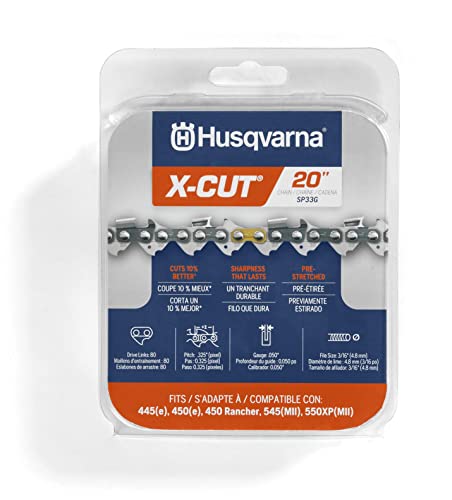
Husqvarna X-Cut SP33G 20 Inch Chainsaw Chain
|
8.4/10 | Buy |
The Mechanics and Prevention of Chainsaw Kickback
Chainsaw kickback is the sudden, violent upward and backward motion of the chainsaw guide bar toward the operator when the moving chain strikes an object near the upper quadrant of the bar tip. Rather than cutting through wood fiber, a cutter tooth in this danger zone abruptly snags and stalls, transferring the rotational kinetic energy of the moving chain into the guide bar. Because the chain travels at high velocity, this energy transfer occurs in a fraction of a second, easily outpacing human reaction time. Recognizing where this hazard zone is located and how modern safety hardware works helps woodcutters prevent severe cutting injuries.
The Anatomy of the Upper Quadrant Hazard Zone
The front nose of a chainsaw guide bar is curved, allowing the chain to navigate the sprocket nose from the bottom rail to the top rail. The upper quarter of this nose curve, running roughly from the twelve o’clock to the nine o’clock position relative to the powerhead, is known mechanically as the rotational kickback zone. When a cutter tooth enters wood along the flat bottom rail, the depth gauge controls bite size while the grain supports smooth chip ejection. As the chain rounds the top tip radius, however, the cutter rotates outward and exposes an aggressive cutting angle.
If a cutter tooth in this upper quadrant strikes solid wood or hard debris, it cannot shave off a normal wood chip. Instead of cutting smoothly, the tooth digs in abruptly and acts as a mechanical pivot while the powerhead continues driving the sprocket. The rotating chain instantly transfers its rotational momentum into the guide bar, propelling the bar nose upward in an arc toward the user. This leverage effect multiplies the force exerted on the operator, making it virtually impossible to restrain the powerhead through arm strength alone.
Rotational Kickback Compared to Pushback and Pull-In Dynamics
Rotational kickback is the most severe reactive force an operator encounters, but other reactive motions can also disrupt saw control. Under ANSI B175.1 standards, power saw operators must also account for linear forces known as pull-in and pushback. Pull-in occurs when cutting with the bottom rail of the guide bar, drawing the saw forward toward the log as the chain travels back toward the sprocket. This pulling force stabilizes the saw against the timber, particularly when bumper spikes rest firmly against the wood.
Pushback occurs when the operator cuts using the top rail of the guide bar, causing the chain to push the saw straight backward toward the user. While pushback moves along a horizontal plane, it can surprise an operator who is not braced for the sudden backward thrust. In contrast, rotational kickback combines backward movement with rapid vertical rotation, directing the spinning cutters toward the operator’s upper body. Managing all three reactive forces requires a stable stance, careful bar tip control, and constant awareness of timber movement.
Mechanical Chain Brakes and Inertia Activation Systems
Modern chainsaws incorporate a front handguard that functions as a dual-action chain brake designed to stop chain rotation in milliseconds. The chain brake operates through two distinct engagement methods: manual tripping and inertia activation. Manual activation occurs when the operator’s left wrist contacts the forward handguard during an upward kickback motion, pushing the lever forward and clamping a steel band around the clutch drum. This mechanical tripping action depends on proper hand placement on the front handle during every cut.
Inertia activation serves as an automatic safeguard that engages even without direct physical contact against the front handguard. During a violent kickback event, the rapid upward acceleration of the saw overcomes a calibrated internal spring mechanism within the brake assembly. The mass of the handguard resists this sudden upward surge, causing the weighted lever to trip forward automatically and lock the brake band. Inspecting the brake mechanism regularly and cleaning packed wood chips from the clutch drum ensures dependable stopping power when kickback occurs.
Low-Kickback Saw Chain Engineering and Guard Link Profiles
Saw chain design directly influences kickback severity through specialized link geometry and cutter profiles. Standard aggressive full-chisel chains feature square-cornered cutters that slice rapidly through clean timber but can grab violently if the nose tip makes contact. Low-kickback chains incorporate ramped bumper drive links or extended depth gauge profiles positioned directly ahead of each cutter tooth. These guard links smooth out the chain path around the nose sprocket, preventing cutters from taking oversized bites when traversing the upper quadrant.
An example of modern anti-kickback design is the Husqvarna X-Cut SP33G 20 Inch Chainsaw Chain, which pairs a semi-chisel cutter profile with engineered oil channels. Semi-chisel cutters feature rounded working corners that handle dirty bark without grabbing unpredictably, helping dampen rotational kickback tendencies. With an 80 drive link count, a .325-inch pitch, and a .050-inch gauge, this pre-stretched chain fits popular powerheads like the Husqvarna 450 Rancher and 550XP. The rounded cutter geometry stays sharper longer and provides the smooth feeding characteristics tree care workers need in tight spaces.
Matching chain pitch, gauge, and drive link count precisely to your guide bar ensures that the drive links seat securely inside the bar groove. Mismatched drive links or incorrect chain pitch can cause the chain to bind erratically or jump the rails, introducing hazardous vibration and cutter chatter. Factory pre-stretched chains also minimize thermal stretching during initial use, preventing excess chain slack that exposes link bottoms to external snags. Maintaining correct tension keeps safety bumper links properly aligned with cutter teeth as the chain cycles around the bar tip.
Operational Triggers: Pinching, Blind Cuts, and Tensioned Timber
Kickback typically stems from specific operational errors or unpredictable log movement rather than spontaneous tool failure. One common trigger is performing blind cuts where the operator cannot see the guide bar tip, such as when slicing through dense brush or cutting behind fallen logs. When the hidden nose bumps an adjacent branch or ground obstacle, the upper quadrant immediately snags. In dense brush where bar tip clearance is difficult to monitor, switching to a manual pruning saw for gardeners provides controlled branch removal without the danger of sudden powerhead launch.
Another frequent trigger occurs when cutting logs under heavy tension and compression, commonly known as log binds. As a saw cuts through a fallen log supported at both ends, the top of the kerf closes inward under intense compression. If the upper bar tip gets pinched inside this closing gap, the wood clamps the moving chain and channels engine power into a sudden kickback. Identifying compression zones before cutting allows operators to make shallow relief cuts on the compression side before finishing the cut from the tension side.
Spring poles, which are saplings or limbs pinned under fallen timber, also create severe kickback and whipping hazards. Severing a bent sapling directly can release stored spring tension that throws the wood while simultaneously clamping the guide bar nose. Shaving small relief notches along the inside curve of the bend gradually dissipates tension before completing a final severing pass. Never push the tip of the guide bar directly into a tensioned branch without a balanced stance and a clear retreat path.
Essential Operator Stance and Proper Grip Mechanics
Controlling a chainsaw safely requires an active, balanced stance capable of resisting unexpected reactive forces. Position your feet roughly shoulder-width apart, keeping your left foot slightly forward to establish a solid, stable base. Always align your torso, head, and legs to the left of the guide bar cutting plane rather than directly behind the saw. By positioning your body outside the guide bar line, any upward rotational arc travels past your shoulder rather than directly toward your face.
Grip technique determines how effectively you can counter rotational movement before the chain brake engages. Grip the front handlebar firmly with your left hand, wrapping your left thumb completely underneath the handle rather than resting it on top. A fully enclosed thumb grip prevents your hand from slipping off the handlebar during sudden upward thrusts. Keep your left arm relatively straight with an extended elbow, using your skeletal frame rather than muscle alone to manage upward powerhead movement.
Guide Bar Maintenance and Progressive Depth Gauge Settings
Meticulous cutting chain maintenance is essential because neglected cutters or improper filing angles can drastically amplify kickback forces. The depth gauges, commonly called rakers, sit ahead of each cutter tooth to regulate the thickness of wood shaved with each pass. If an operator files these depth gauges down too low, the cutters bite too deeply, causing violent grabbing, severe vibration, and motor stalling. Maintaining raker clearance between twenty-five and thirty thousandths of an inch with a progressive filing gauge ensures smooth cutting without erratic grabbing.
Guide bar rail condition also plays a major role in cutting stability and overall saw safety. Over extended cutting sessions, guide bar rails develop exterior burrs and uneven track wear that allow the chain to tilt inside the groove. When making precise cuts on structural wood or bucking thick logs, unstable chain tracking increases kerf binding risks. Woodcutters trimming structural posts often apply alignment practices seen when using electric saws for cutting fence posts to maintain clean cuts without binding the bar. Dressing bar rails flat with a mill file and rotating the guide bar regularly prevents uneven rail wear and ensures stable chain travel.
Inspecting the guide bar nose sprocket is equally important for maintaining smooth chain rotation around the danger quadrant. A damaged or jammed nose sprocket bearing can halt chain movement at the bar tip where reactive forces are highest. Check sprocket rotation regularly by spinning the chain by gloved hand with the engine stopped and the chain brake disengaged. Lubricate the nose sprocket if your guide bar features an external grease port, and replace bars displaying heat discoloration along the rails.
Personal Protective Equipment and Hazard Escalation
Personal protective equipment provides critical protection during timber cutting, though operators must understand what gear can and cannot do. Protective chaps compliant with OSHA 1910.266 logging standards contain cut-retardant fibers designed to clog the drive sprocket and stop a spinning chain. However, chaps protect the legs and lower thighs, whereas rotational kickback primarily travels upward toward the chest, neck, and head. Relying entirely on safety chaps without practicing safe cutting positioning leaves an operator exposed to serious upper-body trauma.
Complete upper-body protection requires a forestry safety helmet fitted with a steel mesh face shield, eye protection, and hearing protection. While a mesh face shield will not stop a full-throttle chain strike, it deflects wood chips and brush that could cause an operator to flinch. Cut-resistant work gloves with textured palms reduce engine vibration and maintain a positive grip on oily handles. Heavy-duty work boots with steel toes and aggressive lug soles prevent slips on wet logs that could throw the bar tip into surrounding wood.
Knowing when a cutting task exceeds your skill level or equipment capability is a fundamental safety responsibility. Complex felling jobs involving storm-damaged trees, heavy backward leans, or overhead power lines create high-risk binding conditions that multiply kickback hazards. When confronting large hanging branches or tensioned tree crowns, step back and hire an ISA-certified arborist. Professional tree services possess specialized rigging winches and bucket equipment to dismantle hazardous trees safely without subjecting ground crews to severe kickback hazards.
Safe Cutting Protocols and Final Operational Verification
Establishing a systematic safety inspection before starting your chainsaw ensures all protective hardware functions properly. Always verify that your chain brake engages cleanly with a sharp mechanical click and releases without dragging against the clutch drum. Check chain tension by pulling down on the chain along the bottom rail; the drive link tangs should stay seated without sagging away from the bar. Run the powerhead at moderate throttle against scrap wood to confirm the oiler delivers a steady lubricant film to the bar tip.
During cutting passes, maintain wide-open engine throttle before contacting wood and sustain full power until the cut finishes. Entering a cut at low engine speeds promotes cutter snagging, whereas full operational RPM allows teeth to shave wood smoothly and cleanly. Never cut timber above shoulder height, as raised cutting angles compromise arm leverage and eliminate the protective lockout of a straight left elbow. By avoiding the upper tip hazard zone, using sharp low-kickback chains, and maintaining a disciplined stance, operators can cut timber safely and effectively.
About the author
Andrew McKean is an experienced outdoor journalist and optics specialist with extensive experience evaluating binoculars, spotting scopes, and other outdoor optical equipment. His work combines practical field testing with detailed technical analysis, helping readers understand optical performance, durability, and the features that matter when comparing equipment.