
Best Bandsaw Blade for Electrician of 2026 for Jobsite Cuts
Smooth conduit cutting demands the best bandsaw blade for electrician jobs in October 2026 for clean burr-free cuts without tooth strip.
 By Thomas Gaige
Updated October 2, 2026
By Thomas Gaige
Updated October 2, 2026

Stripping teeth off a portable band saw blade while cutting electrical metallic tubing or rigid conduit ruins work flow on a busy jobsite. Thin-wall EMT grabs high-pitch teeth and snaps welds if the blade tension or tooth count does not match the wall thickness of your workpiece. That is why securing the best bandsaw blade for electrician tasks makes a noticeable difference in daily cutting speed, battery efficiency, and clean burr-free edges. While larger workshop setups rely on cold cut metal chopsaws for heavy fabrication, compact cordless portabands handle tight overhead electrical rough-ins with unmatched versatility.
Standard portable band saws use 44-7/8-inch by 1/2-inch by 0.020-inch blades engineered for common jobsite tools from Milwaukee, DeWalt, Makita, and Bosch. Selecting the right tooth geometry, whether a fine 24 TPI configuration for sheet metal or a versatile 14/18 variable pitch for mixed materials, keeps your motor running cool and prevents teeth from stripping out on tough unistrut. Our evaluation of manufacturer data and user feedback highlights bi-metal construction as a key factor in heat resistance and overall blade durability. Specifying premium M42 steel teeth ensures your portaband delivers straight tracking without wandering off your layout line during critical conduit runs.
| Award | Product | TGH Score About TGH ScoreThe TGH Score is our own rating from 0 to 10, based on performance, design and build, ease of use, and value. It reflects independent research and is never influenced by manufacturers, retailers, or affiliate commissions. Learn more › | |
|---|---|---|---|
| Best Overall |
FOXBC 44-7/8-inch Bandsaw Blades 14/18 TPI
|
8.8/10 | Buy |
| Best Budget |
 FOXBC 44-7/8-inch Bandsaw Blades 24 TPI
|
8.4/10 | Buy |
 FOXBC 44-7/8 Inch Bandsaw Blades 10/14 TPI
|
8.1/10 | Buy | |
| Best Premium |
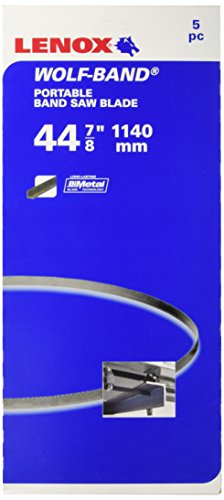 LENOX Tools Portable Band Saw Blades
|
7.8/10 | Buy |
Frequently Asked Questions
What TPI is optimal for cutting thin electrical conduit?
A 24 TPI or 14/18 variable TPI blade works best for thin EMT conduit. Thin-walled tubing requires at least three teeth in contact with the metal at all times to prevent snagging. Using a finer pitch prevents chatter, preserves the tooth weld, and leaves a clean edge that requires minimal deburring before setting conduit fittings.
What size bandsaw blade do standard portable band saws use?
Most standard deep-cut portable band saws require a 44-7/8-inch by 1/2-inch by 0.020-inch blade. This universal dimension fits popular models from Milwaukee, DeWalt, Makita, Bosch, and Wen. Always check your portaband user manual to verify if your tool takes compact sub-compact blades or standard 44-7/8-inch lengths.
Why do bandsaw blades strip teeth when cutting unistrut or threaded rod?
Teeth strip when you apply excessive downward pressure or use a blade with too few teeth per inch for the material gauge. When cutting channeled unistrut, the transition between open space and metal edges shocks the teeth. Letting the tool weight do the cutting and selecting a durable bi-metal tooth profile prevents sudden tooth shear.
Are bi-metal M42 blades necessary for electrical rough-in work?
Yes, bi-metal M42 high speed steel blades provide the heat resistance and flexibility needed for tough metal cutting. The flexible spring steel backing bends around tight portaband drive wheels without snapping, while the hardened M42 teeth resist dulling when cutting stainless conduit or all-thread rod.
How can electricians prevent blade drift on portable band saws?
Proper blade tracking, clean guide rollers, and moderate feed pressure stop blade drift on metal cuts. Pushing too hard twists the thin 0.020-inch blade body and throws off square alignment. Much like tuning fences on portable jobsite cutting tools, maintaining square contact between the tool shoe and the workpiece ensures clean, straight cuts.
How many teeth should contact the metal while cutting?
A minimum of three teeth should engage the metal wall at any point during the cut. If fewer than three teeth contact the material, the teeth straddle the wall edge, catch violently, and strip off the blade band. For heavy solid stock or thick strut, a coarser 10/14 TPI blade provides better chip clearing.
About the author

Thomas Gaige combines mechanical engineering knowledge with extensive hands-on construction experience. His background includes engineering, AutoCAD design, general contracting, residential and light-commercial construction, automotive restoration, cabinetry, fabrication, and workshop projects. This combination gives him a practical framework for evaluating tools based on engineering, performance, usability, and jobsite demands.