
Top Best Porta Band Saw Blade of 2026 for Metal Cutting
Get accurate slicing with the Best Porta Band Saw Blade options for October 2026, designed to stop stripped teeth and cut metal strut smoothly.
 By Edward Ting
Updated October 2, 2026
By Edward Ting
Updated October 2, 2026

Stripped teeth and uneven cuts in conduit or angle iron can instantly stall progress on the jobsite or in a metal fabrication bay. Running a dull edge through structural steel wastes valuable battery life, generates excess heat, and risks catastrophic blade breakage. Selecting the best porta band saw blade requires balancing bi-metal tooth durability, flexible alloy backing, and an optimized teeth per inch (TPI) setup for varied stock thicknesses. Based on manufacturer specifications and metalworker feedback, heavy-gauge steel demands a rigid cutting edge that resists tooth strip-out during aggressive plunge cuts. For fabricators comparing shop tools, pair this setup with a dedicated cold cut metal saw to handle heavier structural beams efficiently.
Standard 44-7/8-inch portaband saws rely on resilient M42 high-speed steel teeth to power through unistrut, threaded rod, and EMT without wandering off line. A premium replacement blade cushions sudden shocks against pipe walls, maintaining smooth tracking over internal drive pulleys while minimizing chatter. Whether you are outfitting a cordless tool or a corded workhorse, investing in durable shatter-resistant bi-metal bands keeps your edges sharp and your cut lines square across long shifts.
| Award | Product | TGH Score About TGH ScoreThe TGH Score is our own rating from 0 to 10, based on performance, design and build, ease of use, and value. It reflects independent research and is never influenced by manufacturers, retailers, or affiliate commissions. Learn more › | |
|---|---|---|---|
| Best Overall |
FOXBC 44-7/8 Inch Bandsaw Blades 10/14 TPI
|
8.1/10 | Buy |
| Best Value |
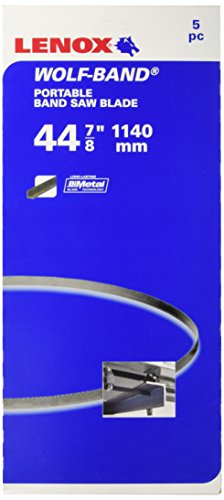 LENOX Tools Portable Band Saw Blades
|
7.8/10 | Buy |
Frequently Asked Questions
What TPI should you select for cutting thin conduit versus solid steel?
A higher tooth count between 14 and 18 TPI works best for thin-wall EMT, unistrut, and sheet metal. Maintaining at least three teeth in contact with the material prevents snagging and tooth stripping. For solid bars or thicker cross-sections above 3/16 inch, a variable 10/14 TPI pitch clears metal chips faster without clogging the gullets.
How does bi-metal construction improve best porta band saw blade performance?
Bi-metal construction welds high-speed steel teeth to an alloy steel backing for superior flex and fatigue resistance. This composite structure allows the band to flex repeatedly over small drive wheels without snapping. The hardened M42 or high-speed steel tooth edge resists heat buildup, staying sharp far longer than basic carbon steel bands under heavy friction.
Why does a portable band saw blade drift or cut crookedly?
Blade drift typically results from excessive feed pressure, worn guide rollers, or dull teeth on one side of the band. Forcing the saw through dense metal deflects the narrow 1/2-inch blade, causing angled kerfs. While portable bandsaws excel at rapid metal cuts, straight line woodworking rip cuts require a portable table saw for precision cuts with a dedicated fence.
What causes premature tooth stripping on a portable band saw blade?
Stripped teeth usually occur when starting a cut on a sharp edge or using too coarse of a tooth pitch on thin stock. When fewer than three teeth engage the workpiece, individual teeth take the full brunt of the motor torque and shear off. Starting the tool at full speed before gently engaging the metal prevents sudden shock loads.
Can you cut wood with a metal-cutting portable bandsaw blade in 2026?
Yes, fine-pitch metal blades can cut wood, but the dense tooth pattern tends to load up with sawdust and burn the timber. When transitioning from jobsite metal conduit to rough framing lumber, using an appropriate saw for cutting planks of wood prevents dulling fine-pitch metal bands. For clean woodwork, a coarse blade with deep gullets is far more efficient.
About the author
Edward Ting is an experienced amateur astronomer, telescope reviewer, and astronomy educator known for his detailed equipment evaluations. With an engineering background and extensive experience reviewing telescopes and astronomical accessories, he helps astronomy enthusiasts understand optical performance, equipment design, and practical considerations when selecting observing equipment.