
Best Bandsaw Blade for Cutting Aluminum of 2026 For Clean Cuts
Upgrade your shop in October 2026 with the best bandsaw blade for cutting aluminum to slice aluminum tubing and bar stock cleanly without chatter or stripped teeth.
 By Phil Harrington
Updated October 2, 2026
By Phil Harrington
Updated October 2, 2026

Slicing through aluminum extrusion with an improper blade often results in melted chips, gummed-up gullets, and stripped teeth within minutes. Soft non-ferrous metals demand a specialized tooth geometry, proper rake angle, and resilient bi-metal metallurgy to clear swarf quickly without bogging down your saw motor. Identifying the best bandsaw blade for cutting aluminum ensures smooth cut surfaces, steady tracking across the guide bearings, and prolonged edge retention across diverse metal fabrication tasks. Whether cutting square structural tubing or trimming solid bar stock, running a dedicated blade keeps your machine running cool and prevents blade drift.
A standard wood blade cannot handle the friction and density of metal profiles, often leading to dull edges and erratic cuts that ruin delicate stock. Upgrading your workshop with reliable bi-metal stock provides the toughness needed to handle non-ferrous bars, much like choosing dedicated cold-cut metal chopsaws for heavier workshop framing. Based on manufacturer specifications and feedback from experienced makers, choosing an M42 cobalt tooth profile with 10 to 14 TPI delivers the right balance between chip clearance and vibration control. Keeping blade tension dialed in and matching blade length to your specific machine wheel diameter will keep your workflow humming.
| Award | Product | TGH Score About TGH ScoreThe TGH Score is our own rating from 0 to 10, based on performance, design and build, ease of use, and value. It reflects independent research and is never influenced by manufacturers, retailers, or affiliate commissions. Learn more › | |
|---|---|---|---|
| Best Overall |
POWERTEC 80 Inch Bi-Metal Bandsaw Blades
|
9.1/10 | Buy |
| Best Budget |
POWERTEC 93-1/2 Inch Bi-Metal Bandsaw Blades
|
8.4/10 | Buy |
| Best Value |
 Imachinist S933414 M42 93" X 3/4" X 10/14tpi
|
8.4/10 | Buy |
| Best Premium |
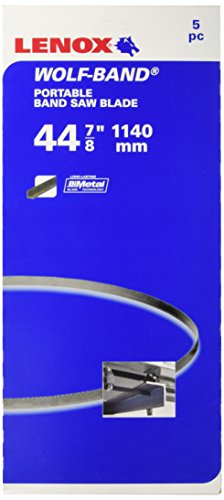 LENOX Tools Portable Band Saw Blades
|
7.8/10 | Buy |
Frequently Asked Questions About Aluminum Cutting Bandsaw Blades
Can you use a regular wood bandsaw blade to cut aluminum?
No, standard carbon steel wood blades dull rapidly and risk severe tooth stripping when cutting aluminum. Wood blades generally feature coarse pitch like 3 to 6 TPI with aggressive hook angles that grab soft aluminum stock. Non-ferrous metal cutting requires harder M42 bi-metal teeth and higher pitch counts like 10 to 14 TPI to prevent snagging and tooth breakage.
What teeth per inch (TPI) is best for slicing aluminum stock?
A pitch of 10 to 14 TPI is ideal for the best bandsaw blade for cutting aluminum when processing typical aluminum sheets, thin tubing, and structural profiles. Thinner wall extrusions need at least three teeth engaged in the cut simultaneously to avoid catching and chattering against the guide bearings. For thicker aluminum billets over one inch, dropping down to an 8 or 10 TPI blade allows larger gullets to clear chip buildup without packing.
How does blade speed affect aluminum cutting performance on a vertical bandsaw?
Slower surface feet per minute (SFPM) settings produce cleaner cuts and reduce heat buildup when cutting aluminum. Most dedicated metal-cutting bandsaws run between 100 and 300 SFPM, whereas standard wood bandsaws run over 2,000 SFPM. If you operate a multi-speed saw or a portaband, reducing the motor speed keeps chips from welding to the blade teeth and preserves the cutting edge.
Why is an M42 bi-metal blade recommended over carbon steel for aluminum?
M42 cobalt high-speed steel teeth withstand friction heat and resist edge rounding significantly better than standard carbon steel. The flexible spring steel backer absorbs bending stress over the saw wheels, preventing premature fatigue fractures during continuous shop use. While carbon blades work for quick emergency cuts, an M42 bi-metal blade maintains sharp cutting edges across hundreds of cuts in tubing, plate, and bar stock. For shops that also handle fine carpentry, pairing precision metal tools with a portable table saw for cabinet making keeps workflows clean and organized.
Do you need cutting fluid or wax when cutting aluminum on a bandsaw?
Yes, applying a solid cutting wax stick or mist coolant prevents gummy aluminum swarf from welding into the blade gullets. Soft aluminum tends to smear under friction, which can clog teeth and lead to blade wandering or stalling. Touching a wax stick directly against the moving blade before starting a rip cut lubricates the kerf and promotes mirror-like surface finishes.
How do you prevent blade drift when cutting aluminum plate?
Proper blade tension, aligned guide bearings, and controlled feed pressure eliminate blade drift during straight cuts. Using a wider blade like 1/2-inch or 3/4-inch increases beam strength, preventing lateral deflection against the rip fence. Always ensure your upper and lower guide assemblies sit within thousandths of an inch from the blade body without contacting the set teeth.
About the author
Phil Harrington is an astronomy educator, author, and experienced optical equipment reviewer with decades of experience exploring the night sky. He has written extensively about telescopes, binoculars, and astronomical observation, combining technical knowledge with practical guidance that helps astronomy enthusiasts understand and select suitable observing equipment.