
How to Shovel Snow on a Gravel Driveway: Practical Guide for 2026
Learn how to shovel snow on a gravel driveway without throwing stone everywhere in October 2026 using proper technique and clearance.
 By Phil Harrington
Updated October 2, 2026
By Phil Harrington
Updated October 2, 2026

Winter storms create an immediate headache when fresh powder conceals an unpaved, crushed stone, or gravel driveway. Dragging a standard sharp-edged scoop across loose stone inevitably catches hidden pebbles, throwing expensive aggregate into the lawn and jarring your joints with sudden, violent stops. Property owners quickly discover that standard clearing techniques used on asphalt or poured concrete simply do not work on loose substrates. Learning how to shovel snow on a gravel driveway requires a shift from scraping surfaces clean to managing clearance heights and preserving the underlying stone foundation.
Using the wrong equipment turns a simple clearing job into an exhausting chore that ruins your driveway profile and damages equipment. While heavy metal blades and sharp steel cutting edges excel at slicing through ice on flat pavement, they dig directly into loose stone like miniature plows. Just as moving coarse stone requires specialized tools designed for transporting gravel, clearing winter accumulation over unpaved ground calls for deliberate tool selection and customized blade handling. Equipping yourself with wide pushers, flexible polyethylene blades, or shovels fitted with surface-friendly nylon wear strips allows you to clear functional driving tracks while leaving the gravel bed intact.
| Award | Product | TGH Score About TGH ScoreThe TGH Score is our own rating from 0 to 10, based on performance, design and build, ease of use, and value. It reflects independent research and is never influenced by manufacturers, retailers, or affiliate commissions. Learn more › | |
|---|---|---|---|
| Best Overall |
The Snowplow the Original Snow Pusher 36" Wide
|
9.2/10 | Buy |
| Best Budget |
 Yocada Snow Shovel for Driveway Home Garage Snow
|
8.9/10 | Buy |
 TRUE TEMPER 1603400 Poly Snow Shovel/Pusher
|
8.9/10 | Buy | |
| Best Premium |
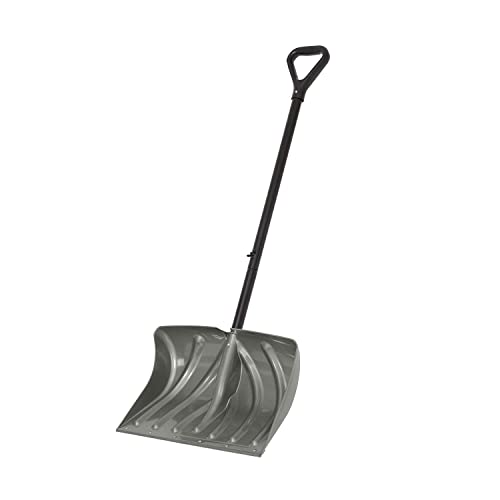 Suncast 20" Combination Snow Shovel/Pusher
|
8.6/10 | Buy |
| Best Value |
 McKraftis Ergonomic Snow Shovel for Driveway Home
|
7.8/10 | Buy |
Strategic Snow Clearing Methods for Gravel and Loose Stone Driveways
Clearing snow from an unpaved driveway demands an entirely different mindset than maintaining smooth concrete or asphalt. Attempting to scrape down to bare dirt or stone invariably leads to gouged ruts, displaced gravel, and painful wrist or shoulder shock from abrupt blade collisions. The primary objective on gravel is to remove excess accumulation while leaving a stable, undisturbed aggregate bed underneath. Achieving this balance depends on establishing a packed base, managing blade clearance angles, and selecting shovels engineered with non-gouging contact edges.
The Mechanical Dilemma of Shoveling Over Unconsolidated Stone
Loose gravel does not provide a uniform, flat plane for a shovel blade to travel across. Every crushed rock, pea pebble, and limestone fragment sits at slightly varied elevations, creating thousands of micro-obstructions beneath the snowpack. When a user pushes a traditional squared shovel forward, the leading edge acts like an excavation scoop, snagging individual stones and redirecting your forward momentum directly into your hands and spine.
Beyond the physical strain on your body, erratic scraping alters the grade of your driveway. Shoveling loose aggregate tosses valuable driveway material into surrounding grass borders, garden beds, and drainage ditches. Once spring arrives, homeowners face hours of raking displaced stone out of turf to prevent dangerous projectile hazards during the first lawn mowing. Recognizing how loose stone interacts with cutting edges helps you adjust your technique before the first major freeze sets in.
The Base-Layer Strategy: Packing Snow Before Major Storms
Rural property owners and municipal road crews in heavy snow belts rely on a proven technique known as the packed snow base. Rather than scraping your gravel driveway down to the stones during early winter storms, you intentionally pack down the first inch or two of light snow. You can create this foundation by driving passenger vehicles repeatedly over early accumulations or by rolling the driveway surface before extreme cold sets in.
This compressed snow freezes directly into the crevices between the loose rocks, effectively cementing the aggregate into a solid, smooth plane. Once this frozen crust solidifies, subsequent snowfalls rest on top of a hard, flat sheet of ice and hardpack rather than unstable stones. You can then glide a snow pusher across the frozen crust without snagging loose gravel or tearing up the driveway bed. This sacrificial base protects your aggregate investment throughout the winter while maintaining adequate traction for passenger tires.
Blade Edge Dynamics: Comparing UHMW Poly, Nylon, and Metal Strips
The material lining the bottom edge of your snow shovel dictates how safely it glides over loose stone. Shovels equipped with virgin Ultra High Molecular Weight (UHMW) polyethylene blades, such as The Snowplow Original Snow Pusher 36″ Wide model, offer exceptional impact resistance and cold-weather slickness. UHMW plastic possesses natural lubricity and flex, allowing the blade to ride over gravel irregularities without digging in or fracturing against frozen stones. This non-abrasive property helps preserve surface grade while moving high volumes of snow.
Alternatively, combination shovels featuring protective nylon wear strips provide a reliable barrier against surface gouging. The TRUE TEMPER 1603400 Poly Snow Shovel/Pusher utilizes an 18-inch combination poly blade with a protective nylon wear strip specifically intended to prevent surface marking and gouging. Nylon wear strips yield slightly under contact, absorbing minor impacts against protruding stones rather than wedging beneath them. For rough ground where dedicated rock extraction requires rigid shovels for moving rock, winter clearing calls for softer, surface-forgiving edge materials that flex over aggregate.
In contrast, blades fitted with galvanized steel or rigid aluminum wear strips demand significant caution on unpaved surfaces. Models like the Suncast 20″ Combination Snow Shovel/Pusher incorporate galvanized steel wear strips, while the McKraftis Ergonomic Snow Shovel features aluminum wear protection along its 16-inch scoop. While steel and aluminum reinforcement prevents plastic from chipping against abrasive pavement, sharp metal strips act like chisels against unpaved gravel. If you use a tool with a metal wear strip on gravel, you must elevate your push angle to prevent the metal edge from catching rock crowns.
Manual Clearing Techniques: The Elevated Skim and Windrow Rolling
Executing the elevated skim technique is the most reliable way to clear snow without catching stone. Instead of dropping the shovel blade flat against the driveway, you elevate the handle slightly to keep the leading edge roughly one inch above the aggregate grade. This elevation allows the shovel to slice through the bulk of the snowpack while leaving a thin cushion of snow covering the stones. Maintaining this clearance prevents abrupt stops and keeps valuable rock in place.
Wide snow pushers excel when clearing paths through continuous windrows rather than discrete scooping cycles. Using a 36-inch wide pusher blade, start down the center crown of your driveway and push snow outward toward the margins at a slight 45-degree diagonal angle. Rolling the snow outward keeps the blade moving continuously, preventing the downward point-loading that occurs when you plunge a standard scoop into a drift. Keeping your body centered behind the push and maintaining steady forward momentum prevents the blade from diving into soft pockets of gravel.
When heavy drifts require lifting rather than pushing, rely on shallow scooping rather than digging down to grade. Position your scoop into the upper half of the snowdrift, lift the load using your leg muscles, and pivot your entire body to cast the snow aside. Attempting to scoop all the way to ground level on gravel almost always results in a blade full of heavy rocks mixed with snow. Taking multiple shallow lifts preserves your back and prevents aggregate displacement.
Ergonomics and Handle Mechanics on Irregular Ground
Shoveling over loose aggregate creates unpredictable resistance that places unique demands on your upper body and lower back. Bent-shaft ergonomic shovels alter your lifting leverage by keeping your hands positioned higher, reducing the degree of forward spinal bending required during each pass. The McKraftis Ergonomic Snow Shovel incorporates a contoured back-saver design alongside an EVA foam grip that insulates your hands against cold metal shafts. This design helps minimize back strain when working across uneven terrain.
Handle material and connection rigidity also influence your ability to navigate uneven ground. Steel handle shafts, found on models like the TRUE TEMPER poly pusher and Suncast combination shovel, provide exceptional torsional stability when pushing dense drifts. However, rigid steel handles transmit direct impact vibration to your wrists whenever the blade clips a frozen stone. When unexpected obstacles cause sudden stops, an oversized D-grip or ergonomic T-grip gives your gloved hands positive rotational control to keep the blade balanced.
Adjustable multi-section shafts, such as the three-piece iron handle on the Yocada Snow Shovel that adjusts from 48 to 55 inches, let operators customize overall tool reach. Taller operators can extend the shaft to maintain an upright posture, ensuring the blade rests at an optimal push angle relative to the driveway slope. Matching handle length to your physical height prevents you from inadvertently forcing the blade nose downward into loose stones. Proper alignment ensures smoother gliding across gravel.
Navigating Wet Heavy Slush and Thaw-Freeze Transitions
Slushy winter precipitation poses severe challenges on unpaved driveways because saturated snow softens the gravel binder. When temperatures hover near freezing, vehicle tires create deep depressions in soft gravel that fill with wet, heavy slush. Scooping this waterlogged material requires careful weight management, because wet slush can easily exceed the lifting limits of both user and tool. Wet conditions demand extra vigilance to avoid tearing up loose aggregate.
When facing wet slush, avoid wide pusher blades that accumulate massive, immovable piles. Instead, transition to a narrower 16-inch to 20-inch combination shovel like the Suncast pusher or Yocada scoop to control load volume. Take partial-width passes, shaving off four to six inches of slush at a time to prevent the shovel from bogging down. If the underlying stone base has completely thawed and turned to mud, cease shoveling immediately to prevent scraping out deep ruts that will harden into vehicle-damaging potholes once temperatures drop.
Handling dense aggregate beneath thawed slush requires the same care used when operating heavy-duty rock shovels during summer drainage projects. Applying excessive downward pressure on a muddy gravel driveway simply blends valuable aggregate into the slush, creating an unmanageable slurry. In these delicate thaw conditions, clearing only the top layer of slush and applying coarse sand or crushed volcanic traction grit over the damp surface preserves driveway integrity far better than aggressive scraping. This approach protects both your tools and the stone base.
Preventative Maintenance and Blade Preparation for Unpaved Surfaces
Proper shovel preparation dramatically improves your efficiency on uneven gravel ground. Plastic and polyethylene scoops frequently develop micro-scratches from grit and road salt, causing wet snow to cling stubbornly to the blade face. This snow buildup adds unnecessary dead weight and forces you to knock the shovel against the ground, risking blade cracking in sub-zero temperatures. Treating the blade surface beforehand helps maintain smooth snow discharge.
Before every winter storm, spray the front and back of your shovel scoop with silicone lubricant, paste wax, or dedicated non-stick snow coating. The virgin UHMW material on The Snowplow Original Snow Pusher is naturally resistant to snow adhesion, but treating standard poly blades ensures snow slides cleanly off the face during pushing. Inspect the leading wear strip regularly for loose rivets or jagged metal burrs created by stone contact. Smoothing out metal burrs with a mill bastard file prevents the blade from snagging rocks like a hook during your next pass.
Practical Principles for Long-Term Gravel Driveway Maintenance
Successfully clearing snow from a gravel driveway without sacrificing your stone base comes down to patience, proper clearance heights, and surface-friendly tools. By driving over early dustings to build a hard frozen crust, you create an artificial barrier that protects your aggregate all winter long. Using wide, non-abrasive pushers to skim the surface allows you to maintain open vehicle paths without scattering gravel across your lawn. Selecting the right combination of blade materials, ergonomic handle architecture, and sensible clearing techniques preserves your driveway investment through the harshest winter weather.
About the author
Phil Harrington is an astronomy educator, author, and experienced optical equipment reviewer with decades of experience exploring the night sky. He has written extensively about telescopes, binoculars, and astronomical observation, combining technical knowledge with practical guidance that helps astronomy enthusiasts understand and select suitable observing equipment.