
How to Use an Edging Shovel: Step-by-Step Guide for 2026
Master how to use an edging shovel to sculpt crisp lawn borders and protect your back with proper leverage and blade technique in October 2026.
 By Phil Harrington
Updated October 2, 2026
By Phil Harrington
Updated October 2, 2026

Overgrown turfgrass spilling over concrete walkways and messy planting beds can quickly make an otherwise healthy landscape appear neglected and chaotic. Learning how to use an edging shovel correctly allows homeowners and property caretakers to carve sharp, manicured boundaries between green turf, flower beds, and hardscapes without relying on noisy gas trimmers or motorized trenchers. A manual edging tool relies on body weight, downward mechanical leverage, and precise blade geometry to cleanly sever dense root masses and thatch. Mastering this basic manual earthmoving technique transforms sprawling lawn margins into defined, professional borders that resist grass intrusion throughout the growing season.
Selecting the appropriate tool profile is just as critical as mastering the physical digging technique. While standard dished digging shovels tend to gouge jagged, uneven holes, specialized half-moon lawn edgers and flat-bladed garden spades are specifically engineered to drive vertical cuts flush against sidewalks or garden perimeters. Heavy-duty models featuring wide foot treads and reinforced manganese or carbon steel blades deliver the downward force needed to slice through compacted loam. For thick, woody root obstructions that resist a spade edge, pairing your edging shovel with a pruning saw for garden beds nearby ensures clean cuts without damaging tool sockets or fatiguing your lower back.
| Award | Product | TGH Score About TGH ScoreThe TGH Score is our own rating from 0 to 10, based on performance, design and build, ease of use, and value. It reflects independent research and is never influenced by manufacturers, retailers, or affiliate commissions. Learn more › | |
|---|---|---|---|
| Best Overall |
DIIG Manual Lawn Edger Tool with Long Handle
|
9.2/10 | Buy |
| Best Budget |
 Jardineer Edger Lawn Tool Manual
|
9.1/10 | Buy |
| Best Premium |
 HANTOP Sharp Blade Garden Spade Shovel Flat Spades
|
9.1/10 | Buy |
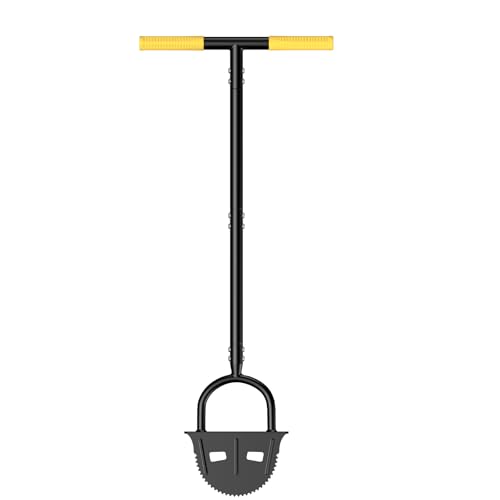 DwelSpire Half Moon Edger Lawn Tool
|
8.6/10 | Buy | |
 WIKER 4-Inch Trench Shovel for Digging
|
8.6/10 | Buy | |
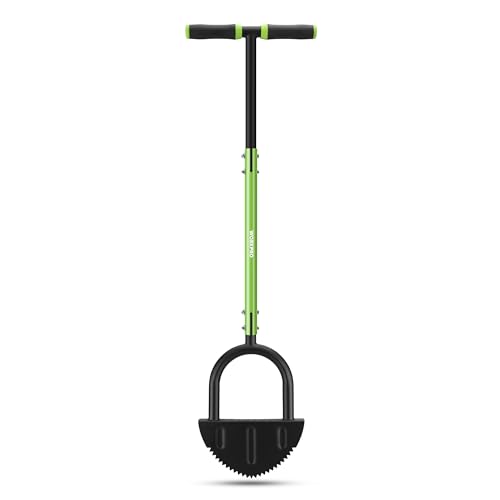 WORKPRO 40-Inch Edger Lawn Tool
|
8.3/10 | Buy | |
| Best Value |
 Colwelt Lawn Edger Tool, Half Moon Garden
|
8.3/10 | Buy |
 HANTOP Flat Spade Garden Shovel Edging Spade
|
8.1/10 | Buy | |
 Amazon Basics Gardening Shovel for Digging
|
8.0/10 | Buy | |
 HANTOP Sharp Blade Spade Shovel Garden Flat Spades
|
8.0/10 | Buy |
Mastering Manual Turf Edging Mechanics and Trenching Techniques
Executing a crisp, professional border requires an understanding of how blade geometry, soil resistance, and personal body mechanics interact during every downward stroke. Rather than hacking haphazardly at overgrown turf, the goal of manual edging is to establish an intentional vertical shear plane that halts horizontal grass runners and leaves an aesthetically sharp definition between landscape zones. Understanding the mechanical leverage of your tool turns a physically demanding chore into a rhythmic, manageable process that protects both your spine and your landscaping investments.
Choosing the Optimal Blade Profile for Your Soil and Border Style
The physical design of your edging blade dictates how easily the tool penetrates dense sod and what kind of border boundary it leaves behind. Half-moon edgers, such as models manufactured by Colwelt, Jardineer, and WORKPRO, feature a curved, semi-circular blade designed to rock smoothly through fibrous turfgrass roots and lateral stolons. Many of these tools incorporate aggressive saw teeth or dual V-shaped bevels along the cutting face, which prevent the blade from slipping off slick sod crowns and help slice through tough thatch layers with minimal downward resistance.
In contrast, flat-edged garden spades like those from HANTOP and Amazon Basics feature a straight cutting edge and a taller rectangular blade. These tools excel when you need to sculpt crisp, flat-bottomed trenches, shave vertical soil walls, or transplant border perennials alongside your edging trench. Unlike cupped, round-point digging shovels that lift and toss soil outward, a flat spade keeps the boundary wall strictly perpendicular, preventing soil crumble along bed borders.
For narrow irrigation lines or deep barrier installation, specialized tools like the WIKER four-inch trenching shovel offer a slim, tapered profile that concentrates downward foot pressure into a compact footprint. Choosing between a curved half-moon edger and a flat spade comes down to your border geometry. Curved half-moon blades follow sweeping bed contours and curved walkways effortlessly, while flat spades create laser-straight edges along formal driveways and fence lines.
Workspace Preparation and Subterranean Clearance Protocols
Before driving any steel blade into the ground, taking the time to inspect the work area prevents expensive utility damage and unnecessary physical frustration. Buried low-voltage landscape lighting cables, shallow drip irrigation tubing, and invisible dog fence wiring often run along the immediate perimeter of garden beds. Always contact regional utility locating services by calling 811 before excavating deep trenches, especially when redesigning landscape beds near property boundaries or service meters.
Soil moisture plays a massive role in how smoothly your blade penetrates without tearing turf or adhering to steel surfaces. Attempting to edge during midsummer drought in baked, compacted clay will cause the blade to bounce off the surface, jarring your ankles and bending socket joints. Conversely, working in saturated, swampy mud creates sloppy trenches and causes heavy clay clods to stick stubbornly to the blade face, adding dead weight to every lift.
The ideal window for manual edging occurs one to two days after a moderate rainfall or a thorough lawn soaking, when the top four to six inches of loam are damp yet friable. Layout your desired border line using a standard garden hose for organic, curved bed shapes, or stretch a high-visibility mason string between ground stakes for straight hardscape lines. Spraying a fine line of biodegradable landscape marking paint along your guide provides a distinct cutting reference that remains visible as loose soil accumulates.
Step-by-Step Stance, Foot Drive, and Rocking Mechanics
Achieving clean, continuous cuts without exhausting your upper body requires letting your core and body weight perform the heavy work. Position your body directly above the tool shaft rather than leaning forward or overreaching, keeping your feet shoulder-width apart to create a stable base of support. Place the center of your dominant foot firmly onto the wide footplate or forward-turned step tread of the edging blade, ensuring your boot arch grips the anti-skid surface securely.
Drive the blade down vertically into the turf at a strict 90-degree angle to the surface of the soil by stepping down with your full body weight. Avoid pushing purely with your shoulder muscles, as this strains the upper back and produces shallow, inconsistent cuts. Once the blade sinks to its target depth, typically three to five inches, gently rock the handle from side to side in a controlled arc to cleanly sever any remaining root fibers along the edges of the cut.
Pull the shaft slightly backward toward the lawn side to crack the soil plug free from the bed wall, then lift the tool straight out of the slot without twisting the socket. Step forward four to six inches along your guide line, overlapping the previous cut by roughly one inch to ensure a seamless, unbroken trench wall. Maintaining this steady cadence of step, rock, pull, and reset produces uniform borders quickly while keeping physical strain to a minimum.
Carving the Clean Trench and Excavating Grass Plugs
A single vertical slit in the ground is rarely enough to keep aggressive stoloniferous turfgrasses like Bermuda, Kentucky bluegrass, or St. Augustine from invading garden mulch. To create an effective physical barrier, professional landscapers rely on a two-cut system often referred to as an English garden edge. The first vertical cut establishes the pristine bed line, while a secondary angled cut creates a shallow V-shaped trench that traps mulch and stops root creep.
Position your flat spade or edging tool approximately three to four inches inside the garden bed, angling the blade downward at roughly 45 degrees toward the bottom of your initial vertical cut. Step onto the foot tread to drive the blade home until it intersects the base of your first shear plane. This intersecting motion detaches a triangular wedge of sod and underlying soil, freeing a clean plug that lifts out effortlessly without disturbing surrounding plant roots.
Scoop out the severed turf wedges using a hand trowel or flat transfer shovel, placing the debris into a wheelbarrow or lawn cart for compost disposal. Use the back of your spade to smooth the inward slope of the trench, ensuring loose soil crumbs are cleared from the bottom of the channel. The resulting three-to-five-inch trench creates an attractive shadow line along your lawn that catches grass clippings and keeps garden mulch from washing out onto paved surfaces.
Navigating Stubborn Tree Roots, Rocks, and Subsoil Obstructions
Subterranean obstacles are common whenever you edge near mature shade trees, shrub borders, or rocky native subsoils. When your edging blade strikes a buried rock or an unyielding lateral root, never bounce repeatedly on the footplate or attempt to use the tool handle as a heavy mechanical pry bar. Manual edging tools feature thin cutting edges engineered for shearing soft turf and soil, and forcing them against dense obstructions can bend the steel blade, curl the cutting edge, or fracture the handle collar.
If you encounter a thick woody root exceeding one inch in diameter, step back and scrape away the surrounding soil with a hand trowel to expose the obstruction clearly. Attempting to chop blindly through heavy roots with an edging shovel dulls the blade and risks shattering wooden shafts at the socket neck. Instead, slice through large roots cleanly using a hand saw for heavy branches and roots, which severs stubborn fibers without tearing up adjacent turf or overstressing your edging equipment.
For small, fibrous roots, edgers equipped with serrated saw teeth, such as the Colwelt or Jardineer models, can bite through fibers when paired with a gentle sawing motion. When working around embedded stones, carefully lever the stone outward with a dedicated round-point digging shovel or a heavy iron digging bar rather than an edging blade. Preserving your edging shovel for clean slicing tasks ensures the blade remains straight, true, and ready for precision detailing.
Handle Ergonomics, Grip Geometry, and Biomechanical Safety
Repetitive manual edging places distinct biomechanical stresses on the lumbar spine, wrists, and shoulder girdle if ergonomic principles are neglected. Tools equipped with extra-wide T-handles, such as those found on Jardineer and WORKPRO edgers, allow users to maintain an even, two-handed downward push that balances chest and shoulder muscles. Meanwhile, traditional D-handles provide outstanding rotational control, preventing the blade from twisting in your grip when encountering uneven soil density.
Handle material also plays a vital role in long-term comfort and vibration dampening during extended landscaping projects. Ash and oak wooden handles, featured on tools like the HANTOP flat spade, provide natural flex and absorb the impact shock generated when the blade strikes buried stones or hardpan. Fiberglass handles, like those on WIKER trenching shovels, offer high tensile resilience and complete immunity to weather rot, though they transmit slightly more vibration directly into your palms.
To safeguard your lower back, maintain a neutral spine and avoid hunching forward over the shaft during each stroke. Engage your abdominal core muscles, bend slightly at the knees and hips, and let your legs push your downward weight onto the footplate. Wearing rigid, steel-shank work boots prevents arch fatigue and foot bruising caused by pressing repeatedly against narrow metal step treads, ensuring a safe and pain-free yard work session.
Blade Sharpening, Rust Prevention, and Storage Maintenance
A dull edging shovel requires double the foot pressure to pierce turf, quickly leading to user fatigue and ragged, torn grass edges. Regularly inspecting and honing the cutting lip with a standard ten-inch mill bastard file restores optimal slicing performance. Always sharpen the blade using a single-bevel profile along the upper, inside face of the cutting edge, maintaining a sturdy 40-to-45-degree angle that balances razor sharpness with impact durability.
Never grind the reverse underside of the spade blade, as keeping the bottom face completely flat ensures clean, flush alignment against sidewalk concrete. After filing several smooth, forward strokes across the bevel to remove nicks and gouges, flip the blade over and make one light, flat pass along the back to shave away the raised metal wire burr. Avoid using high-speed mechanical angle grinders for sharpening, as excessive friction heat can ruin the factory steel temper and leave the metal brittle.
After completing your yard work, scrape away clinging mud and wash the tool thoroughly with a stiff nylon brush and clean water. Dry the steel completely with a clean rag to prevent moisture oxidation, then wipe the metal blade with a light coat of mineral oil or boiled linseed oil before hanging it in a dry garage. Applying a thin coat of automotive paste wax to the blade face can also help shed sticky clay soils during your next edging project.
Practical Verification and Seasonal Maintenance Rhythm
Once you finish carving your landscape borders, step back and inspect the entire boundary line from multiple angles to identify any wavy irregularities or shallow sections. Revisit any uneven spots with your flat spade, shaving down high points and clearing out loose debris until the trench depth remains a uniform three to five inches along the entire run. Check all socket assembly bolts, nuts, and rivets on your tool, tightening any loose hardware that may have backed out during vigorous stepping.
Maintaining pristine lawn edges requires far less effort once an initial clean trench has been established. Scheduling a quick maintenance touch-up every four to six weeks during active growing months prevents grass runners from jumping the trench and re-establishing roots in your mulch beds. By mastering proper foot placement, rhythmic leverage, and routine blade maintenance, you can keep your property looking sharp, crisp, and professionally maintained all year long.
About the author
Phil Harrington is an astronomy educator, author, and experienced optical equipment reviewer with decades of experience exploring the night sky. He has written extensively about telescopes, binoculars, and astronomical observation, combining technical knowledge with practical guidance that helps astronomy enthusiasts understand and select suitable observing equipment.